
Planting
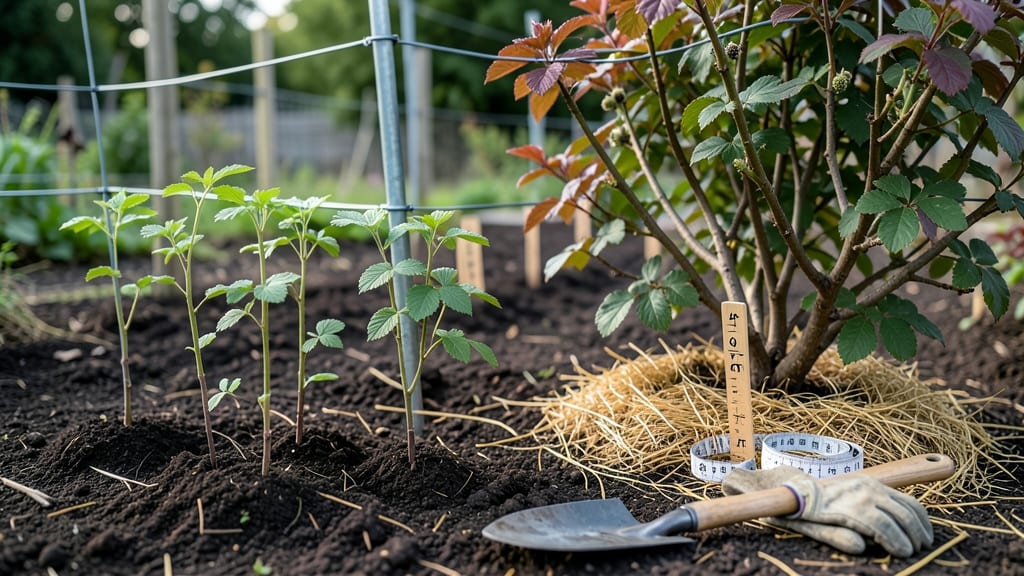
How far apart should blackberry bushes be planted? The answer is 4–6 feet apart for thornless varieties and 6–8 feet for traditional types—this spacing is the key to maximizing your harvest and keeping plants healthy.
Struggling to get those plump, juicy 🫐 berries you dream about? The secret isn’t just in the soil or water—it’s in how much space you give your bushes to grow. Too close, and you’ll battle diseases, weak canes, and tiny fruit.
Too far, and you waste garden real estate. Get the spacing right, and you’ll see bigger yields with less work.
Blackberries thrive when they get plenty of sunlight and airflow, which means spacing matters more than you might think. Whether you’re working with thornless varieties that need a little more elbow room or traditional types that sprawl, the right distance keeps your plants strong and productive for years.
In this guide, I’ll break down the exact spacing you need by variety, plus tips for adjusting based on your soil, climate, and trellising setup. You’ll learn how to avoid common mistakes, prune for better airflow, and even fix overcrowded patches—so you can enjoy a bountiful harvest every season.
Blackberry bush spacing by variety: thornless vs. traditional vs. semi-erect
Blackberries thrive when planted with the right spacing—it’s not just about fitting them into your garden. Proper spacing ensures optimal sunlight exposure, better airflow, and easier maintenance, which directly impacts your harvest size and plant health.
Each blackberry variety has unique spacing needs, so let’s break it down by type to help you plan your berry patch like a pro.
Thornless varieties, like 'Natchez' or 'Chester', are popular for home gardens because they’re easier to harvest and maintain. Traditional thorny types, such as 'Triple Crown' or 'Black Diamond', need more room to sprawl and support their canes.
Meanwhile, semi-erect varieties like 'Apache' strike a balance between upright growth and manageable size. Understanding these differences will save you headaches down the road.
Here’s the golden rule: Spacing affects everything—from fruit quality to disease prevention. Crowded plants compete for nutrients, leading to smaller berries and increased susceptibility to fungal issues like botrytis.
On the flip side, spacing them too far apart wastes garden space and reduces yields. Let’s dive into the exact measurements for each type.
| Variety Type | In-Row Spacing | Row Spacing | Trellis Height | Notes |
|---|---|---|---|---|
| Thornless | 4–6 feet | 6–8 feet | 6–8 feet | Compact growth; ideal for small gardens. Use floral wire trellis for support. |
| Traditional (Thorny) | 6–8 feet | 8–10 feet | 8–10 feet | Sprawling canes; needs strong trellis system (e.g., T-posts with wire). |
| Semi-Erect | 5–7 feet | 7–9 feet | 7–9 feet | Balanced growth; partial trellis support recommended for canes. |
For thornless varieties, the 4–6 feet in-row spacing works perfectly because they grow more upright and don’t spread as aggressively. This makes them ideal for small gardens or container growing with proper trellising.
I’ve seen gardeners squeeze them into 3-foot spacing, but this leads to smaller berries and increased disease risk. Trust me, the extra foot of space is worth it for healthier plants.
Traditional thorny blackberries, like 'Darrow', need the extra room because their canes sprawl horizontally. The 6–8 feet in-row spacing and 8–10 feet between rows give them the elbow room to thrive. Without this, you’ll struggle with overlapping canes, shaded fruit, and difficulty harvesting.
Think of it like giving your blackberries their own personal space to stretch out and soak up sunlight.
Semi-erect varieties, such as 'Apache', are a happy medium. They grow partially upright but still need support, so 5–7 feet in-row spacing is ideal. This spacing allows for better airflow while keeping the garden organized.
If you’re short on space, you can experiment with 4-foot spacing, but be prepared to prune aggressively to maintain plant health.
Don’t forget about trellis systems—they’re not optional! A well-structured trellis supports heavier canes, improves sunlight penetration, and makes harvesting a breeze. For thornless varieties, a 6-foot floral wire trellis works great.
Traditional types need something sturdier, like T-posts with 8-foot wire, to handle their weight. Semi-erect varieties benefit from a 7-foot trellis with cross wires for cane support.
One common mistake I see is ignoring row orientation. Always plant rows north to south to maximize sunlight exposure. This simple trick ensures every cane gets equal access to light, which is critical for fruit development and berry size.
If your rows run east-west, the southern side of the plants will shade the northern side, leading to uneven ripening and smaller yields.
Finally, consider your soil type when finalizing spacing. Sandy soil drains quickly, so you can space plants slightly closer together. Clay soil, on the other hand, holds moisture longer, so give your blackberries extra space to prevent root rot.
Amending your soil with compost can help bridge the gap if you’re working with less-than-ideal conditions.
How to adjust spacing for different blackberry growth habits and soil conditions
Blackberries thrive when given the right amount of space, but their needs change dramatically based on your variety, soil type, and climate zone. Compact thornless varieties like 'Natchez' can handle tighter spacing, while sprawling traditional types like 'Cheyenne' need room to stretch.
Even your soil drainage plays a role—clay soils require wider spacing to prevent root rot, while sandy soils may need closer plants to retain moisture.
In hot/dry climates, like the Southwest U.S., blackberries need extra space to reduce competition for water. Meanwhile, in cool/wet regions, like the Pacific Northwest, tighter spacing can work if you prioritize airflow to prevent fungal diseases like botrytis.
Let’s break down how to adjust spacing for your specific growing conditions to maximize yields and plant health.
Adjust Spacing Based On:
- 🌱 Compact Thornless Varieties: 4–5 feet apart in rows 6 feet apart. Ideal for small gardens or trellises.
- 🌿 Sprawling Traditional Varieties: 6–8 feet apart in rows 8–10 feet apart. Essential for full sun and airflow.
- 🪴 Clay Soil Conditions: Increase spacing to 7–9 feet apart to prevent waterlogging and root rot.
- 💧 Sandy Soil Conditions: Reduce spacing to 3–4 feet apart to help retain moisture and stabilize roots.
- ☀️ Hot/Dry Climates: Space 8–10 feet apart to minimize water competition and reduce stress on plants.
- 🌧️ Cool/Wet Climates: Use 5–6 feet apart with trellises to improve airflow and reduce disease risk.
If you’re growing blackberries in containers, like large pots or raised beds, reduce spacing to 3–4 feet apart but ensure each plant has a minimum 12-inch diameter for root expansion. In container setups, prioritize well-draining soil mixes with added compost to compensate for limited space.
For trellised blackberries, adjust spacing based on your trellis type. Kniffin wire trellises allow for tighter spacing (4–5 feet apart) because the vines grow upward, while fan-trained systems may need 6–7 feet apart to avoid overcrowding.
Always leave 3–4 feet of clearance behind the trellis for pruning and maintenance.
Finally, consider your long-term goals. If you plan to renewal-prune (cutting canes to the ground annually), you can space plants slightly closer (5–6 feet apart) since the canes regrow vigorously.
However, if you’re practicing floricanes management (keeping older canes for fruiting), wider spacing (7–8 feet apart) ensures better fruit quality and easier harvesting.
By tailoring your spacing to your blackberry variety, soil type, and climate, you’ll create an environment where your plants thrive, produce more berries, and stay disease-free. Start with these guidelines, then adjust as you observe your plants’ growth patterns over the seasons. 🌱