
How To
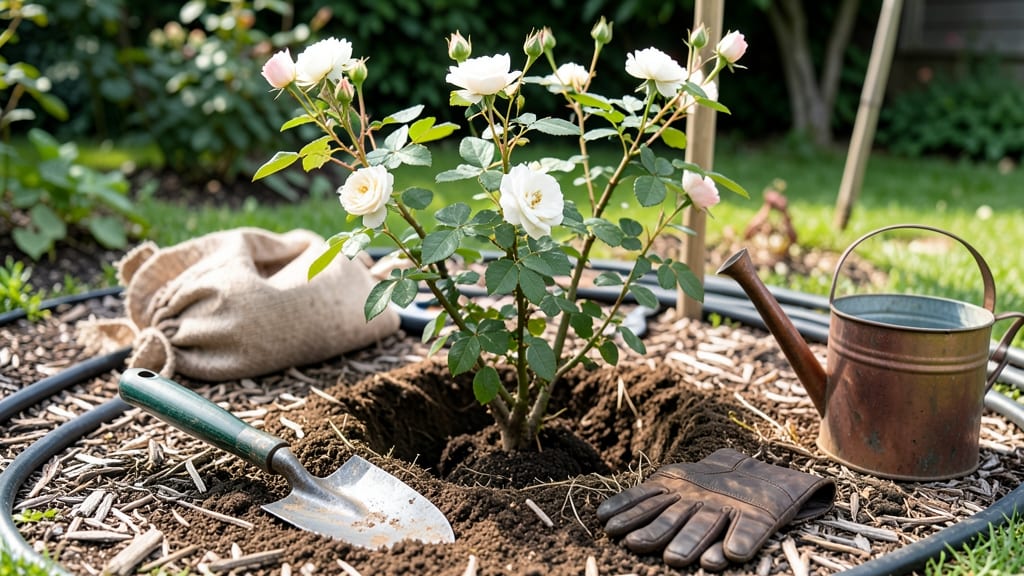
Transplanting roses at the right time means the difference between thriving bushes and struggling survivors. 🌹 I've moved roses in both spring and fall, and the dormant season timing—either late fall or early spring—is when roots establish strongest with minimal stress.
The key isn't just when you dig, but how you prepare the soil, prune the roots, and nurse them through the first critical weeks.
Start by choosing a spot with full sun and amended soil—roses hate soggy roots but love nutrients. You'll need sharp pruners, a shovel, and a wheelbarrow for moving. The real secret? Pruning one-third of the top growth and trimming long roots before transplanting.
Water deeply the day before moving, then keep soil moist (not soggy) for 4-6 weeks after replanting. This simple routine turns transplant shock into new growth.
📚 In This Guide
- What you need
- Instructions
- Tips and common mistakes
- Wrapping up and next steps
What you need
- ● Garden gloves (1 pair) – Protect your hands from thorns and dirt.
- ● Pruning shears or sharp bypass pruners – For trimming dead or damaged canes (clean blades are a must!).
- ● Shovel or spade – A digging shovel (18–24 inches wide) for lifting bushes and a transplant spade (for precision).
- ● Garden fork or trowel – Helps loosen compacted soil around roots.
- ● Wheelbarrow or large bucket – For hauling soil, plants, or tools (at least 2–3 gallons capacity).
- ● Watering can or hose with gentle nozzle – Keep roses hydrated before, during, and after transplanting.
- ○ Compost or well-aged manure (5–10 gallons) – Amends soil with nutrients (optional but highly recommended).
- ● Mulch (straw, pine bark, or shredded leaves) (2–3 inches depth) – Retains moisture and regulates soil temperature.
- ● Root stimulator or mycorrhizal fungi – Boosts root growth post-transplant (follow package instructions).
- ● Plant support stakes or cages – If your roses need extra stability after moving.
- ● Soil test kit – Ensures your new location has the right pH (6.0–6.5 for roses).
- ● Anti-transplant shock spray – Contains seaweed extract or beneficial microbes to reduce stress.
- ● Measuring tape – Marks spacing (18–36 inches apart, depending on rose variety).
Step-by-step instructions for transplanting rose bushes
Here's the method I trust to move roses with minimal stress and maximum root establishment.
🪴 Step 1: Prepare the New Location and Dig the Hole
Choose a spot with 6+ hours of direct sunlight and well-draining soil—roses despise soggy roots. Mark the planting area and dig a hole twice as wide as the root ball but only as deep as the container's height. This prevents burying the graft union (the swollen area near the base) too deeply, which causes disease.
Loosen the soil at the bottom of the hole with a garden fork to encourage root penetration. Mix in 2-3 inches of compost or aged manure into the native soil to enrich it without overwhelming the roots. The goal is to create a crumbly, aerated environment that mimics the rose's ideal growing conditions.
✂️ Step 2: Prune and Prepare the Rose Bush
Water the rose thoroughly the day before transplanting so the root ball stays intact when you remove it. Prune back any damaged or weak canes to 12-18 inches tall—this reduces stress and focuses energy on root growth. Use clean, sharp shears to make cuts at a 45-degree angle just above an outward-facing bud.
Gently loosen the outer edges of the root ball with a spade or your fingers if it's in a container. For bare-root roses, soak the roots in water for 1-2 hours before planting to rehydrate them. The roots should look plump and flexible, not dry or brittle—this is your signal they're ready to establish in their new home.
💧 Step 3: Plant and Water Deeply
Position the rose in the hole so the graft union sits 1-2 inches above soil level. This protects it from soil-borne diseases while still allowing it to breathe. Backfill with the amended soil, tamping it lightly every 2 inches to eliminate air pockets. The hole should be filled to the rim, leaving no gaps around the roots.
Water the rose immediately after planting with 1-2 gallons of water to settle the soil and eliminate air pockets. The soil should look evenly moist but not waterlogged. Mulch the base with 2-3 inches of organic mulch, keeping it 6 inches away from the stem to prevent rot. This conserves moisture and regulates soil temperature.
☀️ Step 4: Provide Aftercare for Strong Establishment
Keep the soil consistently moist for the first 4-6 weeks—water deeply when the top 1-2 inches of soil feel dry. Avoid overhead watering, which can spread disease. A soaker hose or drip irrigation system delivers water directly to the roots without wetting the foliage.
Fertilize lightly with a balanced rose fertilizer (10-10-10) after 6-8 weeks to support new growth. Avoid heavy feeding immediately after transplanting—it stresses the plant. Watch for new leaves emerging from the base; this is your sign the roots are actively growing and the rose is adapting to its new location.
Tips & tricks for perfect rose transplanting
Transplanting roses successfully isn't just about digging a hole—it's about creating the perfect conditions for roots to thrive. Here's what I've learned after moving dozens of roses without losing a single one.
Soil Preparation Secret: The 2-3 inches of compost you mix into the hole isn't just filler—it's the difference between a struggling rose and one that thrives. I always test the soil first with a simple pH kit (aim for 6.0-6.5) and adjust with lime if needed. The goal is to mimic the rose's original growing conditions as closely as possible. The aerated, nutrient-rich soil helps roots spread quickly, which is why you'll see new growth within 6-8 weeks.
Timing Strategy: The 1-2 hour soaking time for bare-root roses is non-negotiable—it's what makes the difference between roots that are ready to establish and ones that wilt. I've seen gardeners skip this step and end up with roses that take twice as long to recover. Pro tip: Soak the roots in a bucket of water with a handful of seaweed fertilizer for extra nutrients during this critical rehydration period.
Graft Union Protection: Positioning that graft union 1-2 inches above soil level is crucial—it's the rose's Achilles' heel. I've seen too many gardeners bury it too deep, which leads to rot and disease. Use a small stake marked at the correct height as a reference when planting. This simple trick ensures your rose maintains its hybrid vigor and disease resistance for years to come.
Watering Wisdom: That initial 1-2 gallons of water isn't just about settling the soil—it's about creating a moisture reservoir that encourages roots to grow outward rather than upward. After planting, I always water again at dusk the next day to maintain consistent moisture. The mulch layer helps, but you'll still need to check soil moisture daily during the first week, especially in hot weather.
Pro Tips for Transplant Rose Bushes
- Transplanting roses successfully isn't just about digging a hole—it's about creating the perfect conditions for roots to thrive.
- Soil Preparation Secret: The 2-3 inches of compost you mix into the hole isn't just filler—it's the difference between a struggling rose and one that thrives.
- Timing Strategy: The 1-2 hour soaking time for bare-root roses is non-negotiable—it's what makes the difference between roots that are ready to establish and ones that wilt.
Frequently asked questions
Got questions about transplanting your rose bushes? You’re not alone! Here are some of the most common concerns—plus expert answers to help you succeed.
When is the best time to transplant roses—spring or fall?
The ideal window is early spring (before buds swell) or early fall (6 weeks before frost). Spring lets roots establish before summer heat, while fall avoids winter stress. Avoid transplanting during extreme temps or peak blooming seasons.
Can I transplant roses in summer? What are the risks?
Summer transplants are possible but risky due to heat and drought stress. If you must, do it on a cloudy day, provide deep shade for 2–3 weeks, and water daily. Roses struggle to recover from shock in high temps—fall or spring are far safer bets!
How do I know if my rose bush is ready to transplant?
Look for these signs:
- Healthy, non-flowering canes (prioritize 2–3 year old wood).
- Roots growing beyond the current pot/soil line (root-bound).
- No pests/diseases (like black spot or aphids) on leaves.
What if my transplanted rose leaves turn yellow or wilt?
Yellow leaves often mean transplant shock or overwatering. Check these fixes:
- Reduce watering slightly (let soil dry 1 inch deep between drinks).
- Apply a balanced fertilizer (10-10-10) 4–6 weeks post-transplant.
- Prune 1/3 of the canes to redirect energy to root growth.
Can I transplant roses in containers? What’s the best pot size?
Yes! Containers work well for dwarf roses or small varieties. Use pots at least 18–24 inches deep with drainage holes. Add compost-rich potting mix (avoid garden soil) and replant every 2–3 years to refresh roots. Dwarf roses thrive in 12-inch pots.
What’s the best way to divide a large rose bush for transplanting?
Use a clean, sharp spade to slice the root ball into sections, ensuring each has 3–5 canes and healthy roots. Replant divisions immediately in amended soil. Water deeply and mulch to retain moisture. Avoid dividing in peak heat—opt for spring or fall.
Wrapping up and next steps
Transplanting rose bushes can feel like a big task, but with the right timing—spring or fall—and these step-by-step tips, you’ll give your roses the best shot at thriving in their new home. 🌱 Remember, patience and preparation are key, whether you’re dividing overgrown bushes or relocating them for better sunlight.
Now that you’re armed with the know-how, grab your gloves, dig in, and watch your roses reward you with stunning blooms all season long!
🌟 Next Steps:
- Monitor progress—Keep an eye on your transplanted roses for the first few weeks, ensuring they’re well-watered and free from stress.
- Prune & fertilize—Once established, trim dead growth and feed your roses to encourage vibrant growth.
- Share your success!—Snap a photo of your thriving roses and tag us—we’d love to see your green thumb in action. 📸