
Pruning
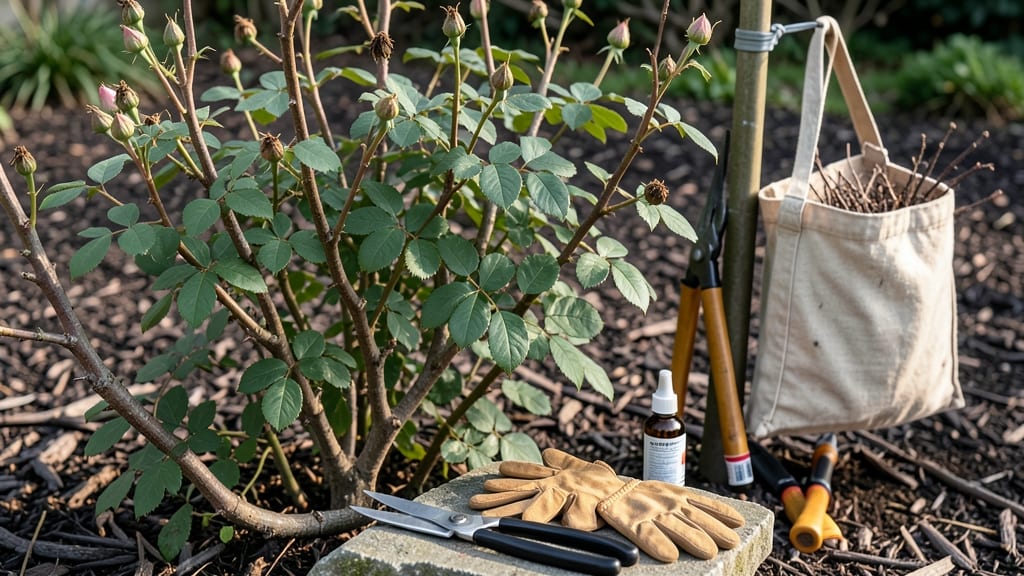
February’s crisp air is the perfect time to prune your rose bushes—when they’re dormant but not yet pushing new growth. ✂️ I’ve learned the hard way that cutting too early risks frost damage, while waiting too long means missing the prime window for shaping bushes that’ll explode with blooms come spring.
The key is working on a dry, frost-free day when temps are above 35°F, and using sharp pruners to make clean cuts just above an outward-facing bud. Most roses need one-third of their height removed, but hybrid teas and floribundas often need even more aggressive pruning.
I always start by removing dead, diseased, or crossing branches first—this opens up the center for better airflow and sunlight.
What you’ll end up with is a bush that looks like a well-groomed sculpture, not a tangled mess. The right cuts encourage stronger canes, more buds, and fewer pests hiding in dense foliage.
By late spring, you’ll see fresh red shoots emerging within 10-14 days, with the first blooms arriving 4-6 weeks after pruning—worth every snip.
Warmer climates (Zones 8-10) can prune a little later, while colder zones (3-7) should finish by early March. The worst mistake? Pruning into new growth or leaving stubs—both lead to weak blooms. Grab your gloves and let’s get those bushes ready for their best season yet!
📚 In This Guide
- What you need
- Instructions
- Tips and common mistakes
- Wrapping up and next steps
What you need
- ● Bypass pruners – Sharp, clean pruners (avoid anvil pruners—they can crush stems). Quantity: 1 pair (or 2 if you have multiple bushes).
- ● Loppers – For thicker branches (½" to 1½" diameter). Quantity: 1 pair.
- ● Hand saw – For stubborn, thick branches (1½" or larger). Quantity: 1.
- ● Disinfectant (70% isopropyl alcohol or bleach solution) – To sterilize tools between cuts and prevent disease spread.
- ○ Garden gloves – Heavy-duty gloves (optional but recommended to protect from thorns and debris).
- ○ Pruning sealant (optional but helpful) – For sealing larger cuts (½" or wider) to prevent disease. Quantity: Small bottle or tube.
- ● Garden twine or rubber tree ties – To secure stakes if you’re training or supporting new growth. Quantity: Small roll.
- ● Buckets or bags – For collecting pruned branches and debris. Quantity: 1-2.
- ● Pruning shears for small trimming – For delicate adjustments on smaller stems.
- ● Hose or spray bottle – To rinse tools and clean cuts if needed.
- ● Marking spray or chalk – To label cuts or identify branches to remove.
- ● Compost bin or mulch – To recycle pruned branches into nutrient-rich compost.
- ● Safety glasses – If you’re dealing with large, thorny bushes or debris.
Step-by-Step guide to pruning rose bushes in February
Here’s how I transform my roses each winter—these cuts set the stage for lush, healthy blooms by spring.
✂️ Step 1: Gather Your Tools and Prep the Workspace
Start by cleaning and sharpening your pruning shears and loppers—dull blades tear stems and invite disease. I spray everything with 70% isopropyl alcohol first to sterilize, then wipe dry. Lay out a tarp or drop cloth underneath the bush to catch debris and make cleanup easier. February’s crisp air is ideal for pruning because the roses are dormant, but work on a dry, sunny day to avoid spreading moisture-borne pathogens.
Wear gloves to protect against thorns and keep your hands clean. I like to wear long sleeves too—those roses can scratch! Check your tools for rust or wear; if your loppers feel wobbly, replace them. A sturdy step stool helps reach higher branches safely without straining.
🌿 Step 2: Identify and Remove Dead or Diseased Wood
Scan the bush for blackened, mushy, or hollow stems—these are dead or diseased and need immediate removal. Cut back to the healthiest outward-facing bud below the damage, making your cut at a 45-degree angle about ¼ inch above the bud. This angled cut helps water run off instead of pooling on the bud.
Look for cankers (sunken, discolored areas) or signs of fungal infection like powdery mildew. If you find any, prune 6 inches below the affected area to ensure you’ve removed the entire infected section. Bag the debris and dispose of it in the trash—not the compost—since diseased material can reinfect your garden.
✂️ Step 3: Shape the Bush and Thin Out Crowded Branches
Step back and visualize the bush’s natural shape. Aim for an open center with branches spaced 6-8 inches apart—this improves airflow and sunlight penetration, which prevents fungal issues. Start by removing crossing branches (where two stems rub together) and weak, spindly growth that’s thinner than a pencil. Cut these back to a strong outward-facing bud.
For hybrid teas and floribundas, leave 3-5 strong canes per bush, cutting the oldest ones back to the ground. For climbers and shrub roses, thin to 4-6 main branches, pruning to encourage new growth from lower buds. Avoid leaving stubs—always cut just above a bud or branch junction.
☀️ Step 4: Prune for Spring Growth and Bloom Structure
Now focus on the remaining branches. For hybrid teas, cut back last year’s blooms to just above a strong outward-facing bud, about ¼ inch above. This encourages new growth that will produce next year’s flowers. For shrub roses, prune to half their height to stimulate bushier growth and more blooms.
Watch for water sprouts (thin, upright shoots growing from the base or along branches)—these sap energy from the plant. Snip them off at the base. If a branch is too weak to support itself, shorten it slightly to prevent breakage. After pruning, spray the cuts with fungicide to protect against infection, especially in damp climates.
🪴 Step 5: Clean Up and Apply Post-Pruning Care
Rake up all fallen leaves and debris from under the bush—this removes overwintering pests and fungal spores. I like to mulch the base with 2-3 inches of compost or aged bark, keeping it 6 inches away from the trunk to prevent rot. Water deeply but lightly to settle the mulch without soaking the roots.
Finally, give your roses a balanced fertilizer (like 10-10-10) to replenish nutrients lost during pruning. Avoid high-nitrogen fertilizers now—they encourage leafy growth at the expense of blooms. In 2-3 weeks, new growth should emerge from the buds you left behind. If not, check for signs of frost heave or hidden pests.
Tips & tricks for pruning rose bushes in February
Here's what I've learned after pruning my roses for over a decade—these tricks make all the difference for healthy spring blooms.
Tool Prep Matters: Don't skip sterilizing your tools with 70% isopropyl alcohol before Step 1. I've seen fungal infections spread just from using dirty shears. Also, check your loppers for rust—they can leave jagged cuts that heal poorly. A few minutes of prep prevents weeks of frustration later.
Bud Direction is Everything: When making cuts in Steps 2 and 4, remember the "outward-facing bud" rule. The new growth will follow the direction of the bud you leave behind. Cutting at a 45-degree angle about ¼ inch above the bud isn't just tradition—it prevents water from pooling and causing rot.
Prune by Type: Hybrid teas need different treatment than shrub roses. For hybrid teas in Step 4, focus on removing last year's blooms back to strong buds, while shrub roses should be cut back to half their height. I always label my bushes so I don't mix them up—this simple step prevents over-pruning or under-pruning.
Frost Heave Watch: After pruning in Step 5, keep an eye out for frost heave—when frozen soil pushes roots upward. If you notice the plant looking tilted or roots exposed, gently push it back down and add more mulch. This is especially important in colder climates where February nights can still be chilly.
Pro Tips for Prune Rose Bush February
- Here's what I've learned after pruning my roses for over a decade—these tricks make all the difference for healthy spring blooms.
- Tool Prep Matters: Don't skip sterilizing your tools with 70% isopropyl alcohol before Step 1.
- Bud Direction is Everything: When making cuts in Steps 2 and 4, remember the "outward-facing bud" rule.
Frequently asked questions
Got questions about pruning your rose bushes in February?
You’re not alone! Here are the most common queries—and clear answers—to help you tackle dormant-season pruning like a pro.
Can I prune roses in February even if it’s still cold?
Yes! February is ideal for pruning dormant roses (when temps are consistently above freezing). Wait until a mild day (30–50°F) to avoid stressing the plant. If frost is forecasted, hold off until after the last freeze—healthy roses bounce back faster with proper timing!
What if my roses are still covered in snow or ice?
Never prune when roses are frozen or snow-covered—it can damage tender canes. Wait until the ground thaws and the bush dries out (usually late February in most zones). A quick shake of the branches will tell you if they’re ready. Patience pays off! →
Should I remove ALL the dead wood, or leave some?
Aim to cut back dead, diseased, or crossing branches to ¼-inch above a bud or outward-facing growth. Leave 3–5 strong canes for hybrid teas/floribundas, and 5–7 for shrub roses. Over-pruning stresses the plant—think "less is more" for February!
Will pruning in February attract pests or diseases?
Not if you sterilize tools with rubbing alcohol and make clean cuts! Pruning in winter reduces hiding spots for pests (like aphids) and removes infected canes before spring. Just avoid pruning if rain is forecasted—wet tools spread bacteria faster.
What if I miss February? Can I prune later?
Yes, but timing matters! Light pruning (removing deadwood) can happen anytime, but heavy pruning should wait until after the first blooms in spring. Late February is prime, but don’t stress—even a messy prune is better than none!
Pro Tip:
Label your cuttings! If you’re propagating from pruned canes, dip them in rooting hormone and plant in pots with perlite. By spring, you might have free rose bushes—just don’t forget where you buried them!
Wrapping up and next steps
Pruning your rose bushes in February is a game-changer for vibrant spring blooms! By trimming during dormancy, you encourage healthier growth, better airflow, and stunning flowers. Remember to use sharp tools, follow the ⅓ rule, and clean up debris to prevent disease.
Now that you’re armed with the know-how, grab those pruners and get ready to transform your garden! Start with just one bush to build confidence, and soon, you’ll be a pruning pro. Happy gardening—your roses will thank you! 🌸✂️