
Planting
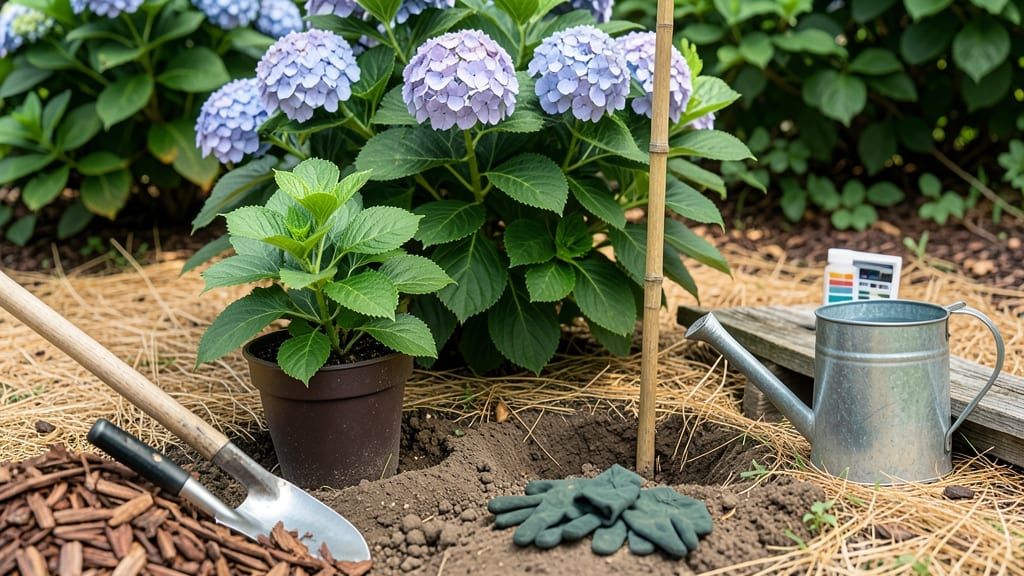
The best place to plant a hydrangea bush isn’t where you think—it’s where the light dances just right. 🌿 I learned this the hard way when my first hydrangea wilted under harsh afternoon sun, its leaves crisping like forgotten parchment.
The secret lies in morning sunlight and afternoon shade, a balance that keeps blooms vibrant and leaves lush without scorching.
Your hydrangea thrives in moist, well-draining soil with a touch of acidity (think pine mulch or peat moss). Space plants 3–5 feet apart—crowding leads to competition, and your bushes will fight for nutrients instead of blooming.
In urban areas, watch for reflected heat from buildings or pavement, which can bake roots even in partial shade.
By mid-summer, you’ll see the payoff: bold, long-lasting blooms that outshine store-bought bouquets. The key is observing your yard’s microclimate—windy spots need shelter, while rural areas might handle more sun. I’ve grown hydrangeas in zones 5–9, and the right spot makes all the difference.
Now, here’s the plot twist: blue vs. pink blooms depend on soil pH. Test it first—alkaline soil turns flowers pink, acidic keeps them blue. The best spot isn’t just about sun; it’s about creating the perfect stage for your hydrangea’s star performance.
📚 In This Guide
- What you need
- Instructions
- Tips and common mistakes
- Wrapping up and next steps
What you need
- ● Hydrangea bush: Choose a healthy, nursery-grown plant (bare-root or potted). Pro tip: 💡 Opt for varieties like Endless Summer or Nikko Blue for stunning blooms!
- ● Garden trowel or spade: A sturdy, medium-sized trowel (8-12 inches) for digging holes.
- ● Garden gloves: A pair of durable, breathable gloves to protect your hands.
- ● Pruning shears: Sharp, clean shears for trimming dead or overgrown branches.
- ○ Mulch (optional but recommended): 2-3 inches of organic mulch (e.g., shredded bark, pine straw, or compost) to retain moisture and regulate soil temperature.
- ○ Organic fertilizer (optional): A slow-release, balanced fertilizer (10-10-10 or similar) to give your hydrangea a nutrient boost.
- ● Watering can or hose with a gentle spray nozzle: For hydrating the plant after planting.
- ● Location: A spot with partial shade (4-6 hours of sunlight daily) or morning sun and afternoon shade. Avoid harsh afternoon sun in hot climates.
- ● Soil type: Well-draining, slightly acidic soil (pH 5.5-6.2). Test your soil or amend with peat moss, compost, or sulfur if needed.
- ● Space: At least 3-5 feet of clearance around the bush for airflow and growth (varies by variety).
- ● Climate: Hydrangeas thrive in USDA zones 3-9. Adjust planting time based on your local frost dates (spring or fall).
- ● Soil pH test kit: To monitor and adjust acidity for vibrant blooms (blue or pink flowers!).
- ● Epsom salt (magnesium sulfate): A handful mixed into the soil can enhance green foliage and flower production.
- ● Stakes or plant supports: For young or top-heavy hydrangeas in windy areas.
- ● Drip irrigation system: For consistent moisture, especially in dry climates.
Step-by-step guide to choosing the perfect spot for your hydrangea bush
Planting hydrangeas in the right location transforms them from average shrubs into showstopping garden stars.
🌿 Step 1: Scout for Morning Sun and Afternoon Shade
Hydrangeas thrive with 4-6 hours of morning sunlight followed by afternoon shade, especially in hotter climates. I always look for locations where the bush will receive gentle morning rays but escape the harsh afternoon sun that can scorch leaves and stress roots. A spot near a tall tree or building that provides natural shade after 11 AM works perfectly.
Test your site by observing how sunlight moves across the area throughout the day. If your yard gets intense afternoon sun, consider planting hydrangeas near a north-facing wall or under a deciduous tree that hasn't yet leafed out in spring. Hydrangeas will reward you with larger blooms and healthier foliage when they're not fighting heat stress.
☀️ Step 2: Test Soil Drainage and Moisture Retention
Hydrangeas demand well-draining but consistently moist soil—think rich, loamy garden soil with a slightly acidic pH between 5.2 and 6.2. I dig a hole twice as wide as the root ball and fill it with a mix of native soil, compost, and peat moss to improve both drainage and moisture retention. Stick your finger into the soil after watering; if it feels damp 1-2 inches down after a day, your spot is ideal.
If your soil drains too quickly (like sandy loam), amend it with 20% organic matter like composted leaves or aged manure. If it stays soggy, raise the planting mound slightly to prevent root rot. Hydrangeas hate "wet feet," so avoid low-lying areas where water pools after rain. A slight slope or raised bed ensures excess water flows away naturally.
🪴 Step 3: Plan Spacing for Airflow and Future Growth
Hydrangeas mature into 3-6 foot wide shrubs, so space them 4-6 feet apart to allow airflow and prevent fungal diseases. I measure the distance from the center of one plant's root ball to the next, ensuring branches won’t brush against each other as they fill out. This spacing also makes maintenance easier—you can prune, water, and fertilize without disturbing neighboring plants.
Consider mature size when choosing a location. A Bigleaf hydrangea (like 'Endless Summer') needs more room than a Panicled hydrangea (like 'Limelight'). If planting near a fence or wall, leave at least 3 feet of clearance so branches don’t get crushed or blocked from sunlight. Hydrangeas with restricted growth often produce smaller blooms and weaker stems.
⏰ Step 4: Time Your Planting for Optimal Root Establishment
Plant hydrangeas in early spring or early fall when temperatures are mild (50-70°F) and the ground isn’t frozen. I avoid summer planting because the heat stresses young roots, and winter planting risks frost damage before roots establish. If you must plant in summer, do it on a cool, overcast day and water deeply every 2-3 days until roots settle in.
After planting, water thoroughly to eliminate air pockets and encourage root contact with the soil. Mulch with 2-3 inches of organic mulch (like shredded bark) to retain moisture and regulate soil temperature. Check moisture weekly by lifting a corner of the mulch—soil should stay evenly moist but not waterlogged for the first 4-6 weeks while roots establish.
💧 Step 5: Monitor and Adjust for Long-Term Success
Once established, hydrangeas need 1-1.5 inches of water weekly, either from rain or supplemental watering. I set a rain gauge nearby to track moisture—if it hasn’t rained in a week, I water deeply at the base of the plant. Avoid overhead sprinkling, which can promote fungal diseases like powdery mildew. Instead, use a soaker hose or drip irrigation to deliver water directly to the roots.
Watch for signs of stress: yellowing leaves often mean too much sun or poor drainage, while drooping blooms signal underwatering. If your hydrangea’s leaves turn crispy at the edges, it’s getting too much afternoon sun. Move it to a shadier spot or provide afternoon shade with a lightweight fabric shade cloth during peak heat. With the right location, your hydrangea will reward you with vibrant blooms for years to come.
Tips & tricks for perfect hydrangea planting
These game-changing insights will help you transform your hydrangea from a struggling shrub into a lush, blooming superstar.
Sunlight Strategy: The 4-6 hours of morning sunlight is non-negotiable for vibrant blooms, but here's what nobody tells you—hydrangeas actually prefer the shade to arrive by 11 AM sharp. I've seen dramatic differences when plants get even just 30 minutes of extra afternoon sun. Test your spot by marking sun patterns with a white cloth for a week before planting. If the cloth shows scorching after 11 AM, that's your warning sign. For southern exposures, consider a lightweight shade cloth (30-50% coverage) during peak summer heat to protect delicate leaves.
Soil Science: While the pH range of 5.2-6.2 is critical, the texture matters just as much. I've learned the hard way that even with perfect pH, sandy soil drains too quickly, while clay holds too much moisture. The ideal mix should feel like a damp sponge—squeeze it gently and it should hold its shape but not drip. For heavy clay, create a raised bed with 20% perlite mixed into your native soil. For sandy soil, incorporate 30% coconut coir to improve moisture retention. Always test your amended soil by sticking your finger 1-2 inches down after watering—it should feel consistently damp but not soggy.
Spacing Secrets: The 4-6 feet spacing recommendation is perfect for most varieties, but here's my pro move: measure from the outer edge of the root ball, not the center. This ensures branches won't touch as they fill out. For container-grown hydrangeas, add 2 extra inches to your spacing since their root balls are more compact. I've also found that planting near evergreen trees can be risky—their year-round shade can stunt growth. Instead, opt for deciduous trees that provide seasonal shade while allowing winter sun exposure.
Planting Timing: While early spring and fall are ideal, I've had great success with summer planting if you follow this exact method: plant on a cool, overcast day between 4-7 PM when temperatures are naturally lower. Water immediately with 1 gallon of water mixed with a root stimulator, then repeat every 2-3 days for the first 4-6 weeks. This mimics the natural rainfall patterns and helps roots establish before heat stress sets in. The key is keeping soil evenly moist during this critical period—never let it dry out completely.
Pro Tips for Best Place To Plant Hydrangea Bush
- These game-changing insights will help you transform your hydrangea from a struggling shrub into a lush, blooming superstar.
- Sunlight Strategy: The 4-6 hours of morning sunlight is non-negotiable for vibrant blooms, but here's what nobody tells you—hydrangeas actually prefer the shade to arrive by 11 AM sharp.
- Soil Science: While the pH range of 5.2-6.2 is critical, the texture matters just as much.
Frequently asked questions
Got questions about planting your hydrangea bush? You’re not alone!
Here are answers to the most common concerns—so you can confidently pick the perfect spot and watch those blooms thrive.
How much sunlight does a hydrangea bush really need?
Hydrangeas are flexible! Most varieties thrive in partial shade (4–6 hours of sunlight daily), but some—like PeeGee or Limelight—tolerate full sun (with extra water). Avoid harsh afternoon rays in hot climates to prevent leaf scorch.
Can I plant hydrangeas in containers instead of the ground?
Containers work great for potted hydrangeas, but choose a large pot (at least 15 gallons) with drainage holes. Use well-draining soil and repot every 2–3 years. Just remember: container plants dry out faster—water deeply 2–3 times weekly in summer.
What’s the best time of year to plant hydrangeas?
Spring or early fall are ideal! Plant in spring (after the last frost) or fall (6 weeks before the first frost). Avoid extreme heat or cold—roots need time to establish before stress. Pro tip: Soak roots in water for 1–2 hours before planting for a head start!
Why are my hydrangea leaves turning yellow or brown?
Yellow leaves often mean overwatering or poor drainage, while brown edges could signal underwatering or sunburn. Check soil moisture (top 1–2 inches should be dry) and adjust care. If leaves curl, it might be pests—inspect for aphids or spider mites!
Can hydrangeas grow near trees or shrubs?
Not ideal! Trees compete for water/nutrients, and their roots can strangle hydrangeas. Keep them at least 3–5 feet away from large trees. For shrubs, maintain a 2–3 foot buffer to avoid root crowding. If you must plant nearby, mulch heavily to protect roots.
Wrapping up and next steps
Choosing the perfect spot for your hydrangea bush is all about balancing sunlight, soil, and space—and now you’ve got the expert tips to make it thrive! 🌸 With the right conditions, your hydrangea will reward you with stunning blooms year after year. Ready to transform your garden?
Your next step? Grab your gardening gloves, pick a sunny (but not scorching) patch, and get planting! Watch those petals pop and enjoy the beauty you’ve cultivated. Happy gardening! 🌿