
Planting
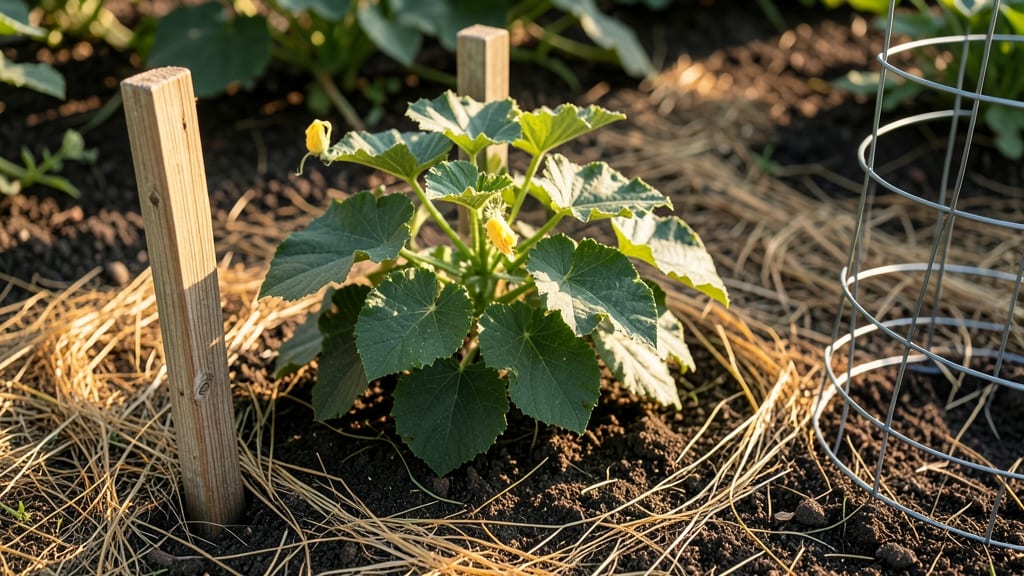
Proper bush cucumber plant spacing makes the difference between a handful of sad, stunted fruits and a bucketful of crisp, vine-ripened cucumbers. 🌱 I learned this the hard way when my crowded patch produced only a few bitter cucumbers—until I redid the spacing and watched the plants explode with productivity.
The right distance isn’t just about fitting more plants; it’s about airflow, sunlight, and giving roots room to thrive. Bush cucumbers need 18-24 inches between plants in rows, with 3 feet between rows.
This might seem generous, but crowded plants compete for nutrients, trap moisture (inviting disease), and produce smaller, misshapen fruits. If you’re working with containers, aim for one plant per 5-gallon pot—they’ll still reward you with abundant yields without the space demands.
What you’ll end up with is a thriving patch where every plant gets its fair share of sun and air circulation. The cucumbers grow straighter, ripen faster, and stay free of powdery mildew—the bane of tight quarters. Plus, harvesting becomes a breeze when you’re not wrestling with tangled vines.
For small gardens or containers, consider vertical trellising to maximize space without sacrificing yield. Just remember: less is more when it comes to spacing, and your future self will thank you at harvest time.
📚 In This Guide
- What you need
- Instructions
- Tips and common mistakes
- Wrapping up and next steps
What you need
- ● Bush cucumber seeds or seedlings: Choose disease-resistant varieties like ‘Bush Champion’ or ‘Sweet Success.’ Aim for 3–5 plants if growing in containers or 10–15 plants for a small garden bed.
- ● Well-draining potting mix or garden soil: Use a high-quality, fertile mix (e.g., 60% topsoil, 20% compost, 20% perlite/sand) for containers. For in-ground planting, amend soil with 2–3 inches of compost.
- ○ Containers (optional but handy): If growing in pots, use 5-gallon containers or larger (minimum 12–18 inches deep) with drainage holes.
- ● Fertilizer: Start with a balanced, water-soluble fertilizer (10-10-10) at planting.
- ● Switch to a low-nitrogen, high-phosphorus formula (5-10-10) during flowering/fruiting.
- ● Mulch: 2–3 inches of straw or shredded leaves to retain moisture and suppress weeds.
- ● Watering can or hose with a gentle spray nozzle: Bush cucumbers need 1–1.5 inches of water weekly (drip irrigation works too!).
- ○ Garden twine or stakes (optional): Lightweight 3–4 foot stakes or twine to support vining varieties (even if "bush," some may sprawl).
- ● Pruning shears: Small, sharp shears for trimming excess foliage or dead leaves.
- ● Row covers or shade cloth (30–50% shade): Protects young plants from pests and intense sun.
- ● Compost tea or liquid seaweed: Boosts soil microbes and plant health.
- ● Plant markers: Label seeds/seedlings to track varieties and spacing.
- ● Gloves: Keeps hands clean while handling soil or prickly vines.
Precision plant spacing for bush cucumbers: maximizing yields
Perfect spacing ensures healthy vines, proper air circulation, and bumper harvests—here's how to get it right.
🌱 Step 1: Understand Bush Cucumber Growth Habits
Bush cucumbers are bred to stay compact, typically reaching 3-4 feet tall and 2-3 feet wide at maturity. Unlike vining varieties, they don't sprawl, but their leaves still need room to breathe. The key is balancing plant density with airflow to prevent fungal diseases like powdery mildew, which thrives in crowded conditions.
I always check the seed packet for specific spacing recommendations—some compact varieties like 'Bush Champion' can handle 18-24 inches apart, while others need slightly more room. If you're planting from transplants, look for the variety tag on the pot for exact spacing guidance. This prevents overcrowding while maximizing your garden's square footage.
📏 Step 2: Measure and Mark Planting Spots
Use a tape measure or spacing tool to mark your planting grid. For a standard 24-inch spacing, place a stake or small rock every 2 feet in both directions. This creates a clear visual guide that prevents accidental overcrowding—something I've seen even experienced gardeners do when planting in excitement.
For a 4-plant yield, arrange your marks in a square or rectangular pattern. If you're working with raised beds, measure from the center of each plant to the next. The goal is to avoid planting too close to bed edges, where roots may dry out faster. I like to sketch a quick layout first to visualize the spacing before digging.
🌿 Step 3: Plant at the Correct Depth and Orientation
Dig holes just deep enough to accommodate the root ball without burying the stem. For bush cucumbers, this is typically 1 inch deeper than the pot's base. Gently remove the plant and place it in the hole, then fill with soil while pressing lightly to eliminate air pockets. The top of the root ball should sit ½ inch below soil level—this prevents stem rot while encouraging strong root establishment.
Orient plants so their strongest stems face outward. This maximizes sunlight exposure and air circulation around the plant's center, where fungal spores often collect. Water deeply after planting to settle the soil and remove any air gaps. You'll know you've done it right when the soil feels firm but not compacted around the roots.
☀️ Step 4: Adjust Spacing for Sunlight and Airflow
After planting, step back and observe how sunlight hits your cucumber patch. Bush varieties need 6-8 hours of direct sun daily, but proper spacing ensures all plants get equal exposure. If you notice one plant shading its neighbors, it's time to thin or rearrange. I've found that morning sun is ideal—it dries dew quickly, reducing disease risk.
Check airflow by holding a hand between plants. You should be able to slide it through without touching leaves. If you can't, the spacing is too tight. Proper airflow isn't just about disease prevention—it also helps regulate temperature around the plants, which bush cucumbers appreciate, especially in hot climates.
⏰ Step 5: Monitor and Maintain Spacing as Plants Grow
Bush cucumbers grow quickly, so check spacing every 2-3 weeks during the growing season. If leaves begin touching, it's time to thin or prune. Remove the weakest stems at the base, leaving the strongest growth. This prevents competition for nutrients and keeps the plant's energy focused on fruit production.
Watch for signs of overcrowding like yellowing leaves or powdery white residue on foliage—these are red flags. Adjust mulch depth to 2-3 inches around plants to retain moisture without smothering the base. Proper spacing now means fewer headaches later and a harvest that rivals commercial yields.
Tips & tricks for perfect bush cucumber spacing
These precision planting strategies will help you avoid common mistakes and maximize your harvest—trust me, the spacing makes all the difference.
Variety-Specific Spacing: Always double-check your seed packet or plant tag for exact spacing recommendations. While the standard 24-inch spacing works for most bush varieties, some like 'Bush Champion' can handle 18-24 inches, while others may need up to 30 inches. I learned this the hard way when my 'Bush Pickle' plants crowded too quickly and developed powdery mildew. The right spacing prevents this while still maximizing your garden's yield.
Visual Layout Strategy: Before digging, sketch your planting layout on paper. This helps visualize how sunlight will hit each plant throughout the day and prevents accidental overcrowding. I use a grid system where each plant gets equal exposure—this ensures all plants receive that critical 6-8 hours of direct sun mentioned in Step 4. A quick sketch takes just 5 minutes but saves hours of headaches later.
Root Ball Depth Check: When planting, verify that the top of the root ball sits exactly ½ inch below soil level—this is crucial for preventing stem rot while encouraging strong root growth. I use a small ruler to measure this depth after planting. This simple check ensures proper establishment, which directly impacts how quickly your plants mature and produce fruit.
Airflow Test: After planting, perform the "hand test" between plants: you should be able to slide your hand through without touching leaves. This simple check prevents fungal diseases that thrive in crowded conditions. I've seen even experienced gardeners miss this step, leading to powdery mildew issues later in the season. Proper airflow isn't just about disease prevention—it also helps regulate plant temperature, which bush cucumbers appreciate in hot climates.
Pro Tips for Bush Cucumber Plant Spacing
- These precision planting strategies will help you avoid common mistakes and maximize your harvest—trust me, the spacing makes all the difference.
- Variety-Specific Spacing: Always double-check your seed packet or plant tag for exact spacing recommendations.
- Visual Layout Strategy: Before digging, sketch your planting layout on paper.
Frequently asked questions
Got questions about spacing your bush cucumbers for the best harvest? You’re not alone!
Here are answers to the most common queries—so you can grow like a pro.
What’s the ideal spacing for bush cucumber plants in containers vs. garden beds?
In containers, space plants 12–18 inches apart (use 5–7 gallon pots). In garden beds, give them 2–3 feet between rows and 18–24 inches apart in a row. Containers limit root spread, so tighter spacing works—just ensure pots have drainage!
Can I plant bush cucumbers too close together if I thin them later?
Nope! Bush cucumbers hate competition—thinning later won’t fix poor spacing. Crowded plants lead to diseases, stunted growth, and bitter fruit. Stick to the spacing guidelines from the start for happy vines and plump cucumbers.
How does temperature affect bush cucumber plant spacing needs?
In hot climates (Zone 9+), space plants slightly wider (24+ inches) to reduce stress from heat and humidity. In cooler zones (Zones 3–7), you can edge closer (18 inches) since growth slows. Always check your local frost dates—bush cucumbers thrive in warmth (70–90°F)!
What if I don’t have enough space? Are there bush cucumber alternatives?
Try compact varieties like ‘Bush Champion’ or ‘Spacemaster’ (12–18" spacing). For even smaller spaces, grow dwarf varieties like ‘Patio Snacker’ in hanging baskets (12" apart). If you’re desperate, trellis regular cucumbers to save space—just give them vertical room!
My bush cucumbers look crowded—how do I fix it without harming the plants?
If you’ve already planted too close, prune aggressively:
- Remove lower leaves to improve airflow.
- Thin out weak stems at the base.
- Add mulch to reduce soil-borne diseases.
- Water deeply but less often to encourage root spread.
For next season, plan ahead—crowding is a pain to reverse!
Wrapping up and next steps
Mastering bush cucumber plant spacing is your secret weapon for a thriving, high-yield harvest! 🌱 Whether you’re a beginner or a seasoned gardener, proper spacing ensures strong vines, fewer pests, and easier maintenance.
Start small—test your soil, mark your rows, and adjust spacing based on your climate—then scale up as you gain confidence.
Ready to grow like a pro? Grab your gloves, sketch a quick planting map, and get those seeds in the ground! 🌿 Next up: Track your cucumbers’ progress and tweak care as they grow—your future harvest depends on it!