
Pests and Diseases
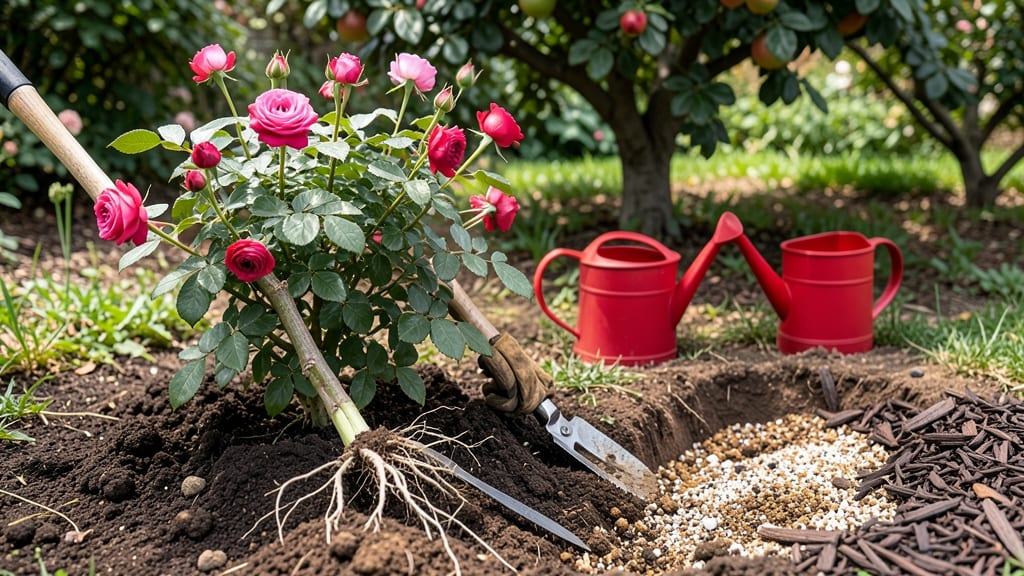
You can dig up a rose bush and replant it successfully by following the right timing and preparation: choose early spring or fall, prune back foliage, water thoroughly before and after moving, and keep roots consistently moist to reduce transplant shock.
Transplanting roses works best during their dormant periods when the plant isn't actively growing. 🌹 The key is minimizing stress—roots need time to establish in new soil without competing with leafy growth. I always recommend doing this on a cloudy day to prevent sunburn on freshly exposed roots.
For best results, dig a hole twice as wide as the root ball and amend the soil with compost to improve drainage and nutrient availability.
After replanting, stake the bush if needed and water deeply every 2-3 days for the first month. This helps the roots spread into the new soil without drying out.
Many gardeners worry about shock, but with proper care, roses often bounce back stronger in their new location—especially if you've chosen a spot with similar sunlight and soil conditions.
💡 In This Article
- Best Time of Year to Transplant Rose Bushes
- Step-by-Step Guide to Safely Moving a Rose Bush
Best time of year to transplant rose bushes
Roses thrive when transplanted during their dormant periods, which occur in early spring (just before buds swell) or fall (after foliage yellows but before hard frost).
This timing aligns with their natural growth cycles: in spring, roots begin active growth before leaves demand resources, while fall allows roots to establish before winter dormancy. ⚡ The ideal window is typically 4-6 weeks before or after your region's last frost date, when soil temperatures hover between 50-65°F—warm enough for root recovery but cool enough to prevent water stress.
Avoid transplanting during summer heatwaves or winter freezes. In summer, roses are in peak metabolic activity, making them vulnerable to transplant shock (a physiological stress response where roots struggle to adapt).
During winter, frozen ground prevents proper root establishment, and cold snaps can damage newly exposed roots. 🌱 Regional climates matter too: Southern gardeners might opt for late fall, while Northern growers should wait until early spring.
For example, roses in USDA Zone 7 (like Virginia) can handle fall transplants until mid-October, whereas Zone 4 (Minnesota) gardeners should wait until May.
The science behind this involves root growth hormones like auxin, which surge during dormancy to promote root expansion.
When you transplant at the right time, these hormones help the plant redirect energy from foliage to root development. 💫 Prune back 1/3 of the bush's height before moving to reduce water loss and focus energy on root regrowth.
This is why I always recommend trimming canes to 12-18 inches—it mimics the plant's natural pruning response and speeds up recovery.
Temperature sensitivity is another critical factor. Roots below 40°F can suffer cold damage, while soil above 80°F causes rapid moisture loss. That's why I schedule transplants on overcast days—less sunlight means slower water evaporation from exposed roots.
For container-grown roses, you have more flexibility, but even these benefit from the same seasonal timing to avoid stress.
Consider these key factors when choosing your transplant window:
- Climate zone: Adjust timing 2-4 weeks earlier in warmer zones (e.g., Zone 9) or later in colder zones (e.g., Zone 3).
- Soil condition: Wait until soil is workable (not muddy or bone-dry). Test by squeezing a handful—it should hold shape but crumble easily. 🌍
- Rose type: Hybrid teas and floribundas recover faster than climbers or old garden roses, which have deeper root systems.
What most gardeners overlook is the moon phase—while not scientifically proven, many swear by planting during the waxing moon (when gravity pulls moisture upward). I've found this works best when combined with proper watering techniques, like deep irrigation every 3-4 days for the first month post-transplant.
This mimics natural rainfall patterns and encourages root spread.