
Pruning
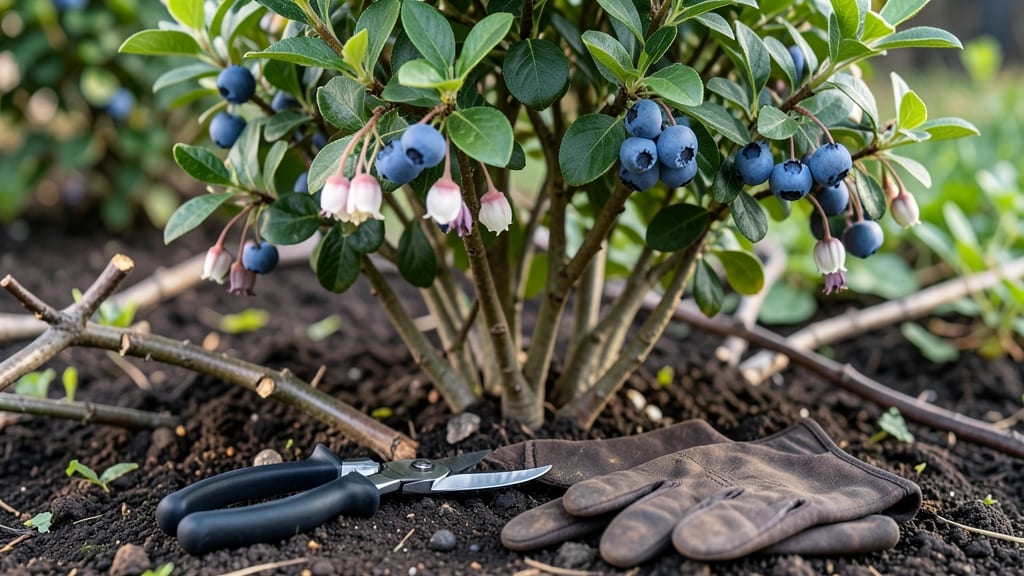
Pruning full-size blueberry bushes in winter unlocks the secret to juicy, disease-free berries next summer. 🌿 I’ve spent years watching bushes struggle—until I learned the right cuts at the right time.
The difference? More sunlight reaches the center, pests have fewer hiding spots, and your plant focuses energy on fruit, not tangled branches.
You’ll need sharp pruners, gloves, and a notebook (trust me, you’ll forget which branches you cut). The best time is late winter, just before buds swell—cold weather reduces stress on the plant.
Start by removing dead or crossing branches first; these compete for nutrients and invite rot. Then shape the bush into an open vase, keeping the center airy.
After pruning, your bush will look sparse but purposeful—like a sculpture instead of a tangled mess. Within weeks, you’ll see fresh green shoots pushing from the base, and by summer, those branches will be heavy with deep blue, sweet berries.
The key is patience: a well-pruned bush can produce for decades if you maintain this routine.
Pro tip: Mulch heavily after pruning to protect roots from spring warmth. And skip the urge to prune in summer—you’ll stress the plant when it’s already working hard to ripen fruit. Now grab those shears and let’s get to work!
📚 In This Guide
- What you need
- Instructions
- Tips and common mistakes
- Wrapping up and next steps
What you need
- ● Pruning shears or loppers: Bypass pruners (sharp, 5-7 inch blades) for smaller branches and loppers (8-10 inch blades, 15-20 inch handles) for thicker stems. Quantity: 1 pair of each.
- ● Hand pruners: Bypass or anvil-style (for precision cuts). Quantity: 1 pair.
- ● Disinfectant (70% isopropyl alcohol or bleach solution): To sterilize tools between cuts and prevent disease spread. Quantity: Small bottle or spray.
- ● Gloves: Heavy-duty, cut-resistant gloves to protect hands from thorns and sap. Quantity: 1 pair.
- ● Garden twine or rubber bands: For tying branches together if needed. Quantity: Small roll or pack.
- ● Trash bags or bucket: For collecting pruned branches and debris. Quantity: 1-2 large bags or a sturdy bucket.
- ● Saw (pruning or handsaw): For removing very thick branches (1+ inch in diameter). Quantity: 1.
- ● Ladder or step stool: If bushes are tall (6+ feet). Quantity: 1.
- ● Marking spray or flags: To label branches for future reference (e.g., canes to keep). Quantity: Small bottle or pack.
- ● Compost bin or pile: For repurposing pruned material as mulch or compost.
- ● Sunscreen and hat: If pruning on a sunny day—protect yourself from UV rays!
Step-by-step guide to pruning full-size blueberry bushes
Winter is the perfect time to restore your blueberry bushes to peak health—here’s how to prune them like a pro.
✂️ Step 1: Remove Dead or Diseased Wood First
Start by inspecting the entire bush for branches that are brown, brittle, or showing signs of disease like fungal spots or cankers. These should be cut back to the nearest healthy bud or branch junction using clean, sharp pruners. I always disinfect my tools with rubbing alcohol between cuts to prevent spreading pathogens—blueberries are particularly susceptible to fungal infections.
Look for stems that have lost their bark or feel hollow when tapped—they’re past saving. Remove these completely at the base. Healthy wood has a firm, greenish-brown interior when cut open. This step ensures your bush doesn’t waste energy on dead material, giving new growth a strong start in spring.
✂️ Step 2: Thin Out Overcrowded Branches
Blueberry bushes thrive when light and air circulate freely. Focus on removing branches that cross or rub against each other—these create wounds where disease can enter. Aim to open up the center of the bush so sunlight reaches the inner stems. I like to step back every few cuts to visualize the shape; you’re sculpting, not just hacking.
Prioritize older, woodier branches that produce fewer berries. These are typically thicker and have a rougher bark texture. Thin these out first, keeping only the most vigorous, younger stems. This encourages the bush to redirect its energy into producing fruit on the remaining branches. Never remove more than one-third of the bush’s total branches in a single year.
✂️ Step 3: Prune for Shape and Fruit Production
Blueberry bushes benefit from an open, vase-like shape that allows sunlight to reach all branches. Cut back any branches that grow inward or downward, making 45-degree cuts just above an outward-facing bud. This ensures new growth will angle outward, improving air flow and fruit exposure. I mark my cuts with a piece of twine tied around the branch first—it’s easier to see where to cut when the bush is full.
For branches that are too long or leggy, shorten them by one-third to encourage bushier growth. Focus on the outer edges of the bush to maintain its natural form. Avoid heavy pruning of fruiting wood—blueberries produce berries on 1- to 2-year-old wood, so you want to preserve these stems while still shaping the bush. Look for clusters of small, red buds; these indicate last year’s growth and should be kept.
⏰ Step 4: Clean Up and Prepare for Spring
After pruning, rake up all the debris from around the base of the bush and dispose of it in the trash—not the compost pile. Diseased branches can harbor pathogens that survive in compost. I also like to apply a 2- to 3-inch layer of mulch around the bush, keeping it 6 inches away from the trunk to prevent rot. Use organic mulch like wood chips or straw to retain moisture and suppress weeds.
Finally, give the bush a light watering if winter has been particularly dry. This helps the roots recover from the pruning stress. Avoid heavy watering right after pruning—it can wash away nutrients and encourage fungal growth. Your bush is now ready for spring, with plenty of energy to produce next year’s harvest.
Tips & tricks for pruning full-size blueberry bushes
These pro-level insights will help you prune like a seasoned horticulturist while avoiding common pitfalls that can stress your bushes.
Tool Prep Matters: Before you begin, sharpen your pruners and clean them thoroughly with rubbing alcohol—this isn't optional. I've seen fungal infections spread rapidly when tools weren't properly sanitized between cuts. For larger branches, use loppers with bypass blades to make clean cuts without crushing the wood. Always carry a small spray bottle of alcohol for quick disinfection between diseased and healthy branches.
Visual Cues for Healthy Wood: In Step 1, when identifying dead wood, look for these telltale signs: brown or blackened bark, stems that crumble when touched, and hollow centers when cut. Healthy wood should have a firm, greenish-brown interior with visible cambium layer (the thin, greenish layer just under the bark). If you're unsure, make a small test cut—healthy wood will spring back slightly when cut, while dead wood will stay flat.
Shape Strategy: For Step 3's shaping, visualize your bush as an open vase. The goal is to create a structure where sunlight can penetrate all the way to the center. When making your 45-degree cuts, aim for the bud that faces outward—this ensures new growth will naturally angle toward the sunlight. I like to step back every 5-6 cuts to check my progress; it's easy to get tunnel vision when pruning.
Mulch Application: When applying your 2- to 3-inch layer of mulch in Step 4, keep it 6 inches away from the trunk to prevent rot. Use wood chips or straw—they break down slowly and improve soil structure over time. Avoid fresh wood mulch, which can draw nitrogen from the soil and stress your bush. A light watering after mulching helps settle the material and encourages root growth without over-saturating the soil.
Pro Tips for Full Size Pruning Blueberry Bushes
- These pro-level insights will help you prune like a seasoned horticulturist while avoiding common pitfalls that can stress your bushes.
- Tool Prep Matters: Before you begin, sharpen your pruners and clean them thoroughly with rubbing alcohol—this isn't optional.
- Visual Cues for Healthy Wood: In Step 1, when identifying dead wood, look for these telltale signs: brown or blackened bark, stems that crumble when touched, and hollow centers when cut.
Frequently asked questions
Got questions about pruning full-size blueberry bushes? You’re not alone! Here are answers to the most common concerns to help you prep like a pro.
When is the best time to prune blueberry bushes?
The ideal time is late winter or early spring, before new growth begins. Prune dormant bushes (Dec–Feb in most climates) to avoid stressing the plant. If you miss winter, wait until after harvest but before summer heat sets in. Never prune in fall—it invites disease and pests.
How much should I cut back my blueberry bush?
Remove 1/3 of the oldest canes (they’re woody and unproductive) and any dead, diseased, or crossing branches. Keep the bush open for airflow—aim for a vase-like shape. Over-pruning (cutting >30%) reduces next year’s yield, so less is often more!
Can I prune blueberry bushes in summer?
Summer pruning is possible but risky. Only trim lightly to shape or remove suckers (shoots at the base). Heavy summer cuts stress the plant and may delay ripening. If you must prune, do it after harvest and keep tools sterilized to prevent bacterial infections.
What if my blueberry bush isn’t producing berries?
Poor yields often stem from lack of pruning, wrong soil pH (<3.0–5.0 is ideal), or over-fertilizing with nitrogen. First, check your pruning habits—thick canes block light. Test soil pH and amend with sulfur if needed. Also, ensure bushes get full sun (6+ hours/day) and well-draining soil.
Do I need special tools for pruning blueberry bushes?
Basic tools suffice: bypass pruners (for small branches), loppers (thicker canes), and a pruning saw for stubborn wood. Sterilize tools with rubbing alcohol between cuts to prevent disease spread. A glove (thorns!) and sharpener keep you safe and efficient.
What should I do with the pruned branches?
Dispose of diseased branches in the trash (not compost)—they spread pathogens. Healthy prunings can be mulched (chopped finely) or used as plant markers in the garden. Avoid burning them unless local laws permit (some areas restrict burning).
Wrapping up and next steps
Pruning your full-size blueberry bushes in winter isn’t just a chore—it’s the secret to healthier plants and sweeter harvests! 🌱 With the right tools, timing, and technique, you’ll encourage vigorous growth, prevent disease, and set the stage for a burst of juicy berries come summer.
Remember, consistency is key: a little effort now means big rewards later.
Ready to roll up your sleeves? Grab your pruners and start pruning! If you’re new to it, take it one bush at a time—confidence grows with practice. For even better results, bookmark this guide and revisit it next winter. Happy pruning, and here’s to your blueberry bonanza! 💙🍇