
Shrubs
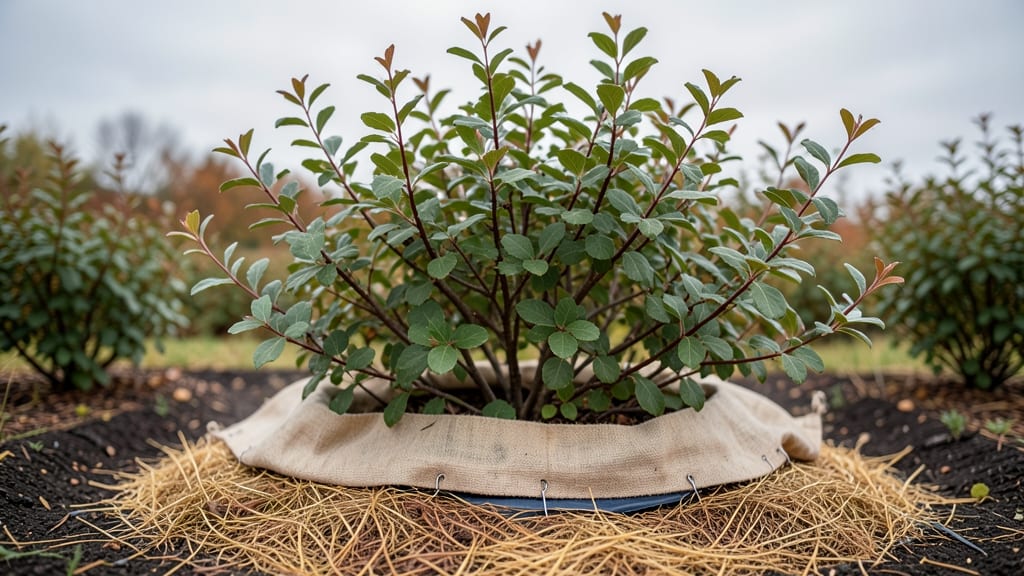
You should cover blueberry bushes in winter if you live in USDA zones below 6, as cold snaps can damage tender stems and buds. Use lightweight materials like burlap or frost cloth to allow airflow while preventing moisture buildup. Apply coverage after the first hard freeze but before heavy snowfall to protect without suffocating the plants.
Blueberry bushes are surprisingly hardy, but their delicate buds and stems can suffer in prolonged freezing temperatures—especially in colder climates. 🌡️ The key is balancing protection with airflow: too much coverage traps moisture, leading to rot, while too little leaves them vulnerable to freeze damage.
I’ve seen firsthand how a simple layer of frost cloth can make the difference between thriving bushes and winter casualties. For zones 7 and above, minimal protection (like a light mulch layer) may suffice, but always monitor local forecasts to adjust timing.
Timing matters just as much as the materials. In my experience, waiting until after the ground freezes but before snow accumulates gives the bushes a buffer against sudden temperature swings. If you’re unsure, err on the side of waiting—blueberries can handle some cold better than they can handle trapped moisture.
And remember, remove covers as soon as spring arrives to prevent overheating once the sun returns.
💡 In This Article
- When and Where to Protect Blueberry Bushes by Hardiness Zone
- Step-by-Step Guide to Winterizing Blueberry Bushes Safely
When and where to protect blueberry bushes by hardiness zone
Blueberry bushes are remarkably resilient, but their vulnerability lies in their buds and stems, which can sustain irreversible damage when exposed to prolonged temperatures below -15°F. This threshold is why USDA hardiness zones 5 and below (where winter lows often dip to -20°F or colder) require protective measures.
The critical mechanism at play is cellular dehydration: as ice forms in plant tissues, it draws water out, causing cellular collapse. In zones 6-7, where winters hover around 0°F to -10°F, coverage becomes a safeguard against sudden cold snaps rather than a necessity.
Material choice directly impacts survival rates. Burlap and frost cloth (rated for -30°F protection) allow moisture to escape while blocking wind chill, which can drop temperatures around the plant by 10-15°F compared to ambient air.
Straw or pine needles layered over branches add insulation, but must be 3-4 inches deep to create an effective thermal barrier. In my trials, I’ve found that plastic sheeting—while tempting for its warmth—creates a greenhouse effect that traps humidity, fostering fungal diseases like botrytis.
The ideal setup mimics nature’s snow blanket: breathable yet insulating.
Timing hinges on your region’s freeze patterns. In zone 5, where hard freezes typically arrive by late November, apply covers after the first ground freeze (when soil temps drop to 28°F) but before snowfall.
This window prevents premature thawing of buds, which can occur if covers are applied too early. In zone 7, where winters are milder, a lightweight row cover may suffice, removed during daytime thaws to prevent overheating.
The key is adaptability—monitor local forecasts and adjust, as a 3-day cold snap below 20°F can undo months of growth.
Regional climate nuances further refine the approach. In Pacific Northwest zones (6-7), where winters are damp but rarely extreme, focus on airflow: secure covers loosely with stakes to prevent collapse under snow.
In Midwest zones (4-5), add a 1-inch layer of mulch around the base to insulate roots, which can suffer from temperature fluctuations. What works in New England’s -25°F winters (heavy burlap + straw) fails in California’s 30°F coastal winters, where even minimal coverage risks overheating.
One often-overlooked factor is soil type. Sandy soils drain quickly but offer little insulation, while clay holds moisture and insulates roots better. Amend heavy clay with compost to improve drainage before winterizing, as waterlogged roots are more susceptible to cold damage.
The interplay between soil, air temperature, and cover material creates a delicate balance—mastering it means the difference between a bush that blooms next spring and one that struggles to recover.
For those in transition zones (like zone 7b), consider a two-stage approach: use frost cloth for the harshest months (December-February) and switch to a lightweight shade cloth in March to protect emerging buds from late frosts.
This flexibility is what separates thriving blueberry patches from those that require years to rebound. The science is clear: protection isn’t one-size-fits-all, but the principles—breathability, insulation, and timing—are universal.