
Shrubs
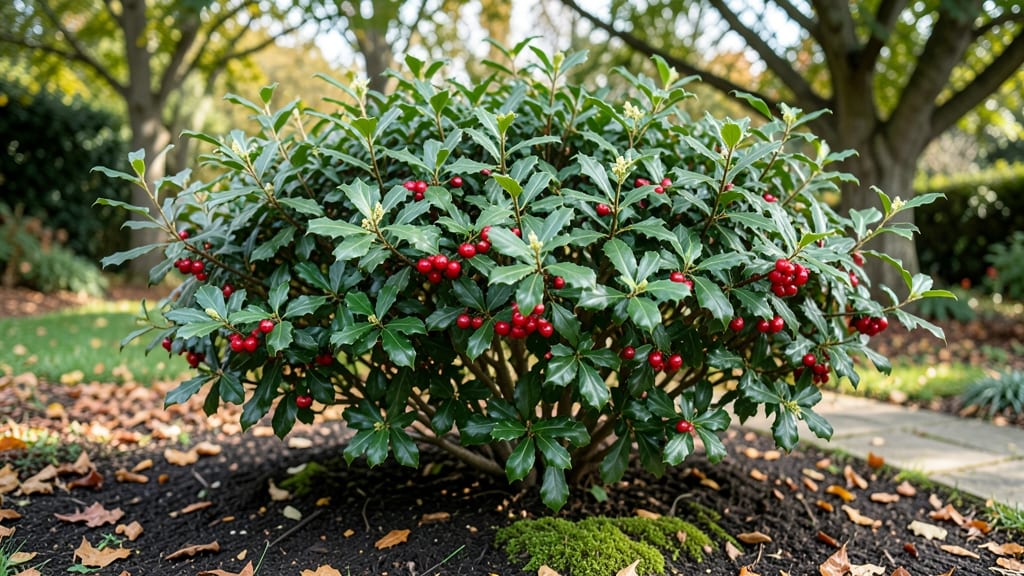
Holly bushes in shade bring year-round greenery and bold berries to dark corners of your garden, even where sunlight barely reaches.
Struggling to add vibrant plants to shady spots? These hardy shrubs thrive in partial shade, offering lush foliage and striking red or black berries without demanding full sun.
With the right shade-tolerant variety—like Ilex crenata or Ilex verticillata—you can transform dull areas into evergreen focal points that stay beautiful through winter.
In this guide, I’ll walk you through selecting the best holly for shade, planting tips, and care tricks to keep your Holly Bush 🌿 thriving in low-light conditions.
 Best Window Placement
Best holly varieties for shady gardens with year-round appeal
Shady gardens don’t have to lack color or structure—holly bushes are perfect for adding evergreen foliage and vibrant berries even in low-light areas. These hardy shrubs thrive where others struggle, offering year-round interest with minimal sunlight.
Whether you’re looking for dense hedges or ornamental focal points, shade-tolerant holly varieties deliver stunning results with the right care.
Not all holly species perform equally in shade, so choosing the right variety is key. Some, like Ilex crenata, handle deep shade better than others, while Ilex verticillata (winterberry) may need slightly more light for optimal berry production.
Below, I’ve compared the top shade-tolerant holly varieties to help you pick the best fit for your garden’s conditions.
The Ilex crenata is my top pick for deep shade gardens because it thrives where other holly varieties struggle. Its compact size makes it ideal for hedges or foundation plantings, and its dense, glossy foliage stays vibrant even in the darkest corners.
Plus, its black berries (though rare) add a striking contrast to the dark green leaves.
If you’re after winter interest, Ilex verticillata (winterberry) is a game-changer. While it prefers partial shade, it produces bright red berries in winter that birds adore. The trade-off? It’s deciduous, so you’ll lose foliage in fall, but the berries more than make up for it.
For wet or boggy soils, Ilex glabra (inkberry) is unmatched—it tolerates full shade and even poor drainage, making it perfect for rain gardens.
For a bold statement, consider Ilex x 'Nellie R. Stevens'. This hybrid grows tall and produces abundant red berries, but it needs slightly more light than Ilex crenata.
If your shade is dappled (like under tall trees), this variety will thrive and reward you with year-round structure. Lastly, Ilex aquifolium (English holly) is classic but needs partial shade—its spiky leaves and red berries are iconic, but it’s less forgiving in deep shade.
When selecting a holly for shade, prioritize evergreen varieties like Ilex crenata or Ilex glabra if you want year-round greenery. For winter color, Ilex verticillata* is unbeatable, even if it’s deciduous.
Always check your garden’s light conditions—deep shade (under dense canopies) limits your options, while partial shade (4–6 hours of filtered light) opens up more choices.
Pro tip: Pair holly bushes with shade-loving perennials like heuchera or hostas to create a layered, low-maintenance garden. The textural contrast between holly’s spiky
How to plant and care for holly bushes in shade for optimal growth
Planting holly bushes in shady spots transforms dull corners into lush, evergreen focal points. With the right approach, your holly bushes will reward you with glossy leaves and vibrant berries year-round—even in low-light gardens.
The key lies in understanding their unique needs for soil prep, watering, and seasonal care in shaded environments.
Unlike sun-loving plants, holly bushes adapt well to partial shade, making them perfect for under trees, north-facing yards, or dense shrubbery. However, they still require well-draining soil and consistent moisture to thrive.
I’ve learned that mulching and proper spacing are game-changers for holly health in shady areas. Let’s dive into the step-by-step process to ensure your holly bushes flourish.
Test your soil’s drainage before planting. Holly roots hate soggy soil—amend heavy clay with compost or sand to prevent root rot. Aim for a slightly acidic pH (6.0-7.0) for optimal nutrient uptake.
Start by choosing a planting location with dappled sunlight (2-4 hours of indirect light daily). Dig a hole twice as wide as the root ball but only as deep.
Gently remove the holly from its container and loosen any circled roots with your fingers. This encourages outward growth rather than root binding.
Place the holly in the hole, ensuring the root flare (where roots meet the trunk) sits above soil level. Backfill with native soil mixed with organic matter, like compost or peat moss.
Water thoroughly to settle the soil and eliminate air pockets. Spacing matters: Plant dwarf varieties 3-4 feet apart, while standard holly bushes need 6-10 feet of space to avoid competition.
Watering holly bushes in shade requires a balanced approach. While they tolerate moderate drought, consistent moisture is critical during the first year after planting. Water deeply once a week, aiming for 1 inch of water per week.
In summer’s heat, increase to every 5-7 days. Always water at the base of the plant to prevent fungal diseases like powdery mildew.
Prune holly bushes in late winter or early spring to shape them and encourage new growth. Remove dead or crossing branches first, then trim to maintain your desired shape.
Avoid heavy pruning in fall, as it stimulates tender growth that may freeze in winter. For berry-producing varieties, leave some old wood to ensure next year’s fruit.
Apply a 2-3 inch layer of mulch around the base of your holly bushes, keeping it 6 inches away from the trunk. Use wood chips or pine straw to retain moisture, regulate soil temperature, and suppress weeds.
Replenish mulch annually, especially in spring, to support healthy root development as temperatures rise.