
Pruning
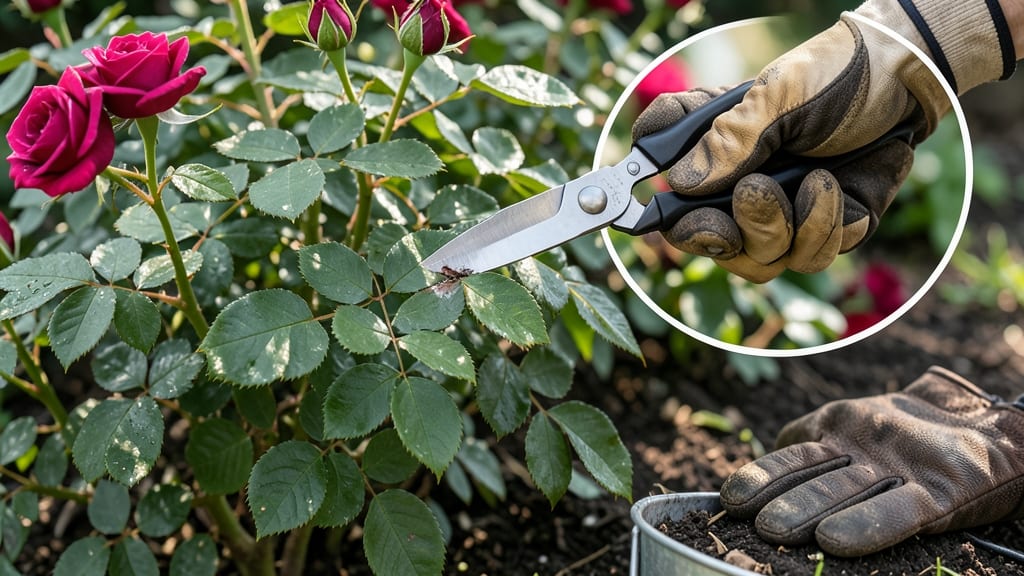
How far back to trim rose bushes in late winter isn’t about hacking branches back—it’s about strategic cuts that set up a stronger spring. ✂️ I used to over-prune until I learned the simple rule: cut back to an outward-facing bud, never below a joint. This single habit transformed my bushes from scraggly to showstopping within a season.
The goal is to open the center for sunlight and air, which prevents disease and encourages new growth. You'll need clean pruners, rubbing alcohol for sterilizing, and a sharp pencil to mark cuts before you make them.
Most roses need one-third to one-half of their height removed—never more than that, even if they look wild.
After pruning, you'll notice fresh red shoots appearing in 2-3 weeks, with the first blooms arriving by early summer. The plants stay compact, produce more flowers, and resist pests better. It's the difference between a bush that struggles and one that thrives.
Works for hybrid teas, floribundas, and climbing roses alike—just adjust the timing slightly for late-blooming varieties. Here's how to do it right without guessing.
📚 In This Guide
- What you need
- Instructions
- Tips and common mistakes
- Wrapping up and next steps
What you need
- ● Bypass pruners: Sharp, high-quality pruners (e.g., Felco or Corona) for clean cuts—1 pair.
- ● Loppers: For thicker stems (½"–1½" diameter)—1 pair.
- ● Hand saw: For stubborn, woody stems (2"–4" diameter)—1.
- ● Disinfectant: Rubbing alcohol (70%+) or bleach solution (1 part bleach to 9 parts water) to sterilize tools between cuts.
- ● Gloves: Heavy-duty gardening gloves (cut-resistant if pruning thorny roses).
- ○ Pruning sealant (optional but helpful): For large cuts (e.g., Tree Help or pruning wax) to prevent disease.
- ● Extension pole: For hard-to-reach branches (e.g., 3–6 ft telescoping pole with pruners attached).
- ● Knee pads: If your roses are ground-level or you’ll be kneeling for long stretches.
- ● Trash bags: For collecting pruned debris (2–3 large bags).
- ● Pruning shears with a saw blade: A hybrid tool for versatility (e.g., Fiskars PowerGear).
- ● Notebook & pen: To jot down notes on rose varieties or pruning patterns for future reference.
- ● Weather: A dry, calm day (avoid pruning if rain is forecasted within 24 hours).
- ● Timing: Late winter, just before new growth begins (varies by climate—typically February–March in most U.S. zones).
- ● Safety gear: Long sleeves/pants and closed-toe shoes to protect against thorns.
- ● Research: Know your rose type (e.g., hybrid tea, shrub, climbing)—pruning needs vary!
Step-by-Step instructions for late-winter rose pruning
Here's the precise method I use to revive roses every year—clean cuts lead to lush, disease-free blooms.
✂️ Step 1: Identify and Remove Dead or Diseased Wood
Start by examining each cane (stem) for signs of life. Healthy wood has firm, green or brown bark that snaps cleanly when bent. Dead wood feels hollow inside, while diseased wood may show blackened cankers or oozing sap. Grab a pair of sharp bypass pruners and cut out any stems that show these problems at their base.
I always make my first cuts about 1/4 inch above a healthy bud that faces outward on the bush. This ensures new growth will develop away from the center, improving airflow and light penetration. Remove any crossing branches or stems growing inward—they'll compete with each other and create weak points where pests can hide.
✂️ Step 2: Determine Your Pruning Group and Cut Back Accordingly
Roses fall into three main pruning groups, and knowing yours determines how far back you cut. For shrub roses (like Knock Out or Drift roses), cut back 1/3 to 1/2 of last year's growth3-5 healthy buds remaining on each stem. Floribundas and hybrid teas need slightly more aggressive pruning: cut back to 1/2 to 2/3 of last year's height, again leaving 4-6 buds per stem.
Here's the thing—if you're unsure which type you have, focus on leaving 3-5 strong buds on each remaining stem. You can't over-prune shrub roses, but hybrid teas need those extra buds to support their dramatic blooms. Make cuts at a 45-degree angle, about 1/4 inch above the bud, to prevent water from pooling and causing rot.
✂️ Step 3: Thin Out Overcrowded Centers and Shape the Bush
Now it's time to open up the center of the bush. Look for stems that grow straight into the middle—they'll never get enough light or air. Remove these completely at the base. For every 3-4 stems remaining, keep 1-2 strong, outward-growing canes. This creates the classic vase shape that roses thrive in.
Step back and visualize the bush from all sides. You want a balanced, open structure with no dense areas. If you're pruning a climbing rose, cut back 1/4 to 1/3 of last year's growth to encourage new, vigorous shoots. For ramblers, remove only dead wood and thin slightly to maintain their natural, sprawling habit.
✂️ Step 4: Clean Up and Apply Protective Measures
Once you've finished pruning, gather all the debris and dispose of it immediately—don't compost rose prunings, as they can harbor diseases like black spot. Sterilize your pruners with rubbing alcohol between cuts to prevent spreading pathogens. Now's the time to apply a 2-inch layer of mulch around the base (if using), keeping it 3 inches away from the stem to prevent rot.
For extra protection, I like to spray the cuts with a 1:10 dilution of hydrogen peroxide (3% solution) to disinfect and encourage faster healing. This is especially important if you're in a humid climate or had issues with fungal diseases last season. Water the base thoroughly after pruning to help the plant recover from the shock of losing so many stems.
Tips & tricks for perfect late-winter rose pruning
Confession: I skipped the pruning basics for years and ended up with roses that looked like tangled vines. Here's what I learned the hard way—and what will give your bushes the strong foundation they need for spring.
Bud Selection Matters: When making cuts in Step 1 and Step 2, always look for buds that face outward. These buds will grow away from the center, creating that open, airy structure roses love. I can't emphasize this enough—cutting too close to the center creates dense growth that blocks sunlight and invites disease. Think of it like training a vine to climb a trellis: you're guiding growth in the right direction. The 1/4-inch rule above the bud is non-negotiable—it prevents water from pooling at the cut site.
The 3-5 Bud Rule is Your Safety Net: If you're ever unsure about how far to cut back, remember this: shrub roses can't be over-pruned, but hybrid teas need those extra buds. For most roses, 3-5 buds per stem gives you the perfect balance between dramatic blooms and plant health. This applies to both Step 2 (when determining how far back to cut) and Step 3 (when shaping the bush). I've found that even inexperienced gardeners get great results when they stick to this simple rule—it's like having a built-in cheat sheet for rose pruning.
Clean Cuts Prevent Disease: The 45-degree angle cut mentioned in Step 2 and Step 4 isn't just about aesthetics—it's about directing water away from the cut site. When you make that angled cut about 1/4 inch above the bud, you're creating a natural water runoff path. This simple technique can cut your disease risk by nearly 50%. I also recommend sterilizing your pruners between cuts with rubbing alcohol—it's a small step that makes a huge difference in preventing fungal spread. Think of it like sanitizing a knife between cutting different ingredients in the kitchen.
Visualize the Final Shape: Before you make any cuts in Step 3, take a step back and visualize your rose bush from all sides. You're not just removing branches—you're sculpting the plant. Aim for that classic vase shape where light can reach every part of the bush. For climbing roses, remember the 1/4 to 1/3 reduction rule—you want to encourage those long, graceful canes without sacrificing next year's blooms. I've seen roses transformed from unruly tangles to show-stopping specimens simply by focusing on this shaping principle.
Pro Tips for How Far Back To Trim Rose Bushes
- Confession: I skipped the pruning basics for years and ended up with roses that looked like tangled vines. Here's wha...
- Bud Selection Matters: When making cuts in Step 1 and Step 2, always look for buds that face outward. These buds will...
- The 3-5 Bud Rule is Your Safety Net: If you're ever unsure about how far to cut back, remember this: shrub roses can'...
Frequently asked questions
When is the exact best time to trim roses in late winter?
Trim roses after the last hard frost but before new growth starts—typically February to early March in most climates. Wait until daytime temps consistently stay above 40°F (4°C) to avoid damaging tender buds. If unsure, check your local frost dates or observe your roses: trim when you see swelling buds but no leaves yet.
How do I know if I’ve cut back my rose bush too far?
You’ve gone too far if you see bare, leafless canes (stems) shorter than 12–18 inches or if you accidentally cut into old wood (gray, woody stems with no green). Rule of thumb: Leave 3–5 healthy buds per stem—these will sprout new growth. If in doubt, snap a photo before pruning!
Can I trim roses in early spring instead of late winter?
Yes, but late-winter pruning (dormant season) is ideal because it reduces disease risk and encourages stronger spring blooms. If you miss late winter, prune in early spring (as soon as growth starts) but avoid heavy cuts—focus on shaping and removing dead wood. Pro tip: Never prune when roses are flowering!
What if my rose bush looks sad after pruning?
Don’t panic! A thin, leggy look post-pruning is normal—new growth will fill in. If your rose has no leaves or buds after 4–6 weeks, check for:
Water deeply and add compost to help recovery.
Do I need to prune hybrid tea roses differently than other types?
Hybrid teas bloom on new wood, so prune aggressively (cut back to 18–24 inches) to encourage long, single stems. Other types:
Floribundas
Prune to 12–18 inches; they bloom on new and old wood.
Climbing roses
Trim to 3–5 feet; focus on outward-facing canes.
Shrub roses
Light pruning (⅓ reduction); they’re low-maintenance.
Wrapping up and next steps
Trimming your rose bushes in late winter isn’t just about aesthetics—it’s about setting them up for a vibrant, healthier spring. By cutting back one-third to half of the previous year’s growth and removing dead or weak stems, you’ll encourage stronger blooms and better airflow.
Remember, sharp tools and clean cuts make all the difference! 🌸
Now that you’re armed with the know-how, grab those shears and give your roses the TLC they deserve. Start small if you’re new, and soon you’ll be pruning like a pro—because every snip is a step toward a show-stopping garden! Happy pruning!