
Pruning
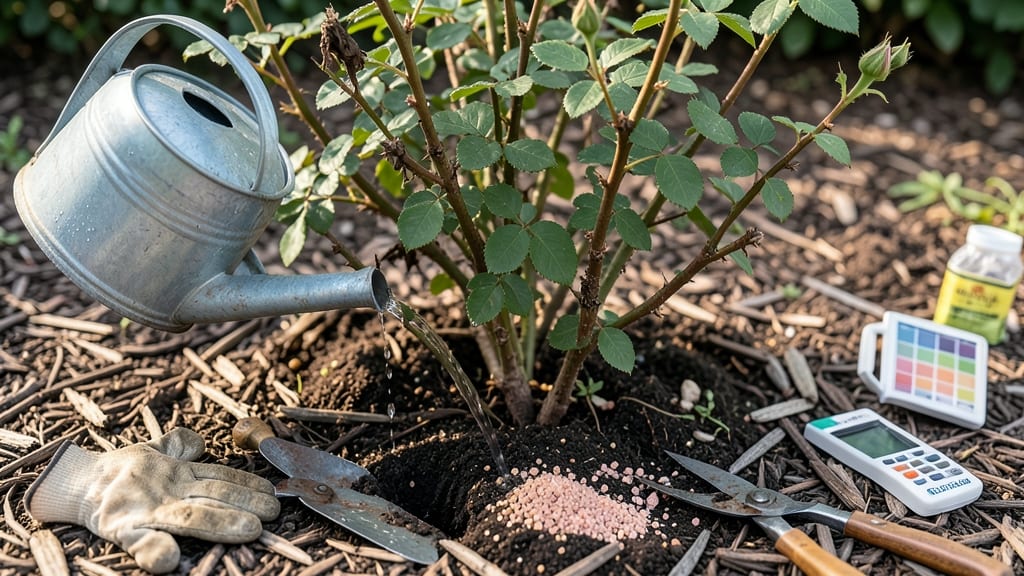
Reviving a dying rose bush starts with understanding what killed it—and spring is the perfect time to turn things around. 🌿 I’ve brought back bushes with blackened canes, yellow leaves, and even those that looked like they’d given up for good. The key?
Pinpointing the problem fast, then acting before pests or disease take over completely. Most struggling roses suffer from one of three issues: overwatering (soggy soil, wilted leaves), underwatering (crispy edges, wilting in heat), or disease (black spots, powdery white growth).
Prune out dead wood first—cut back to healthy green growth at a 45-degree angle—and you’ll already see a difference. Then adjust your watering: roses need 1-2 inches per week, but never soggy roots.
What you’ll end up with is a bush that looks like it’s been revived from the dead—new red shoots within weeks, buds forming by early summer, and those fragrant blooms you planted for.
The secret isn’t just fixing the problem; it’s giving the plant the right conditions to thrive moving forward. This works for hybrid teas, floribundas, and even old garden roses. Let’s get your bush back to its glory days—starting with a sharp pair of pruners and a little detective work.
Root Causes of Rose Decline
Reviving a struggling rose bush starts with understanding why it’s fading in the first place. Roses are resilient, but they send distress signals when their basic needs aren’t met.
Below, we break down the key culprits behind wilting, sparse blooms, or even dead-looking stems—so you can pinpoint the issue and take precise action.
Roses thrive in well-drained soil, but too much moisture suffocates their roots, leading to root rot (a fungal infection that blocks nutrient uptake). Signs include:
- Yellowing leaves (especially lower ones)
- Mushy, black stems at the base
- Stagnant water pooling around the base
Why it happens:
- Compacted or clay-heavy soil holds excess water, cutting off oxygen to roots.
- Overzealous watering (e.g., daily soaking) drowns roots instead of hydrating them.
- Lack of mulch or improper mulching traps moisture against the stem.
Actionable clue: Stick your finger 2 inches into the soil—if it’s soggy, drainage is the issue.
While overwatering kills roots, chronic dehydration causes roses to wilting, crispy edges on leaves, and dropped buds. Roses need 1–1.5 inches of water weekly (more in heatwaves).
Why it happens:
- Shallow root systems (common in young roses) can’t reach deep moisture.
- Evaporation from hot sun or wind steals water faster than roots absorb it.
- Ignoring soil moisture leads to gradual decline—roses show stress after damage is done.
Actionable clue: Wilting that doesn’t bounce back after watering = thirst, not disease.
Roses are heavy feeders, and poor soil leads to pale leaves, weak stems, or no blooms.
Common deficiencies: - Nitrogen (N) deficiency → Yellow lower leaves (but green veins). - Phosphorus (P) deficiency → Dark green leaves, no flowers. - Iron (Fe) deficiency → Yellowing between veins (chlorosis). - Magnesium (Mg) deficiency → Yellow patches on older leaves.
Why it happens:
- Exhausted soil from years of blooming without replenishment.
- pH imbalances (roses prefer 6.0–6.5; alkaline soil locks out iron).
- Over-pruning without feeding depletes stored nutrients.
Actionable clue: Soil test kits (or a pro analysis) reveal exact deficiencies—don’t guess with fertilizer!
Roses are magnets for sap-sucking insects and fungal pathogens. Common offenders:
- Aphids/Spider Mites → Curled leaves, sticky residue (honeydew).
- Japanese Beetles → Skeletonized leaves (chewed edges).
- Black Spot Fungus → Dark spots with yellow halos on leaves.
- Powdery Mildew → White, powdery coating on stems/leaves.
Why it happens:
- Stressed roses (from poor care) are easier targets.
- Humid climates or crowded plants (poor airflow) fuel fungal spread.
- Lack of preventive sprays (neem oil, copper fungicide) invites infestations.
Actionable clue: Check undersides of leaves—pests and fungi hide there first.
Even healthy roses slow down with age (10+ years), but bad pruning accelerates decline. Signs:
- Over-pruned canes (no leaves = no energy for blooms).
- Dead wood (brown, hollow stems) from old age or winter damage.
- Suckers (shoots at the base) steal nutrients from main growth.
Why it happens:
- Pruning at the wrong time (late fall/winter weakens buds).
- Cutting too aggressively removes next year’s blooms.
- Neglecting rejuvenation pruning in mature bushes.
Actionable clue: If more than ⅓ of the bush is dead wood, it’s time for a hard rejuvenation prune (but do it in early spring).
Roses hate extreme conditions. Look for:
- Sunburn (white/yellow patches on leaves from intense afternoon sun).
- Frost damage (blackened tips after late frosts).
- Wind scorch (brown edges on leaves).
Why it happens:
- Sudden climate shifts (e.g., moving a potted rose indoors/outdoors).
- Lack of windbreaks in exposed gardens.
- Improper winter protection (mulch too thin or removed too early).
Actionable clue: Morning sun + afternoon shade is ideal—roses need 6+ hours of light but hate scorching.
Roses crave slightly acidic soil (6.0–6.5). If pH is off:
- Too alkaline (high pH) → Iron/chlorosis (yellow leaves with green veins).
- Too acidic (low pH) → Aluminum toxicity (stunted growth, brown roots).
Why it happens:
- Native soil (e.g., clay or limestone-heavy areas) naturally skews pH.
- Over-fertilizing with lime raises pH too high.
- Using acidic compost (like pine needles) without balancing.
Actionable clue: Test your soil—home kits cost $10 and save your roses from guesswork!
Your rose’s decline is almost always tied to one (or more) of these issues.
The good news? Most are fixable with targeted care—whether it’s adjusting water, feeding, pruning, or protecting against pests. Start with the most obvious signs (e.g., soggy soil = drainage fix; yellow leaves = nutrient test), and your rose will bounce back stronger than ever.
💡 Pro Tip: Keep a rose care journal—note watering, pruning dates, and fertilizer use. Patterns emerge fast!
Fix Your Rose Bush Now
Your rose bush isn’t beyond saving—even if it looks wilted, bare, or lifeless, the right steps can bring it roaring back to life. Below, we’ve mapped out the most common reasons your roses are struggling (like we covered earlier) and the practical, step-by-step fixes to revive them.
Plus, we’ll share prevention tips so your roses stay healthy all season long.
If your soil feels soggy, your roses might be drowning in their own moisture. Overwatering or compacted soil cuts off oxygen roots need to thrive.
How to Fix It:
✅ 🔥 Stop Watering Immediately
- Let the top 2–3 inches of soil dry out before watering again. Stick your finger in—if it’s damp, wait.
✅ 🍳 Improve Drainage
- Mix in coarse sand, perlite, or compost to aerate the soil. For heavy clay soil, dig a trench around the bush and fill it with gravel or broken pottery shards.
✅ 👨🍳 Raise the Plant (If Needed)
- If water pools around the base, mound soil or rocks to create a slight slope away from the bush.
💡 Prevention Tips:
- Water deeply but infrequently—roses prefer drought over soggy roots.
- Plant in well-draining soil (avoid low spots where water collects).
- Use mulch (2–3 inches of wood chips or straw) to regulate moisture.
Yellowing leaves, crispy edges, or wilting can mean your roses are thirsty. Unlike many plants, roses do need consistent moisture—especially in hot weather.
How to Fix It:
✅ 🥘 Water Deeply at the Base
- Soak the soil 6–12 inches deep (use a hose with a slow setting or a watering can). Avoid sprinkling leaves to prevent fungal diseases.
✅ 🌡️ Schedule Watering
- Early morning (6–9 AM) is best—it reduces evaporation and fungal risks.
- Drip irrigation or soaker hoses deliver water directly to roots without waste.
✅ 🎯 Add Mulch
- Spread 2–3 inches of organic mulch (like shredded bark) around the base (keep it 2 inches away from the stem). This locks in moisture and cools roots.
💡 Prevention Tips:
- Monitor soil moisture—stick a moisture meter in the ground or do the "squeeze test" (grab a handful; if it crumbles, water is needed).
- Group roses together to create a microclimate that retains humidity.
- Use a rain gauge to track weekly rainfall—roses typically need 1–1.5 inches per week.
Black spots, powdery white residue, or rust-colored leaves? Fungal diseases like black spot, powdery mildew, or rose rust thrive in damp, shady conditions. The good news? You can stop the spread and revive your bush.
How to Fix It:
✅ 🔪 Prune Infected Parts
- Cut off all diseased leaves, stems, and canes (even if it means removing up to ⅓ of the bush). Sterilize pruners with rubbing alcohol between cuts.
✅ 🌿 Apply Fungicide
- Spray with a copper-based fungicide (like copper sulfate) or a baking soda mix (1 tsp baking soda + 1 quart water + a drop of dish soap). Reapply every 7–10 days until new growth appears.
✅ 🌡️ Improve Airflow
- Thin out crowded canes and prune inner branches to let sunlight and air circulate.
💡 Prevention Tips:
- Water at the base—never overhead.
- Space roses 3–4 feet apart to prevent humidity buildup.
- Clean up debris regularly (fallen leaves, spent blooms).
- Choose disease-resistant varieties (like ‘Knock Out’ roses) if fungal issues are chronic.
Mushy, dark stems at the base or a foul smell when you dig? Root rot (from overwatering or poor drainage) can kill roses quickly—but early action saves them.
How to Fix It:
✅ 🔥 Stop Watering Completely
- Let the soil dry out completely for 3–5 days before watering lightly again.
✅ 🍳 Dig and Inspect Roots
- Gently loosen the soil around the base. Healthy roots are firm and white; rotten roots are black, mushy, and smell bad. Trim away the bad ones with sterilized pruners.
✅ 👨🍳 Repot or Amend Soil
- If root rot is severe, transplant the rose into a new pot with well-draining soil (50% potting mix + 50% perlite/sand).
- For in-ground roses, dig out a trench around the bush, fill it with fresh soil mixed with compost and perlite, and gently pack it in.
💡 Prevention Tips:
- Never let roses sit in wet soil—raise beds or use containers with drainage holes.
- Avoid heavy mulch in winter if your climate is damp (mulch too late).
- Test your soil’s drainage—if water pools after 30 minutes, amend it immediately.
Yellow leaves, stunted growth, or weak canes? Your roses might be hungry. Unlike many plants, roses are heavy feeders and need regular nutrients.
How to Fix It:
✅ 📊 Test Your Soil
- Use a DIY soil test kit (available at garden centers) to check pH (ideal: 6.0–6.5) and nutrient levels.
✅ 💪 Fertilize Properly
- Spring (March–April): Apply a balanced rose fertilizer (10-10-10 or 5-10-5) or compost.
- Mid-Summer (June–July): Switch to a low-nitrogen, high-phosphorus fertilizer (like 5-10-10) to encourage blooms.
- Avoid high-nitrogen fertilizers in late summer—they promote leafy growth but fewer flowers.
✅ 🍎 Boost with Organic Amendments
- Mix in bone meal (for phosphorus) or fish emulsion (for nitrogen) if your soil is lacking.
💡 Prevention Tips:
- Fertilize every 4–6 weeks during the growing season (spring to fall).
- Water before fertilizing to prevent root burn.
- Use slow-release granules for steady nutrition without spikes.
Brown, brittle canes or delayed spring growth? Your rose might’ve suffered winter dieback from cold snaps, frost, or improper protection.
How to Fix It:
✅ 🔥 Prune Dead Wood
- Cut back black, mushy, or hollow canes to healthy green wood. Use sterilized pruners and make cuts at a 45-degree angle just above a bud.
✅ 🌿 Stimulate New Growth
- Apply a balanced fertilizer (like 10-10-10) in early spring to encourage regrowth.
- Mulch heavily (4–6 inches of straw or leaves) to insulate roots.
✅ 🌡️ Protect from Late Frosts
- Cover young shoots with frost cloth if late frosts are forecasted.
💡 Prevention Tips:
- Mulch in late fall (after the first frost) to protect roots.
- Choose cold-hardy varieties (like ‘Dr. Huey’ or ‘The Fairy’)
Frequently asked questions
How do I know if my rose bush is beyond saving?
If more than 50% of the canes are completely black, mushy, or hollow with no green tissue inside, it’s likely too far gone. However, if you see any green growth—even just a few buds or shoots—keep pruning dead wood and focus on root health. Never give up until you’ve tried reviving it for at least 2 weeks with proper care.
Can I use coffee grounds to revive my rose bush?
Yes! Coffee grounds are a great organic fertilizer and help lower soil pH (roses prefer 6.0–6.5). Mix 2–3 inches into the soil around the base, but avoid piling them directly against the stem. For best results, combine with compost and water thoroughly. Use every 4–6 weeks during growing season.
How often should I prune a struggling rose bush?
Start with a hard prune in early spring—cut back dead, diseased, or crossing canes to healthy outward-facing buds. Then do light maintenance pruning every 4–6 weeks to remove any new dead wood or overcrowded growth. Always sterilize your pruners with rubbing alcohol between cuts to prevent disease spread.
What's the fastest way to see new growth on my rose bush?
Combine 3 key steps for quick results:
- Prune aggressively to remove dead wood,
- Apply a balanced fertilizer (like 10-10-10), and
- Water deeply at the base (1–1.5 inches weekly). With these changes, you should see new shoots within 2–3 weeks if the roots are still healthy.
Can I save a rose bush with black spot fungus?
First, prune all infected leaves and canes (don’t compost them—burn or trash). Then spray with a copper fungicide or baking soda mix (1 tsp baking soda + 1 quart water + dish soap). Improve airflow by thinning the bush, and water at the base only. With consistent treatment, your rose can recover fully within 4–6 weeks.