
Pruning
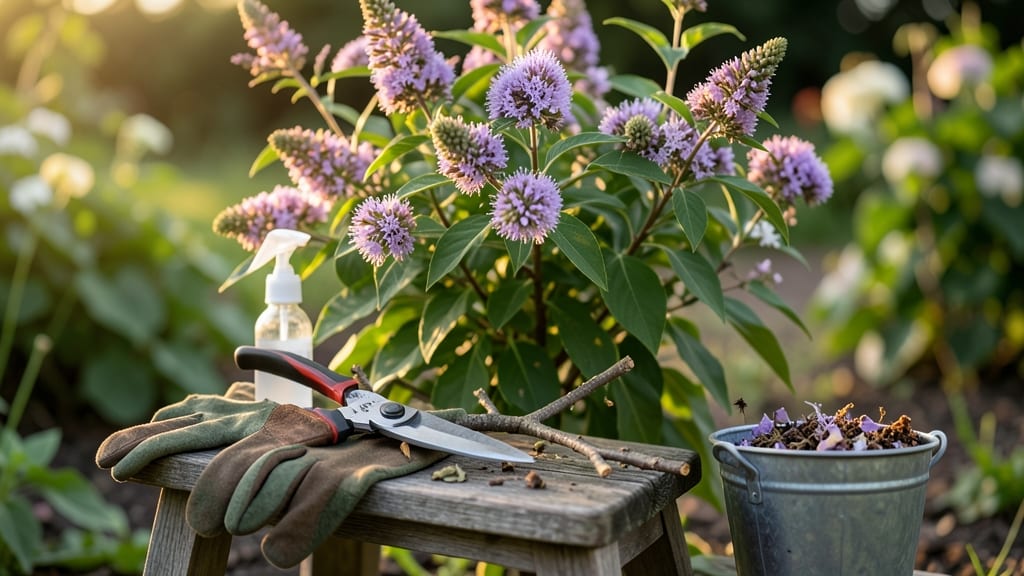
Summer pruning butterfly bush saves your plant from looking ragged while keeping it blooming all season. 🌿 I learned the hard way—last year’s late cuts left my bush struggling through August heat, but this year’s mid-summer trim gave me dense new growth without sacrificing flowers.
The key is timing and technique, not just grabbing shears and hacking away.
Butterfly bushes bloom on new wood, so summer pruning works differently than spring cuts. Focus on removing only 1/3 of the oldest stems—never more—to avoid stressing the plant.
Use sharp pruners to make clean cuts just above a leaf node, and always prune in the morning when temperatures are cooler. This prevents heat shock and keeps the plant hydrated.
What you’ll end up with is a bush that looks fuller, grows stronger, and continues attracting butterflies like crazy. The new growth stays vibrant even in August, and you’ll avoid the leggy, sparse look that happens when you wait too long.
Just remember: no late-season cuts after mid-August, or you risk frost damage next spring.
Pro tip: After pruning, give your bush a deep watering to help it recover. The fresh cuts also make a great snack for caterpillars, so you’ll see even more pollinators visiting. Works for any butterfly bush variety—just stick to the 1/3 rule and you’ll be golden.
📚 In This Guide
- What you need
- Instructions
- Tips and common mistakes
- Wrapping up and next steps
What you need
- ● Bypass pruners: Choose a sharp, high-quality pair (e.g., Felco or Fiskars) to make clean cuts without crushing stems. Quantity: 1 pair.
- ● Loppers: For thicker branches (½ inch or larger). Opt for bypass-style loppers with a 10-12 inch blade for leverage. Quantity: 1 pair.
- ○ Hand pruners (optional): For delicate trimming of smaller stems. Quantity: 1 pair (if needed).
- ● Garden gloves: Durable, cut-resistant gloves (e.g., Mechanix or Wolverine) to protect your hands from thorns and sap. Quantity: 1 pair.
- ● Disinfectant (70% isopropyl alcohol or bleach solution): To sterilize tools between cuts and prevent disease spread. Quantity: Small spray bottle or wipe.
- ● Heavy-duty trash bags or bucket: For collecting pruned branches. Quantity: 1-2 (depending on bush size).
- ○ Garden twine or zip ties (optional): To secure large branches if you’re doing structural pruning. Quantity: Small roll.
- ● Weather check: Prune on a cool, overcast day or early morning to reduce stress on the plant. Avoid pruning during extreme heat or humidity.
- ● Water source: Have a hose or watering can nearby to hydrate the plant post-pruning. Quantity: 1-2 gallons (or access to a garden hose).
- ○ First-aid kit (optional but recommended): For minor cuts or scrapes. Quantity: Small kit with bandages and antiseptic wipes.
- ● Ladder (if needed): For tall butterfly bushes (over 6 feet). Ensure it’s stable and rated for your weight. Quantity: 1 (if applicable).
Step-by-step guide to pruning butterfly bush in summer
Here’s how to refresh your butterfly bush while keeping those pollinators happy—and your plant thriving.
✂️ Step 1: Wait for the Right Time to Prune
Butterfly bush (Buddleia) blooms on new wood, so you can prune summer stems without fear of losing flowers. The best time is right after a bloom cycle—look for spent flower clusters that have dried up or fallen. This usually happens 6-8 weeks after the first flush of blooms, often in mid-to-late summer.
If you prune too early, you risk cutting off next year’s flower buds. If you wait too long, the plant may put too much energy into seed production. I like to prune in early July in my zone 7 garden—just as the first wave of blooms starts to fade. Grab your pruners and scan the plant for woody stems with no flowers—these are safe to trim.
✂️ Step 2: Trim Back Overgrown or Weak Stems
Start by removing any dead, diseased, or crossing branches first. These compete for resources and can spread problems. Cut these back to the main stem or ground level using clean, sharp pruners—dull blades crush stems and invite infection. I always disinfect my tools with rubbing alcohol between cuts to prevent spreading any hidden pathogens.
Next, focus on overlong or leggy stems. Butterfly bush grows fast, and stems can stretch 3-4 feet without pruning. Trim these back by one-third to one-half of their length, cutting just above a leaf node (the bump where leaves attach). This encourages bushier growth and more flowering sites next season. Avoid cutting into old, woody stems—these won’t regrow well.
✂️ Step 3: Shape for Airflow and Sunlight
Butterfly bush loves sunlight, so prune to open up the center of the plant. Thin out crowded branches to improve airflow—this reduces humidity around the foliage, which helps prevent fungal diseases like powdery mildew. Aim for a rounded, vase-like shape, cutting back the longest stems first to create balance.
Here’s the trick: step back every few cuts to visualize the plant’s silhouette. You want to see light reaching the inner branches. If a branch is growing inward, cut it back to redirect energy outward. I often prune in stages—first removing 20% of the plant, then reassessing before making further cuts. This prevents over-pruning, which can stress the bush.
🌿 Step 4: Encourage New Growth with Light Pruning
For a final touch, give the plant a light haircut to stimulate fresh growth. Look for new shoots emerging from the base or along the stems—these are your plant’s way of saying, “I’ve got this!” Trim back any overly long or floppy new growth by one-third, cutting just above a set of leaves. This keeps the plant compact and encourages more flowering stems next year.
After pruning, water deeply to help the plant recover. Butterfly bush is drought-tolerant once established, but summer pruning can be stressful. I like to add a balanced fertilizer (like 10-10-10) to the soil after pruning to give the plant a nutrient boost for regrowth. Avoid heavy fertilizers right after pruning—they can burn tender new shoots.
⏰ Step 5: Monitor and Maintain Through Summer
Keep an eye on your butterfly bush over the next 4-6 weeks for new growth. You’ll see bright green leaves and fresh stems emerging from the pruned areas—this is a good sign! If you notice any yellowing leaves or wilting, it might be overpruned or stressed. In that case, hold off on further cuts and focus on consistent watering (about 1 inch per week unless it rains).
Butterfly bush is a heavy bloomer, so it may produce a second flush of flowers later in summer. If you want to encourage this, avoid heavy pruning after mid-summer. Instead, just deadhead spent blooms to redirect energy into new flowers. By late summer, your bush should look fuller and healthier—ready to attract butterflies and hummingbirds all season long.
Tips & tricks for perfect butterfly bush pruning
Summer pruning can transform your butterfly bush—but only if you do it right. These hard-won lessons will help you avoid common pitfalls and keep your plant thriving.
Timing is Everything: The 6-8 week window after the first bloom cycle is your sweet spot. I learned this the hard way—pruning too early in June cut off next year's buds, while waiting until August sent the plant into seed mode. Look for those dried-up flower clusters as your cue. In my zone 7 garden, early July works perfectly, but adjust based on your local climate and bloom schedule.
Tool Prep Saves Your Plant: Clean, sharp pruners are non-negotiable. I always disinfect my tools with rubbing alcohol between cuts—this simple step prevents spreading fungal spores or bacterial infections that can weaken your butterfly bush. Dull blades crush stems instead of cleanly cutting, which stresses the plant. For large bushes, consider using loppers for thicker stems and hand pruners for finer work.
The 20% Rule for Stress-Free Pruning: Never remove more than 20% of the plant in one session. This prevents over-pruning shock that can leave your butterfly bush looking sad and stressed. Start by removing dead or crossing branches, then work on shaping. Step back frequently to visualize the plant's silhouette—you're aiming for that open, vase-like shape that lets sunlight reach all branches. Remember, butterfly bushes are resilient but not invincible!
Post-Pruning Care Makes All the Difference: After your pruning session, give your plant a deep watering to help it recover. I like to add a balanced 10-10-10 fertilizer at this stage to support new growth, but avoid heavy fertilizers right after pruning—they can burn tender new shoots. Monitor your plant closely over the next 4-6 weeks for signs of stress like yellowing leaves or wilting. If you see these signs, back off on watering slightly and give the plant time to adjust.
Pro Tips for Pruning Butterfly Bush In Summer
- Summer pruning can transform your butterfly bush—but only if you do it right.
- Timing is Everything: The 6-8 week window after the first bloom cycle is your sweet spot.
- Tool Prep Saves Your Plant: Clean, sharp pruners are non-negotiable.
Frequently asked questions
Can I prune my butterfly bush in summer without killing it?
Summer pruning is safe if done correctly. Focus on light trimming—remove only about 1/3 of the plant’s growth at a time to avoid stress. Avoid heavy cuts, as butterfly bushes thrive on gradual shaping. Prune in the early morning or late evening to reduce heat stress on the plant.
What’s the best time of summer to prune?
The ideal window is late spring to early summer (May–June), right after the first flush of blooms. If you miss this, wait until July or August—just avoid pruning when buds are forming. Pro tip: Prune on a cool, cloudy day to help the plant recover faster.
Should I cut back dead or diseased branches first?
Yes! Always remove dead, damaged, or diseased branches first—even in summer. Use sterilized pruners and dispose of infected branches immediately. This prevents pests/diseases from spreading. After that, shape the bush by trimming back overgrown stems to just above a leaf node.
Will pruning in summer attract more butterflies?
Not directly—but healthy, well-pruned bushes bloom longer, giving butterflies more nectar! Focus on light pruning to encourage new growth and extended flowering. Avoid heavy cuts, as they can reduce blooms. Plus, deadheading spent blooms (removing faded flowers) encourages more flowers—just don’t overdo it!
What if my butterfly bush doesn’t bloom after summer pruning?
Don’t panic! Some varieties (like Buddleia davidii) bloom on new wood, so pruning stimulates fresh growth. If blooms are still sparse, try:
- Fertilizing with low-nitrogen, high-phosphorus feed after pruning.
- Ensuring it gets 6+ hours of sun daily.
- Watering deeply but infrequently (overwatering stresses the plant).
Wrapping up and next steps
Pruning your butterfly bush in summer is all about balance—cutting back just enough to encourage lush growth while preserving those vibrant blooms that attract pollinators. 🌿 By following the right timing, techniques, and tools, you’ll keep your plant thriving and buzzing with activity all season long.
Ready to give your butterfly bush a little TLC?
Your next step? Grab those pruners and head outside—your butterfly bush (and the pollinators!) will thank you! For extra confidence, bookmark this guide or jot down your notes before diving in. Happy pruning! ✂️💛