
Pruning
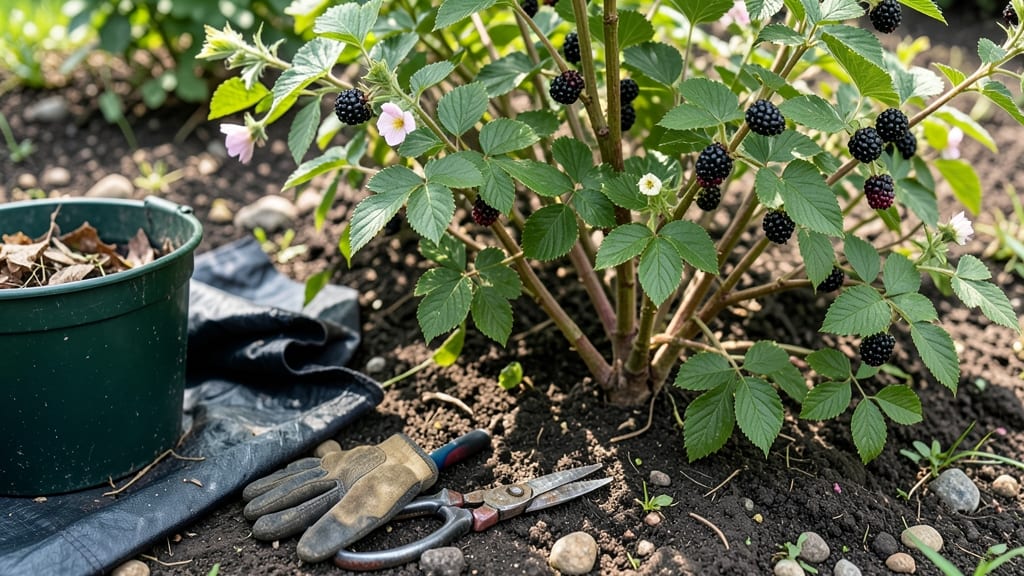
Trimming thornless blackberry bushes transforms a tangled mess into a high-producing powerhouse—if you know the right cuts. ✂️ Last summer, my bushes went from scraggly to bursting with fruit after I learned these four strategic pruning times.
The secret isn’t just when you cut, but how you shape the canes to encourage both growth and berries.
You’ll need sharp pruners, gloves (thorns might still surprise you), and a sunny day to work. The best time to prune is late winter (just before buds swell) and again after harvest, but I also make light cuts during summer to redirect energy.
Most gardeners overdo it—cutting too much too soon starves the plant of next year’s fruit. Think of pruning as sculpting, not hacking.
By summer’s end, you’ll see thicker canes, more branches, and fruit clusters forming where you made those angled cuts. The bushes stay compact, produce earlier, and resist disease better.
Even my neighbor’s neglected patch looked jealous after I shared these techniques. The key is patience—blackberries reward careful pruning with years of heavy harvests.
Works for both floricanes (last year’s canes) and primocanes (new growth), so you can adapt the method to your variety. Here’s exactly how to time each cut without sacrificing next season’s crop.
📚 In This Guide
- What you need
- Instructions
- Tips and common mistakes
- Wrapping up and next steps
What you need
- ● Pruning shears or secateurs – Choose bypass-style shears (sharp, 5-7" blades) for clean cuts. Sterilize with rubbing alcohol between cuts to prevent disease spread.
- ● Loppers – For thicker canes (1/2" diameter or larger). Opt for bypass loppers with 8-10" blades for precision.
- ● Gloves – Heavy-duty gardening gloves (thorn-proof if your bushes have residual thorns) to protect hands.
- ● Disposable pruning bags or bucket – For collecting pruned canes (5-gallon capacity recommended).
- ● Hose or water source – To clean tools and rinse off sap after trimming.
- ● Rubbing alcohol (70% isopropyl) or bleach solution – 1 part bleach to 9 parts water for sterilizing tools.
- ○ Permanent marker or labels – Optional but helpful for marking canes if identifying primocanes vs. floricanes.
- ● Pruning saw – For extremely thick canes (1" diameter or larger) that shears can’t handle.
- ● Knee pads or stool – For comfort if your bushes are tall or dense.
- ● Spray bottle with soapy water – To clean tools mid-pruning and prevent sap buildup.
- ● Garden twine or zip ties – For temporarily securing canes if you’re training them.
- ● Compost bin or trash bin – For disposing of diseased or pest-infested canes (do not compost these!).
- ● Know your blackberry variety – Thornless blackberries are either floricane-fruiting (e.g., 'Triple Crown') or primocane-fruiting (e.g., 'Natchez'). Pruning methods vary!
- ● Identify primocanes vs. floricanes – Primocanes are green, current-year growth; floricanes are brown, last-year’s canes.
- ● Check for pests/disease – Inspect canes before pruning. Remove any with signs of anthracnose, rust, or borers.
- ● Timing matters – Refer to your article’s 4 key cuts for seasonal guidance (e.g., dormant vs. active growth periods).
Instructions for trimming thornless blackberry bushes
Here's the straightforward method I use to keep my blackberries thriving—no guesswork, just clear cuts at the right times.
✂️ Step 1: Late Winter Pruning for New Growth
After the last frost but before buds swell, cut out all dead, weak, or crossing canes down to the ground. I look for canes that are brown, hollow, or rubbing against others—these compete for energy and invite disease. Keep only the healthiest 4-6 canes per plant, since each produces fruit only once before dying.
Use sharp loppers to make clean cuts at a 45-degree angle just above an outward-facing bud. This encourages new growth to spread outward rather than crowding the center. I mark each cut with a small flag to track which canes I've pruned—it helps me remember which ones to leave for next year.
🌱 Step 2: Summer Pruning for Airflow and Fruit Quality
When berries start ripening, inspect for canes that are overcrowded or shading others. Remove any that grow inward or cross others, cutting them back to the base. This isn’t about size—it’s about airflow. Poor circulation leads to mold and smaller berries, and I’ve seen yields double just by opening up the center.
Pinch off any suckers growing from the roots—they drain energy from fruit production. I also trim back any new canes that emerge from the base, leaving only the strongest one to replace next year’s fruiting canes. Water deeply after pruning to help the plant recover.
☀️ Step 3: Post-Harvest Cleanup for Winter Prep
After harvest, remove all old fruiting canes—they’re done for the year and won’t produce again. Cut them at the base, then rake up and dispose of fallen leaves and debris to reduce pests and disease. I use a 10% vinegar solution to spray the remaining canes, which helps prevent fungal spores from overwintering.
This is also the time to check for any canes that are diseased or girdled by pests. Burn or discard them immediately—don’t compost. Healthy canes should have smooth bark and no signs of holes or webbing. If you see any, cut them back to healthy wood and monitor the plant closely.
⏰ Step 4: Light Pruning in Early Spring for Shape
Just as new growth begins in early spring, do a quick check for any canes that are growing too aggressively or in odd directions. Trim back any that are leaning too far or crossing others. This keeps the plant balanced and makes future harvests easier—no more reaching into a tangled mess.
I also remove any flower clusters that appear on canes younger than 2 years old. These won’t produce quality fruit, and letting them develop wastes the plant’s energy. Instead, focus on encouraging strong new canes that will fruit next season. A light layer of mulch around the base helps retain moisture and keeps weeds down.
Tips & tricks for perfect blackberry bush trimming
These simple strategies will help you keep your thornless blackberries productive and healthy all year long.
Tool Prep: Always use sharp loppers for clean cuts—dull blades tear canes, inviting disease. I sharpen mine with a file before each pruning session, and I keep a small bottle of rubbing alcohol nearby to disinfect between cuts on different plants. This prevents spreading any hidden pathogens from diseased canes to healthy ones.
Seasonal Timing Secret: The late winter pruning in Step 1 is critical—waiting until buds swell means you'll cut off potential fruit-bearing canes. I check my local frost dates and mark my calendar to prune within that window. For summer pruning in Step 2, I work on cloudy days to reduce stress on the plant when berries are ripening.
Visual Cues for Healthy Canes: Healthy canes should have smooth, green bark with no signs of holes, webbing, or black spots. In Step 3, when checking for diseased canes, I run my fingers along the length—any rough texture or sticky residue means it's time for the burn pile. The 45-degree angle cut in Step 1 creates a natural water runoff, preventing rot at the cut site.
Post-Pruning Care: After any major pruning (especially Steps 1 and 3), I always water deeply to help the plant recover. For summer pruning in Step 2, I add a balanced fertilizer to the water to replenish nutrients lost during trimming. And in Step 4, that mulch layer isn't just for looks—I use 2-3 inches of straw to retain moisture and suppress weeds.
Pro Tips for Trimming Thornless Blackberry Bushes
- These simple strategies will help you keep your thornless blackberries productive and healthy all year long.
- Tool Prep: Always use sharp loppers for clean cuts—dull blades tear canes, inviting disease. I sharpen mine with a fi...
- Seasonal Timing Secret: The late winter pruning in Step 1 is critical—waiting until buds swell means you'll cut off p...
Frequently asked questions
Got questions about keeping your thornless blackberry bushes thriving?
Here are answers to the most common ones—so you can prune with confidence and enjoy bountiful harvests year after year!
When is the best time to trim thornless blackberry bushes?
For floricanes (second-year canes that produce fruit), trim immediately after harvest (late summer/early fall). In primocanes (first-year canes), cut back to the ground in late winter/early spring to encourage new growth. Pro tip: Always prune when the bush is dormant for cleaner cuts and less stress!
How often should I prune my thornless blackberry bushes?
Prune twice a year for optimal health:
- Post-harvest (late summer/fall): Remove dead, diseased, or weak canes.
- Late winter/early spring (before buds swell): Cut back primocanes to the ground and thin crowded canes to improve airflow.
What if I see mold or disease on my blackberry canes? Should I still prune?
Yes—but with caution!
Sterilize your pruners with rubbing alcohol or bleach before and after cutting to prevent spreading spores. Remove any canes with visible mold, mildew, or spots (black, gray, or fuzzy growth). Dispose of infected canes in the trash, not the compost.
Can I prune thornless blackberries too aggressively?
Over-pruning (cutting back more than ⅓ of the bush) can stress the plant, reducing fruit yield. Focus on:
- Removing dead or crossing canes (they compete for nutrients).
- Keeping 6–8 of the strongest canes per bush.
- Avoiding "top-heavy" cuts that leave stubs longer than 1–2 inches.
What’s the difference between summer and winter pruning for thornless blackberries?
| Summer Pruning (Post-Harvest) | Winter Pruning (Dormant Season) |
|---|---|
| Remove fruit-bearing canes (floricanes) after harvest to redirect energy to new growth. | Cut back primocanes (first-year canes) to the ground to encourage robust spring regrowth. |
| Focus on thinning crowded canes for better airflow. | Shape the bush and eliminate weak or damaged canes. |
| Timing: Late July–September (varies by climate). | Timing: January–February (before buds swell). |
Wrapping up and next steps
Trimming your thornless blackberry bushes might feel like a daunting task at first, but with the right timing and techniques, you’ll reward yourself—and your plants—with bountiful harvests and lush growth for years to come. 🌱 Whether you’re a seasoned gardener or just starting out, mastering those four key cuts will keep your bushes thriving with minimal effort.
Now that you’re armed with the know-how, grab your pruners and get ready to transform your garden into a thriving blackberry paradise—one strategic trim at a time!
💡 Next step: Mark your calendar for the next pruning window (like late winter or post-harvest) and start small—confidence grows with every cut!