
Pruning
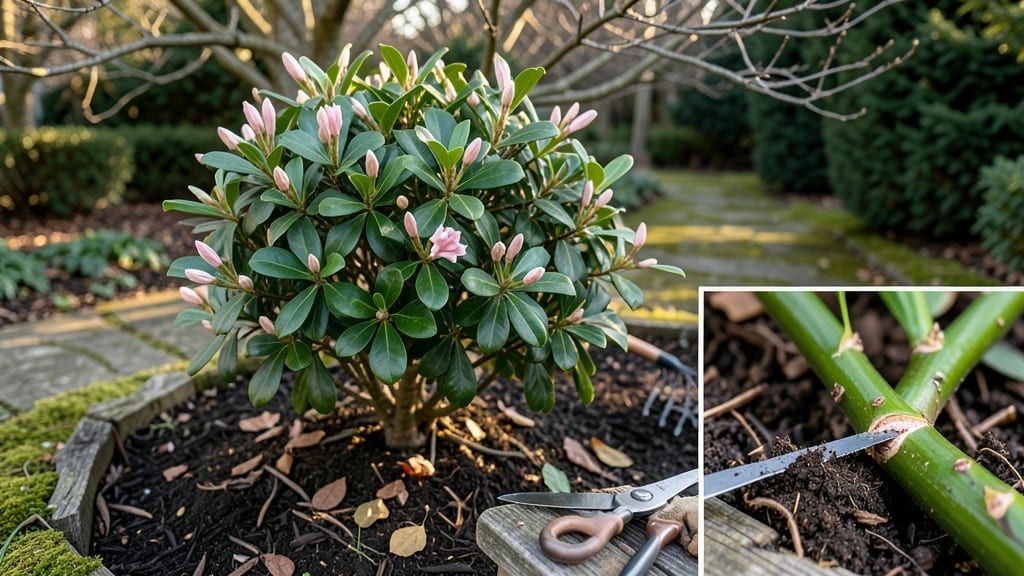
To prune daphne bushes, wait until immediately after flowering—usually late spring to early summer—to preserve next year’s blooms. Avoid pruning in fall or winter, as it damages dormant growth, and only trim heavily if reviving overgrown plants.
Daphne bushes bloom on old wood, meaning their flower buds form on stems from the previous year. 🌸 If you prune too late, you risk cutting off next year’s blooms before they’ve even formed.
I’ve found that varieties like Daphne odora (winter-flowering) and Daphne mezereum (spring-flowering) each have slightly different ideal timings—always check your specific type’s bloom cycle. Light shaping after flowering keeps the plant healthy without sacrificing future flowers.
For best results, use clean, sharp pruners to make clean cuts just above a leaf node. 🌿 Heavy pruning should only happen in early spring if your bush has become unruly, as daphne responds poorly to aggressive trimming.
Always remove any dead or diseased branches first, then focus on thinning out crowded areas to improve airflow.
💡 In This Article
- Why Timing Matters for Daphne Bush Pruning
- Step-by-Step Pruning Guide for Daphne Varieties
Why timing matters for daphne bush pruning
Daphne bushes are unique because they bloom on old wood, meaning their flower buds develop on stems from the previous growing season. When you prune at the wrong time, you risk removing next year's blooms before they've even formed.
The plant's growth cycle is tightly linked to its flowering period—if you cut back after buds have set but before they open, you're essentially sacrificing the next season's display. This is why the post-bloom window (late spring to early summer) is critical for most varieties.
The timing difference between varieties can be subtle but important. For example, Daphne odora (winter-flowering) should be pruned immediately after its fragrant blooms fade in early spring, while Daphne mezereum (spring-flowering) waits until late spring.
The key is to prune when all flowers have dropped—typically within 2-4 weeks after the last bloom. This gives the plant time to set new buds for next season while still allowing you to shape the growth before summer heat sets in. 🌿
What happens if you prune too late? The plant's energy shifts from flower production to new stem growth, and next year's blooms may be sparse or nonexistent. I've seen daphne bushes that were heavily pruned in fall or winter develop bare stems the following spring—no flowers at all.
This is because the plant's dormant period is when it's most vulnerable to pruning stress. The roots and remaining stems are already preparing for next year's growth, and aggressive cuts can disrupt this delicate balance.
Temperature also plays a role in timing. Daphne bushes prefer cool to moderate climates (USDA zones 5-9), and pruning too early in warm climates can stress the plant as it tries to recover before summer heat arrives.
The ideal window is when daytime temperatures are consistently above 50°F but haven't yet reached the 80°F+ range that can cause heat stress. This usually falls between May and early June in most growing regions, but always check your local frost dates.
One common misconception is that daphne bushes need heavy pruning to stay compact. In reality, they respond best to light shaping—removing only 10-20% of the plant's volume at a time. Heavy pruning should only occur if the bush is severely overgrown or has become leggy.
Even then, it's better to do this gradually over 2-3 years rather than all at once. The plant's woody stems are slow to recover, and aggressive cuts can lead to dieback or even death in extreme cases.
For best results, observe your daphne bush's natural growth pattern over 2-3 years to determine the perfect pruning time. Pay attention to when the last flowers drop and when new growth begins.
This hands-on approach ensures you're working with the plant's natural rhythms rather than against them. The reward? A bush that blooms abundantly year after year with minimal effort. 💫