
Diseases
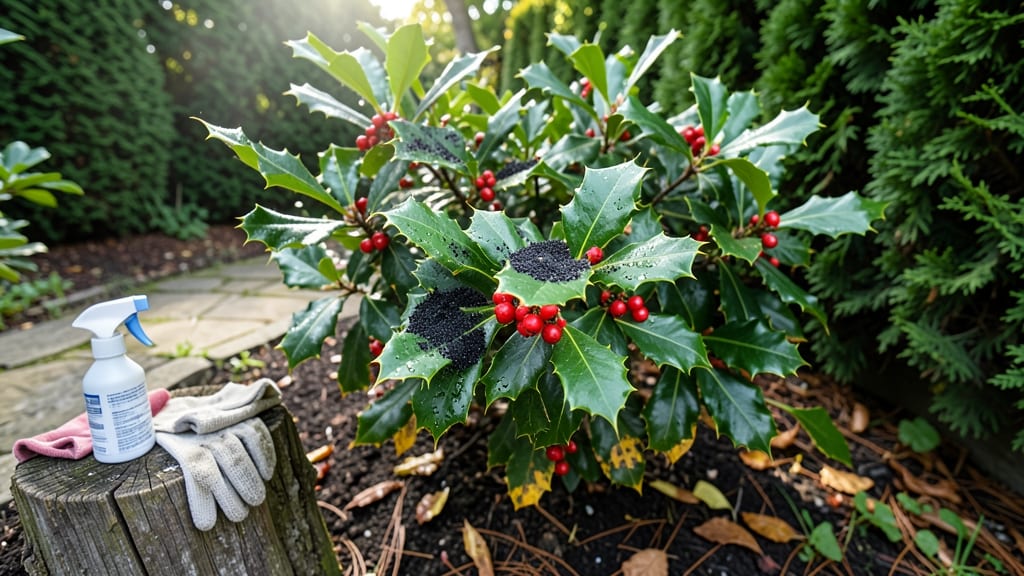
Black mold on holly bushes turns glossy leaves into ugly, blackened messes faster than you can say "holiday wreath." 🌿 I’ve battled this exact problem with my Ilex bushes—those stubborn black spots ruin the sharp, waxy foliage that makes hollies so special.
The good news? You can stop the spread and restore that classic holly shine without harsh chemicals.
The culprit is usually sooty mold or anthracnose, both of which thrive when sticky honeydew (from aphids or scale insects) coats the leaves. High humidity and poor airflow make things worse, turning your holly into a fungal buffet.
The key is breaking the cycle: clean up the mess, improve airflow, and keep leaves dry without smothering the plant.
Start by pruning out the worst-infected branches—sterilize your shears with rubbing alcohol to avoid spreading spores.
A strong spray of water (like a hose on gentle setting) will wash away honeydew and mold spores, and follow up with neem oil or baking soda spray (1 tsp baking soda + 1 quart water + a drop of dish soap) to prevent regrowth.
Repeat every 7-10 days until new growth appears clean.
Long-term fixes focus on prevention: space bushes for airflow, water at the base (not overhead), and treat aphids early with insecticidal soap. With these steps, your hollies will bounce back with those signature glossy leaves—just in time for the holidays. No fungicides required.
Root Causes Behind Fungal Growth
Holly bushes are tough, evergreen stars of the landscape—but when black mold (likely Gloeocercospora or Phyllosticta species) takes hold, their glossy leaves dull into a sad, speckled mess.
Understanding the why behind this fungal invasion is the first step to stopping it. Below, we break down the key triggers, backed by science and actionable insights.
Fungi thrive in damp conditions, and holly bushes are no exception. When leaves stay wet for prolonged periods—whether from overhead watering, high humidity, or compacted, waterlogged soil—spores germinate and spread. Here’s how it plays out:
- Leaf Surface Trapping Water: Holly leaves have a waxy cuticle, but when rain or sprinklers create a film of water, spores latch on and grow. Gloeocercospora, the culprit behind holly leaf spot, needs 12+ hours of leaf wetness to infect.
- Root Zone Saturation: Poorly draining soil (common in clay-heavy areas) keeps roots soggy, weakening the bush’s defenses. Fungal hyphae (thread-like structures) spread from soil to leaves via splashing water or insect activity.
- Humidity Hotspots: Dense plantings or shaded areas trap moisture. If your holly is nestled against a fence or under trees, humidity lingers, creating a fungal paradise.
Actionable Fix: Water at the base (not overhead) in the early morning so leaves dry by nightfall. Amend soil with compost or perlite to improve drainage. 💡 Pro Tip: Space bushes 3–5 feet apart for airflow.
A hungry or stressed holly bush is like an open invitation to fungi. When soil lacks key nutrients or pH is off, the plant’s cell walls weaken, making it easier for pathogens to breach defenses. Here’s the breakdown:
- Nitrogen Deficiency: Holly bushes need balanced N-P-K (nitrogen-phosphorus-potassium). Too much nitrogen (common with over-fertilizing) leads to soft, sappy growth—fungi’s favorite buffet. Too little? The plant can’t produce antifungal compounds like phytoalexins.
- Iron or Magnesium Shortages: These micronutrients help maintain chlorophyll and cell membrane integrity. Without them, leaves become thinner and more permeable, inviting fungal entry.
- pH Imbalances: Holly prefers acidic soil (pH 4.5–6.0). If soil is alkaline (pH >7.0), nutrient uptake drops, and the plant struggles to fight off Gloeocercospora.
- Physical Stress: Drought, transplant shock, or root damage from construction/sodding compromises the root system, reducing the bush’s ability to resist pathogens.
Actionable Fix:
Issue
Solution
Nitrogen imbalance
Use a slow-release, organic fertilizer (e.g., fish emulsion or composted manure) in early spring.
Micronutrient deficiency
Apply chelated iron or Epsom salt (magnesium sulfate) per package instructions.
High pH
Amend soil with peat moss or sulfur to lower pH gradually.
Transplant shock
Water deeply 2–3 times/week for the first month and avoid fertilizing until new growth appears.
Fungi don’t work alone—often, insects or other pests pave the way by damaging leaves or spreading spores. Common culprits include:
- Holly Leaf Miners: Larvae burrow into leaves, creating wounds that fungi exploit. Their frass (poop) also traps moisture, accelerating mold growth.
- Aphids & Spider Mites: These sap-suckers weaken leaves by removing nutrients, making them more susceptible to fungal infections. Plus, they excrete honeydew, a sticky substance that promotes sooty mold (a secondary fungal issue).
- Scale Insects: Their protective shells shield them from predators, but they also block sunlight and air, creating microclimates perfect for fungal spores.
Actionable Fix:
- 🔥 Blast off pests with a hose (for aphids) or apply neem oil (mix 1 tbsp/quart of water + dish soap) as a fungicide + insecticide.
- 👨🍳 Introduce beneficial insects: Ladybugs and lacewings devour aphids and mites. Release them in the early evening for best results.
- ✨ Prune heavily infested leaves and dispose of them in the trash (not compost) to break the pest-fungus cycle.
Holly bushes need breathing room. When they’re planted too closely together or surrounded by dense shrubs, air circulation stalls, and humidity builds up. This creates the perfect conditions for fungal spores to land, germinate, and spread via splashing water or wind.
- Stagnant Air = Stagnant Spores: Without airflow, relative humidity near leaves stays high, delaying drying time. Gloeocercospora spores can survive for years in dead leaves, reinfecting the bush if not removed.
- Shade & Debris: Leaves that don’t get sunlight stay damp longer. Plus, fallen leaves or mulch piled against stems trap moisture and harbor spores.
Actionable Fix:
- 🌡️ Thin out plantings: Space holly bushes 4–6 feet apart (check the variety’s mature size).
- 🎯 Prune for sunlight: Trim back overhanging branches from trees or structures to allow 6+ hours of direct sun
Fixing Fungal Foliage Flaws Naturally
Black mold on holly bushes—often caused by Gloeosporium or Phyllosticta fungi—can turn vibrant green leaves into unsightly, spotted messes. But the good news? You can tackle this issue without harsh chemicals.
Below, we break down the most common causes and their practical, eco-friendly solutions, plus tips to keep your holly bushes thriving and mold-free.
Holly bushes hate soggy roots. Excess moisture creates the perfect breeding ground for fungal spores, leading to black spots and mold. If your soil stays damp for too long, it’s time to adjust your watering habits and improve drainage.
#### 🔥 How to Fix It: - 🍳 Adjust Watering Schedule: Water deeply but infrequently—aim for 1–1.5 inches per week, including rainfall. Let the top 2–3 inches of soil dry out between waterings. - 👨🍳 Improve Soil Drainage: Amend heavy clay soil with compost or organic matter (like peat moss or coconut coir) to help water drain faster. For container-grown hollies, ensure pots have drainage holes. - 🥘 Raise Planting Beds: If your holly is in a low-lying area, consider mounding soil around the base or planting it on a slight slope to prevent water pooling. #### 💡 Prevention Tips: - ✨ Use Mulch Wisely: Apply a 2–3 inch layer of mulch (like pine straw or shredded bark) around the base, but keep it 6 inches away from the trunk to avoid trapping moisture. - 🌡️ Water in the Morning: This gives leaves time to dry before evening humidity sets in, reducing fungal growth.Holly bushes with thick, bushy growth trap moisture, creating a cozy environment for mold spores. Pruning and airflow are key to breaking this cycle.
#### 🔪 How to Fix It: - 🍳 Prune for Airflow: Thin out overcrowded branches to improve circulation. Focus on removing: - Dead or dying branches (cut at the base). - Crossing or rubbing branches (trim to open the canopy). - Overly dense inner growth (lightly prune to let sunlight penetrate). - 👨🍳 Space Plants Properly: If hollies are planted in groups, space them 3–6 feet apart to reduce humidity buildup. #### 💡 Prevention Tips: - ✨ Prune in Late Winter/Early Spring: This encourages new, healthy growth and reduces the risk of fungal spread during the growing season. - 🎯 Avoid "Top-Heavy" Growth: If your holly grows taller than it is wide, prune the top to create a more balanced shape.Weak, stressed hollies are more susceptible to fungal infections. Poor nutrition, pests, or environmental stress (like drought or extreme heat) can weaken defenses, making black mold worse.
#### 📊 How to Fix It: - 🍳 Boost Soil Health: Test your soil and amend with balanced organic fertilizer (like 10-10-10 or compost tea) in early spring. Avoid high-nitrogen fertilizers, which can promote soft, mold-prone growth. - 👨🍳 Support Stressed Plants: If your holly is struggling, give it: - Consistent moisture (but not soggy soil). - Afternoon shade during heatwaves. - Protection from pests (like spider mites or scale, which weaken plants). - 🥘 Mulch for Moisture Retention: A 3-inch layer of organic mulch helps regulate soil temperature and retain moisture without suffocating roots. #### 💡 Prevention Tips: - 🌡️ Monitor for Pests: Check leaves regularly for yellowing, sticky residue (honeydew), or tiny webs—signs of pest infestations. - 💪 Strengthen Roots: Apply a layer of compost around the base in early spring to encourage root health.Black mold spores spread easily through wind, water, or tools. If you’ve already seen spots, stopping the spread is critical.
#### ⏰ How to Fix It: - 🍳 Clean Up Debris: Remove all fallen leaves, berries, and branches from around the holly. Fungal spores overwinter in organic matter, so bag and dispose of debris (don’t compost it). - 👨🍳 Sterilize Pruning Tools: Wipe blades with rubbing alcohol or a 10% bleach solution before and after pruning to prevent cross-contamination. - 🥘 Avoid Overhead Watering: Use drip irrigation or soaker hoses instead of sprinklers to keep leaves dry. #### 💡 Prevention Tips: - ✨ Plant Resistant Varieties: Some holly cultivars (like ‘Sky Pencil’ or ‘Dwarf Burford’) are less prone to fungal issues. Check with your local nursery for disease-resistant options. - 🎯 Quarantine New Plants: If adding new hollies, inspect them first and keep them separate from existing plants for 2–3 weeks to monitor for disease.With these targeted fixes, your holly bushes can bounce back—spotless and strong. Consistency is key, so combine proper watering, pruning, and soil care for long-term prevention. Happy gardening! 🌿✨
Frequently asked questions
1Why does black mold appear black on holly leaves instead of green or brown?
The dark color comes from dense fungal growth called sooty mold or anthracnose spores, which block sunlight from reaching leaf tissues. These fungi thrive in moist conditions and produce thick, black colonies that contrast sharply with holly's natural glossy green. The black appearance is actually a survival strategy—it helps the fungus absorb more heat and moisture from the environment.
2Can I still use my holly bushes for holiday decorations if they have black mold?
Yes, but with precautions! Remove heavily infected branches before using them in arrangements. The mold won't spread to other plants through decorations, but it may leave black stains. For wreaths or garlands, use branches with only minor spots. After use, sterilize your tools with rubbing alcohol to prevent spreading spores to healthy bushes.
3How long does it take to see improvement after treating black mold?
With proper care, you should see new growth free of black spots within 4-6 weeks. The key is consistency—continue pruning infected areas, improving airflow, and using preventative sprays like neem oil. Existing spots won't disappear completely, but the fungus should stop spreading. For severe cases, it may take up to 3 months for full recovery, especially if the plant was previously stressed.
4Will black mold on holly bushes harm my other plants?
Not directly, but the same conditions that create black mold (high humidity, poor airflow) can affect nearby plants. Fungal spores may spread via wind or water to susceptible plants like azaleas, rhododendrons, or other evergreens. The biggest risk comes from shared tools or contaminated mulch. Always sterilize pruners and remove fallen leaves from the area to protect your garden ecosystem.
5Can I use household vinegar to treat black mold on holly bushes?
While vinegar (1 part to 3 parts water) can help clean tools and surfaces, it's not ideal for holly bushes. The acidity may harm the plant's natural defenses over time. Instead, use a 1% hydrogen peroxide solution (mix 1 part 3% hydrogen peroxide with 3 parts water) as a safer alternative. Always test on a small area first and apply in early morning to avoid leaf burn from sunlight exposure.