
Pests and Diseases
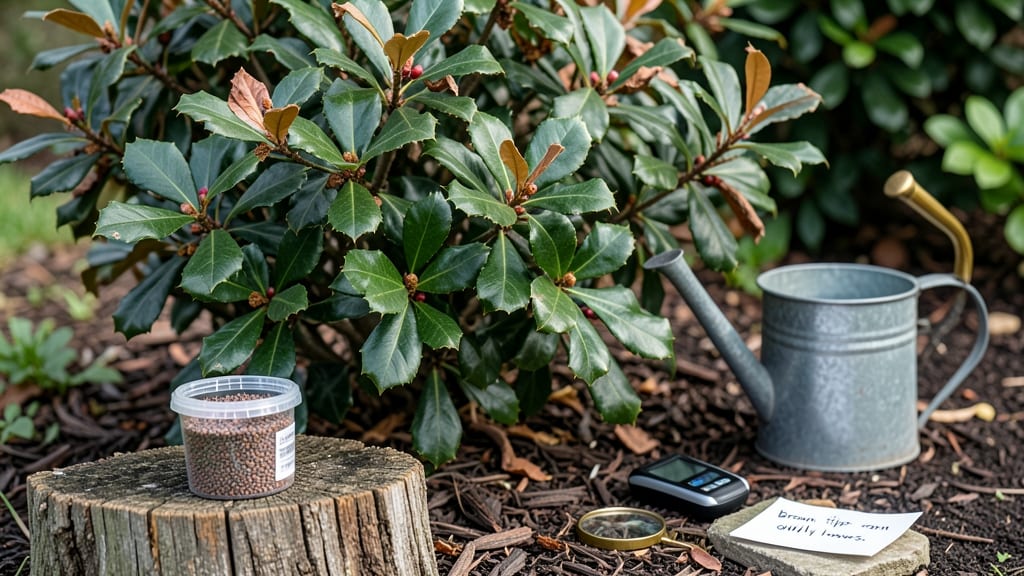
Your holly bush's brown tips might be screaming for help—fungal blight is the most common culprit, and copper spray is the foolproof fix. 🌿 I’ve seen this problem turn into a full-on leaf collapse when ignored, but with the right approach, your bush can bounce back stronger than ever.
The key is acting fast before the infection spreads to the whole plant.
Fungal blight thrives in damp, crowded conditions, often triggered by overwatering, poor airflow, or salt spray from nearby roads. Pests like spider mites can also weaken the leaves, making them vulnerable. The good news? You don’t need fancy tools—just a homemade copper spray (or store-bought), pruners, and a little patience.
Start by trimming the worst-affected branches to improve airflow, then apply the spray every 7-10 days until new growth appears.
Within 2-3 weeks, you’ll see fresh, vibrant leaves pushing out where the brown tips once were. The bush will regain its glossy sheen and dense shape, and the copper spray acts as a preventive shield for future outbreaks.
Plus, your neighbors will be green with envy when their hollies can’t compete with yours.
If the problem persists after two treatments, check for root rot or deeper fungal issues—sometimes, the soil needs amending with compost or a mycorrhizal fungus to restore balance. When in doubt, consult a local arborist, but for most cases, this method works like a charm.
Root Causes Behind Holly Leaf Damage
If you’ve noticed brown tips on your holly bush, don’t panic—it’s usually a sign of one of a few common issues, each with a distinct scientific trigger. Understanding the why behind the browning is the first step to restoring your plant’s health.
Below, we break down the most likely culprits, from environmental stress to microbial invaders, with clear explanations and actionable insights.
Holly bushes thrive in well-drained soil, and when they’re overwatered or planted in compacted or clay-heavy soil, their roots struggle to absorb oxygen. This leads to root asphyxiation, where roots suffocate and can’t deliver nutrients or water efficiently to the leaves.
The result? Brown, crispy tips as the leaf edges dry out from stress.
🔍 How to spot it:
- Yellowing leaves before browning (a sign of root stress).
- Soggy soil that stays wet for days after watering.
- Mushy or blackened roots if you dig a small test hole.
💡 Fix it:
- Amend the soil with organic matter (compost or peat moss) to improve aeration.
- Water deeply but less frequently—holly prefers soil that’s moist but not soggy.
- Ensure the planting hole has a drainage layer (gravel or sand) at the bottom if your soil is clay-heavy.
Holly bushes are partial-shade lovers, and when exposed to intense afternoon sun or drying winds, their leaves lose moisture faster than they can absorb it through their roots. This causes plasmolysis—where plant cells shrink and die at the edges, leading to those telltale brown, papery tips.
🔍 How to spot it:
- Browning occurs on exposed sides of the bush (e.g., west or south-facing leaves).
- Leaves may feel dry or crispy to the touch.
- New growth appears stunted or wilted in hot, windy conditions.
💡 Fix it:
- Provide afternoon shade (use a sheer fabric screen or plant nearby shade trees).
- Mulch the base with 2–3 inches of organic mulch to retain soil moisture.
- Avoid pruning during peak summer heat—wait for cooler months.
Fungal pathogens like Phytophthora (root rot) or Septoria (leaf spot) thrive in wet, humid conditions and can cause brown, irregularly shaped tips or spots with yellow halos. These fungi block the plant’s vascular system, preventing water and nutrient flow.
🔍 How to spot it:
- Brown tips with dark spots or lesions (often with a fuzzy texture).
- Leaves may drop prematurely or develop blackened veins.
- Fungal growth (mold or mildew) on soil or leaf surfaces.
💡 Fix it:
- Apply a copper fungicide spray (like copper sulfate) every 7–10 days during wet seasons.
- Prune and dispose of infected leaves (don’t compost them!).
- Improve air circulation by spacing plants 3–5 feet apart.
Tiny pests like spider mites or scale insects suck sap from holly leaves, causing stippling, yellowing, and browned edges. Their feeding weakens the plant, making it susceptible to further stress. Look for fine webbing (mites) or sticky residue (scale) on leaves.
🔍 How to spot it:
- Brown tips with tiny dots or webbing on undersides of leaves.
- Sticky honeydew on leaves or nearby surfaces.
- New growth appears stunted or curled.
💡 Fix it:
- Spray with neem oil or insecticidal soap every 5–7 days.
- Introduce beneficial insects (like ladybugs) to control pests naturally.
- Hose off leaves with water to dislodge mites (especially in early morning).
🎯 Pro Tip: If you’re unsure what’s causing the browning, examine the undersides of leaves and check soil moisture—this often reveals the root (or leaf!) of the problem.
Fixing Holly Bush Brown Tips
Brown tips on your holly bush don’t have to be a permanent problem! With the right approach, you can restore its lush, healthy appearance. Below are targeted solutions based on the most common causes—fungal blight, environmental stress, or pest damage—along with prevention tips to keep your holly thriving.
---
If brown tips are caused by anthracnose or other fungal diseases, act fast to prevent spread.
#### 🔥 Step 1: Prune Infected Areas - Use sterilized pruners (wipe with rubbing alcohol) to remove all brown or blackened leaves and stems. - Cut at least ½ inch below the affected area to ensure the fungus doesn’t linger.
#### 🍳 Step 2: Apply Fungicide (Copper-Based or Organic) - Copper fungicide (like copper sulfate or copper hydroxide) is the gold standard for fungal blight. - Mix 1 tbsp per gallon of water and spray thoroughly on both sides of leaves. - Apply early in the morning or late afternoon to avoid leaf burn. - Alternative organic options: - Baking soda spray (1 tsp baking soda + 1 tbsp oil + 1 quart water + a drop of dish soap). - Neem oil (1 tbsp per quart of water) for mild cases.
#### 👨🍳 Step 3: Improve Air Circulation - Thin out dense foliage to allow sunlight and air to reach inner branches. - Space plants 3-5 feet apart to reduce humidity buildup (fungi love damp conditions).
#### ⏰ Prevention Tips for Fungal Recurrence 💡 Water at the base (avoid overhead sprinkling). 🌡️ Water in the early morning so leaves dry by evening. 🎯 Mulch properly (2-3 inches of organic mulch) but keep it 6 inches away from the trunk. ✨ Avoid overhead irrigation—use drip systems instead.
---
If brown tips appear dry and crispy (not mushy), the issue is likely water-related stress.
#### 🔥 Step 1: Check Soil Moisture - Stick your finger 1-2 inches into the soil—if it’s bone-dry, water deeply. - If it’s soggy, hold off on watering and let it dry out slightly.
#### 🍳 Step 2: Adjust Watering Practices - Holly bushes prefer consistently moist (not soggy) soil. - Water slowly and deeply (1-1.5 inches per week, including rain). - Avoid letting soil dry out completely between waterings.
#### 👨🍳 Step 3: Flush Out Salt or Chemical Buildup - If your holly is near a salted driveway or sidewalk, rinse the soil with clean water. - Test soil pH (ideal range: 5.0–6.0). If too alkaline, amend with sulfur or peat moss.
#### ⏰ Prevention Tips for Healthy Soil 💡 Use rainwater or distilled water if tap water is high in chemicals. 🌡️ Mulch with pine needles or wood chips to retain moisture and acidify soil naturally. 🎯 Avoid fertilizing in extreme heat—stick to slow-release granular fertilizer in spring/fall.
---
If brown tips are accompanied by tiny webs, sticky residue, or tiny bugs, pests may be the culprit.
#### 🔥 Step 1: Identify the Pest - Spider mites → Tiny yellow/red dots, webbing on undersides. - Scale insects → Bumpy, waxy growths on stems/leaves. - Aphids → Sticky honeydew, curled leaves.
#### 🍳 Step 2: Apply Targeted Treatments - For spider mites: - Spray with neem oil (1 tbsp per quart of water) or insecticidal soap. - Blast off mites with a strong water spray (early morning). - For scale/aphids: - Horticultural oil (apply in dormant season for scale). - Soap spray (1 tsp mild dish soap + 1 quart water) for aphids.
#### 👨🍳 Step 3: Encourage Natural Predators - Ladybugs, lacewings, and parasitic wasps eat aphids and mites. - Plant companion flowers (like marigolds or dill) to attract them.
#### ⏰ Prevention Tips for Pest-Free Holly 💡 Inspect new plants before bringing them home. 🌡️ Keep holly healthy—stressed plants attract pests. 🎯 Remove fallen leaves/debris where pests hide. ✨ Use reflective mulch (like aluminum foil) to deter spider mites.
--- If more than 50% of the holly is affected and treatments fail, it may be time to remove and replace the plant. Choose a disease-resistant variety (like ‘Sky Pencil’ or ‘Winter Gem’ holly) for future plantings.
--- By tackling the root cause—whether fungal, environmental, or pest-related—your holly bush can bounce back to its vibrant, glossy green self. Act quickly, and with a little care, you’ll have a lush, thriving holly in no time! 🌿✨
Frequently asked questions
Why do holly bushes get brown tips in winter?
Winter browning is often caused by freeze damage or winter desiccation, where dry winds and cold air pull moisture from leaves. Holly bushes are semi-evergreen, but their leaves can dry out if they're not protected. Mulch heavily with 3-4 inches of organic material and consider wrapping young bushes with burlap to shield them from harsh winds.
Can I prune brown tips off my holly bush?
Yes, but only if the browning is localized to the leaf edges. Use sterilized pruners to trim just the brown tips—never cut into healthy green tissue. For fungal issues, remove entire infected leaves and dispose of them in the trash (not compost). Prune in early spring for best results, as summer pruning can stress the plant.
How often should I spray copper fungicide?
Apply copper fungicide every 7-10 days during wet seasons or active outbreaks. For prevention, 2-3 applications per growing season (spring, summer, and early fall) works well. Always spray early morning or late afternoon to avoid leaf burn, and wear gloves—copper can irritate skin. Remember to rotate with organic options like neem oil to prevent resistance.
Will brown tips spread to healthy leaves?
If caused by fungal disease, yes—they can spread rapidly in moist conditions. For environmental stress (like salt or drought), browning typically stays localized. Act fast by improving airflow, adjusting watering, or applying fungicide to stop the spread. The key is catching it early before 50% of the bush shows symptoms.
Can I save my holly bush if most leaves are brown?
It depends! If the browning is superficial (just tips) and new growth appears healthy, prune aggressively and focus on soil/airflow improvements. If more than half the bush is affected or stems are blackened, the plant may be beyond saving. Consider replacing it with a disease-resistant variety like 'Sky Pencil' holly for future plantings.