
How To
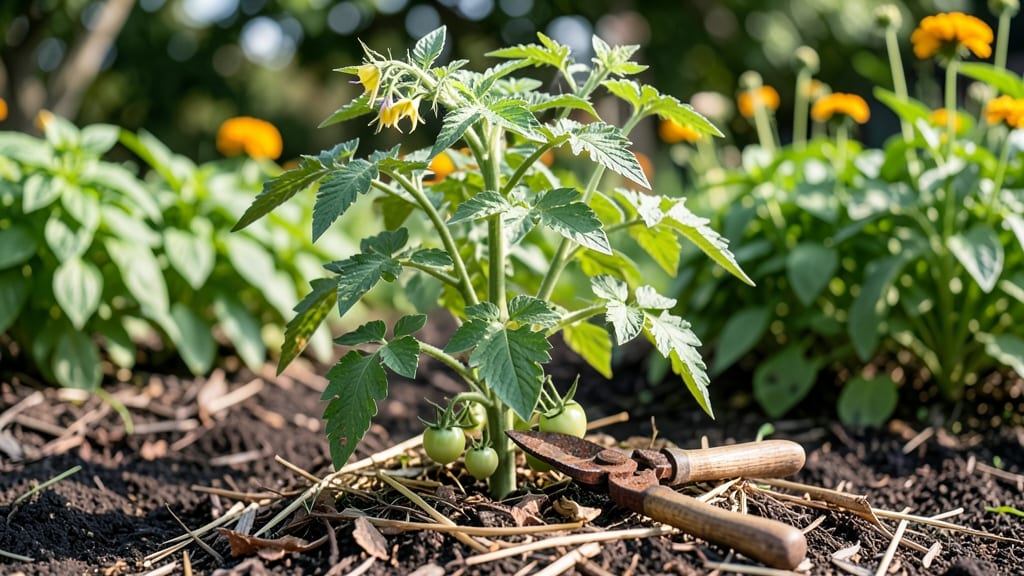
The Bush Early Girl tomato is a determinate variety, growing in a compact bush shape and producing all its fruit at once during a single harvest cycle rather than continuously like indeterminate types.
The Bush Early Girl's determinate nature means it stops growing taller once it starts flowering, focusing all its energy on fruit production. 🌱 This makes it perfect for gardeners with limited space or those using containers, as it won't sprawl uncontrollably.
Unlike indeterminate varieties that keep growing and producing fruit all season, determinate plants like this one give you a big harvest all at once—great for canning or preserving. The trade-off? You'll need to plant multiple rows if you want continuous tomatoes throughout the season.
This growth habit also affects care needs—determinate plants typically require less pruning and staking since they naturally stay compact. However, you'll want to ensure proper spacing (about 18-24 inches apart) to prevent disease spread and maximize air circulation.
The single harvest cycle means you'll need to plan your garden layout carefully if you want fresh tomatoes all summer long.
💡 In This Article
- How Determinate vs Indeterminate Tomato Growth Affects Harvesting
- Best Gardening Practices for Determinate Bush Early Girl Tomatoes
How determinate vs indeterminate tomato growth affects harvesting
The key difference between determinate and indeterminate tomatoes lies in their genetic growth patterns. Determinate varieties like Bush Early Girl produce a terminal bud at the top of their main stem, signaling the plant to stop growing taller once it reaches about 3-4 feet.
This triggers a shift in energy from vertical growth to fruit production, resulting in a concentrated harvest window—typically 2-3 weeks—where the plant bears nearly all its fruit simultaneously. 🌿
Indeterminate varieties, on the other hand, lack this terminal bud and continue growing vertically throughout the season, producing fruit continuously from the lower leaf axils. This means you'll get tomatoes all summer long, but each plant may require 6-10 feet of trellis support.
The Bush Early Girl's determinate nature makes it perfect for gardeners who want a quick, abundant harvest without ongoing maintenance—ideal for container growing (using 5-gallon pots) or small urban gardens.
This growth difference also affects plant structure. Determinate plants form a bushy, multi-stemmed shape with primary stems radiating from the base, while indeterminate plants grow as a single, vine-like stem.
The compact structure of determinate varieties means they're less prone to wind damage and require minimal staking, though you may still want to use cages or small stakes to support the weight of ripe fruit. 🍅
The biological mechanism behind this involves plant hormones, particularly auxin, which regulates cell elongation. In determinate plants, auxin production shifts from the growing tip to the fruit clusters once the terminal bud forms, redirecting resources to ripening.
This hormonal shift explains why determinate plants ripen all their fruit at once—it's a programmed response to stop vertical growth and focus on reproduction.
For gardeners planning their season, this means determinate varieties like Bush Early Girl are excellent choices if you want to can or preserve a large batch of tomatoes at once.
However, if you prefer fresh tomatoes throughout the summer, you'll need to plant multiple determinate varieties at 2-week intervals or choose indeterminate types. The trade-off is clear: determinate plants offer convenience and space efficiency, while indeterminate plants provide a prolonged harvest.
Consider this example: A single Bush Early Girl plant might produce 10-20 pounds of tomatoes in its 2-week harvest window, while an indeterminate plant like 'Sungold' might yield 20-30 pounds over 3-4 months.
The choice depends on your gardening goals—whether you prioritize convenience and space or continuous production. 🌱