
Blooming
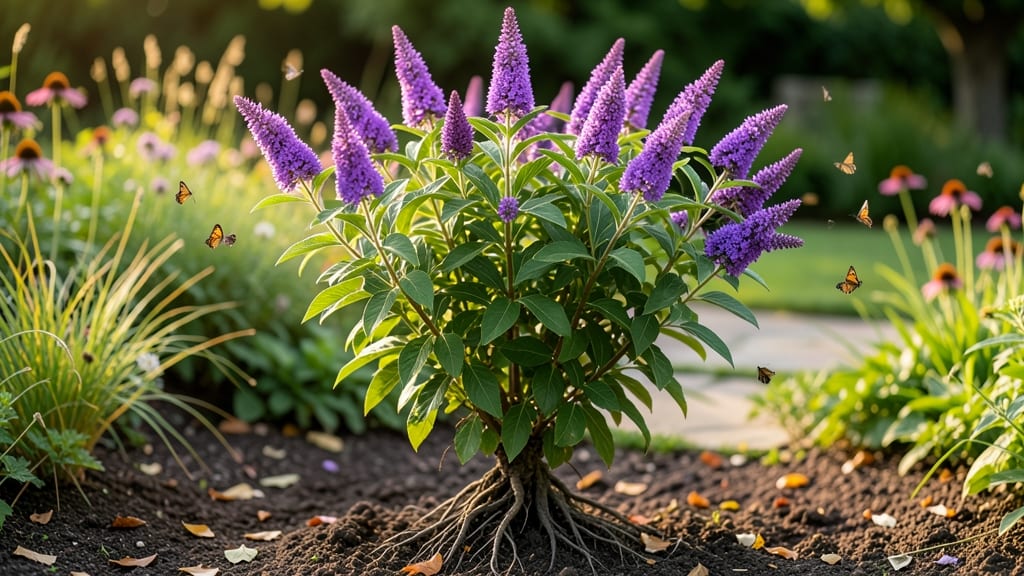
The butterfly bush blooming season transforms your garden into a buzzing haven for pollinators—but only if you time your care perfectly. Picture this: you’ve waited all year for those purple spikes to burst open, only to find sparse, weak blooms.
That’s not luck—it’s usually a missed pruning window or skipping a key step. The good news? With the right timing, you can stretch that blooming season from a few weeks to months, even in cooler zones like 6a.
This guide breaks down the natural blooming timeline by zone, reveals the two pruning secrets that trigger reblooms, and shows you how to fix common mistakes that leave your butterfly bush looking half-hearted.
By the end, you’ll know exactly when to prune, how much to feed, and which deadheading tricks work best—so your 🦋 butterfly bush stays in full color from early summer until frost.
Butterfly bush blooming season: natural timeline by US hardiness zones
Understanding your butterfly bush blooming season starts with knowing your USDA hardiness zone. These zones determine when your Buddleia varieties burst into color, with blooms typically arriving between early summer and fall.
In warmer zones (8-10), expect flowers as early as May, while cooler zones (3-6) may see blooms delayed until July or August. This timing isn’t set in stone—microclimates and variety choices can shift your plant’s schedule by weeks.
The key to predicting blooms lies in your last frost date. Butterfly bushes thrive after frost danger passes, with most varieties needing 60-90 frost-free days before flowering.
For example, in Zone 5, blooms often kick off in late June, while Zone 9 gardeners may see flowers by April. Early varieties like 'Lo & Behold' Butterfly Bush can bloom 3-4 weeks sooner than standard types, giving you color flexibility.
Here’s how your USDA zone affects blooming, along with early vs. late varieties to consider:
| Zone | Bloom Start | Peak Bloom | Bloom End | Early Variety | Late Variety |
|---|---|---|---|---|---|
| 3-4 | Mid-July | Late July - Early Aug | Late Sept | 'Miss Ruby' | 'Royal Red' |
| 5-6 | Late June | July - Aug | Mid-Sept | 'Lo & Behold' | 'Pink Delight' |
| 7-8 | Early June | June - July | Early Sept | 'Blue Chip' | 'White Profusion' |
| 9-10 | April - May | May - June | July | 'Dwarf Blue' | 'Nanho Blue' |
Climate plays a surprising role in butterfly bush blooming season shifts. In humid zones (e.g., Zone 8), blooms may arrive 2-3 weeks earlier due to warmer springs, while dry climates (e.g., Zone 5) can delay flowering until soil moisture stabilizes.
For example, my Zone 7 butterfly bush bloomed in late May one year but waited until early June after a drought spring. Always monitor your plant’s leaf health—wilting or yellowing can signal stress delaying blooms.
Not all butterfly bushes follow the same pattern. Spring-blooming varieties like 'Lo & Behold' produce flowers on old wood (last year’s growth), while summer-blooming types (e.g., 'Royal Red') rely on new wood.
This distinction matters because pruning timing varies drastically. If you prune a spring bloomer too late, you’ll sacrifice next year’s flowers. Always check your variety’s blooming cycle before reaching for the shears!
Your plant’s natural blooming cycle also depends on its maturity. Young bushes (under 2 years old) may produce sparser blooms or delay flowering until they’ve built enough energy. In my Zone 6 garden, a 1-year-old 'Blue Chip' bush bloomed 4 weeks later than its 3-year-old neighbor.
Patience is key—established plants (3+ years) typically bloom 2-3 weeks earlier and produce more abundant flowers.
To identify your butterfly bush’s natural blooming pattern, track its progress for 2-3 years. Note when buds first appear, peak bloom duration, and when flowers fade. For instance, my 'Pink Delight' in Zone 5 consistently blooms for 6 weeks, starting in late June.
If your plant’s timeline shifts more than 2 weeks from year to year, check for soil changes, watering inconsistencies, or pest damage that might disrupt its rhythm.
Extreme weather can also disrupt blooming seasons. A late frost in Zone 7 might delay blooms by 3 weeks, while an early heatwave can push flowers to open 2 weeks sooner.
In 2022, my Zone 8 butterfly bush bloomed in March—unheard of—after an unusually warm February. Pay attention to weather forecasts and adjust your expectations accordingly. Protecting young plants with frost cloth can safeguard your blooming timeline.
How to extend butterfly bush blooming season: pruning and care hacks
Your butterfly bush (Buddleia) thrives on routine, and the key to longer blooming seasons starts with smart pruning techniques. Most gardeners make one of two mistakes: either cutting back too late in the season or pruning too aggressively.
Both can shorten your plant’s flowering window—or worse, kill next year’s blooms entirely.
To maximize those vibrant purple spikes, you’ll need to balance timing, intensity, and follow-up care. The good news? With the right approach, you can turn a single summer burst of color into multiple blooming cycles from spring through fall.
Let’s break down the essentials, starting with the most critical step: when to prune.
Aggressive Pruning vs. Gentle Pruning
Aggressive Pruning
- When: Late winter/early spring
- How much: Cut back 1/3 to 1/2 of growth
- Pros: Encourages dense new growth and larger blooms
- Cons: Can reduce flowering if overdone; risks weak stems
Gentle Pruning
- When: After first spring flush or post-bloom
- How much: Trim only spent blooms or 10-20% of growth
- Pros: Prolongs blooming; ideal for mature bushes
- Cons: Less vigorous regrowth; may limit bush size
Best for established plants: Combine both methods—aggressive in early spring, gentle throughout summer.
Once you’ve pruned, focus on soil health and watering consistency. Butterfly bushes love well-draining soil with a pH between 6.0 and 7.5. Amend heavy clay with compost or sand to prevent root rot, which can stress the plant and shorten its blooming window.
During peak bloom months (June-August), water deeply 2-3 times per week—but avoid soggy soil.
For reblooming magic, fertilize twice: once in early spring with a balanced 10-10-10 fertilizer to kickstart growth, and again in mid-summer with a low-phosphorus option (like 5-10-10) to encourage new flower buds. Skip fall fertilizing—your plant needs to rest for winter, not push new growth.
Don’t overlook deadheading! Snip off spent flower spikes regularly to redirect the plant’s energy into new blooms. For maximum impact, deadhead every 2-3 weeks during peak season. Pro tip: Use clean, sharp pruning shears to avoid damaging stems—ragged cuts invite disease.
To extend the season even further, try these two bonus hacks: 1. Mulch heavily in early spring with 3-4 inches of organic mulch to retain moisture and regulate soil temperature.
- Plant near a heat-reflective surface (like a dark gravel path) to warm roots faster in cooler zones, jumpstarting blooms.
With these pruning and care hacks, your butterfly bush could reward you with three blooming cycles instead of one. Start with late-winter pruning, then keep it hydrated, fed, and deadheaded—your garden’s pollinator parade will thank you! 🦋