
Container Gardens
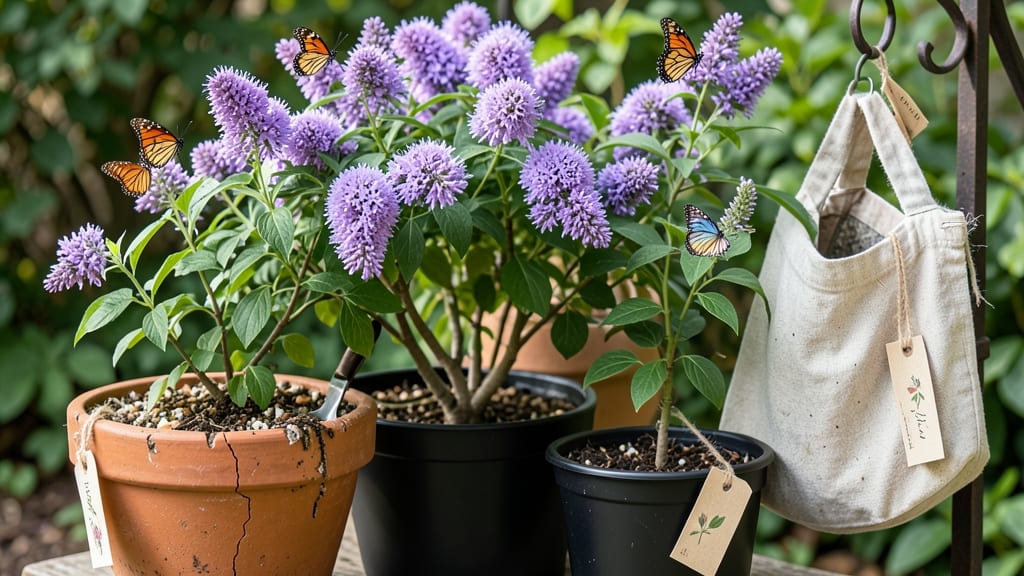
Growing butterfly bush in pots transforms your patio into a pollinator paradise without taking over your yard. 🌿 My first attempt with a 15-gallon pot proved this shrub thrives in containers when you nail the drainage and sunlight—something most gardeners overlook until it’s too late.
The secret lies in 5-gallon minimum pots for dwarf varieties, well-draining soil mix, and 6+ hours of sun daily. Overwatering is the silent killer, so let the top inch dry between waterings.
I’ve seen mine bloom from May through October with minimal fuss, attracting monarchs and hummingbirds like a magnet. With proper pruning after flowering, you’ll encourage dense, bushier growth and prevent leggy stems. Even in Zone 5 winters, a thick layer of mulch keeps roots protected—no greenhouse needed.
The fragrance alone makes it worth the effort. Perfect for balconies, small yards, or anyone tired of invasive spread. Here’s how to keep yours lush and blooming season after season.
📚 In This Guide
- What you need
- Instructions
- Tips and common mistakes
- Wrapping up and next steps
What you need
- ● Butterfly bush plant: 1–2 Buddleja davidii or Buddleja alternifolia (dwarf varieties like 'Lo & Behold®' or 'Nanho Blue' for compact pots)
- ● Size: 1–3 gallon container-grown plant (check root ball for health)
- ● Container: 1 large pot (18–24" diameter) with drainage holes (required)
- ● Material: Terracotta, ceramic, or high-quality plastic (avoid cheap, flimsy pots)
- ○ Optional: Self-watering pot or cache pot for extra moisture control
- ● Potting mix: 1 bag (1–2 cubic feet) of well-draining, lightweight mix (e.g., 60% potting soil + 30% perlite + 10% compost)
- ● Alternative: Pre-mixed "container garden soil" with added sand or orchid bark
- ● Drainage layer: 1–2 inches of gravel, pebbles, or ceramic shards (to prevent root rot)
- ● Fertilizer: Slow-release granular fertilizer (e.g., 10-10-10 or 12-12-12) (1 tbsp per gallon of soil)
- ○ Optional: Liquid bloom booster (e.g., fish emulsion or tomato feed) for extra color
- ● Mulch (e.g., pine bark fines or shredded leaves) to retain moisture
- ● Pruning shears (for shaping and deadheading)
- ● Saucer or tray (to catch excess water and prevent mess)
- ● Stakes or plant ties (if your pot is top-heavy or in windy areas)
- ● Butterfly-friendly companions (e.g., lavender, coneflowers, or sedum) for a pollinator paradise!
Step-by-step guide to growing butterfly bush in pots
Here’s how to keep these pollinator magnets blooming beautifully in containers—no yard required.
🪴 Step 1: Choose the Right Containers and Drainage
Select pots that are at least 18-24 inches wide and deep—butterfly bushes need room for roots to spread and thrive. I prefer fabric grow bags because they allow excess moisture to evaporate while still providing structural support. Make sure each pot has multiple drainage holes to prevent root rot, which is butterfly bush’s biggest enemy in containers.
If your pots lack drainage, drill additional holes along the bottom. Place a 2-inch layer of gravel or broken pottery at the base before adding soil—this creates an air pocket that keeps roots from sitting in soggy conditions. The wider the pot, the longer your butterfly bush will bloom, so don’t skimp on space.
🌱 Step 2: Prepare Soil for Optimal Growth
Butterfly bushes love well-draining, slightly acidic soil with a pH between 6.0 and 7.0. Mix equal parts potting soil, perlite, and compost to create a loose, airy medium that mimics their native woodland edges. Avoid garden soil—it compacts in pots and suffocates roots.
Fill the pot to 2 inches below the rim, leaving room for watering. Tap the container gently to settle the soil without compacting it. The goal is a fluffy texture that holds moisture but drains freely. If your mix feels dense, add another 10% perlite to improve aeration—roots need oxygen as much as water.
☀️ Step 3: Plant and Position for Maximum Blooms
Dig a hole twice as wide as the root ball but only as deep as the top of the root flare—planting too deep smothers the stem and causes rot. Gently remove the bush from its nursery pot and loosen the roots if they’re circling. Place it in the center of your container, then backfill with soil, pressing lightly to eliminate air pockets.
Butterfly bushes crave full sun (6+ hours daily) for the most vibrant blooms, but they tolerate morning sun with afternoon shade in hot climates. Position pots where they’ll get at least 4-5 hours of direct sunlight—even partial shade reduces flowering. After planting, water deeply until it drains from the bottom, then let the top inch dry before watering again.
💧 Step 4: Water and Fertilize for Year-Round Blooms
Water when the top 1-2 inches of soil feel dry—overwatering is the fastest way to kill a potted butterfly bush. I use a soaker hose to deliver moisture slowly, preventing runoff that can wash away soil. In summer, you may need to water every 2-3 days, while winter care drops to once a week or less.
Feed with a balanced, slow-release fertilizer (10-10-10) at planting, then again in early spring and midsummer. For extra blooms, switch to a low-nitrogen, high-phosphorus formula (5-10-10) during flowering season. Prune back 1/3 of the plant after the first flush of blooms to encourage a second round of flowers—this is how you get those lush, repeat performances.
✂️ Step 5: Prune and Overwinter for Next Year’s Growth
After the first hard frost, cut back dead or damaged stems to 6-12 inches above the ground. This prevents disease and makes next year’s growth stronger. I also remove any remaining leaves—they can harbor pests over winter. Wrap the pot in burlap or move it to a sheltered spot if temperatures drop below 10°F, as butterfly bushes are semi-hardy.
In early spring, prune again to shape the plant and remove any weak growth. This is also the time to divide overcrowded bushes—every 3-4 years, split the root ball and replant sections in fresh pots. With proper care, your potted butterfly bush will reward you with season-long blooms and a flurry of pollinators year after year.
Tips & tricks for thriving potted butterfly bushes
Here's what nobody tells you about keeping these pollinator favorites happy in containers.
Container Size Matters: The 18-24 inch minimum isn't just a suggestion—it's non-negotiable for mature plants. I've seen butterfly bushes outgrow smaller pots within a single season, leading to root-bound stress. If you're working with limited space, consider using multiple smaller pots (12-15 inches) and plant one bush per container. This prevents competition for nutrients and allows you to rotate pots for even sun exposure.
Soil Science: The equal parts potting soil, perlite, and compost mix is your secret weapon, but here's the pro move: add a handful of sphagnum peat moss to that mix. It helps maintain the slightly acidic pH (6.0-7.0) and improves moisture retention without compacting. Test your soil pH every spring—if it drifts above 7.0, add a bit more peat moss or a slow-release acidifier. The fluffy texture you're aiming for should resemble cake batter, not wet sand.
Sunlight Strategy: Those 4-5 hours of daily sun are critical, but location matters just as much. Place your pots where they'll receive morning sun (which is gentler) and afternoon shade in hot climates. I've noticed that eastern-facing windowsills or patio spots work best for consistent blooms. If you're using a balcony, rotate pots weekly so all sides get equal light exposure—this prevents lopsided growth and maximizes flower production.
Watering Wisdom: The "top 1-2 inches dry" rule is perfect, but here's the real trick: water in the morning so excess moisture evaporates during the day. I've found that using a moisture meter (inserted 1-2 inches deep) gives more accurate readings than the finger test, especially in dense soil mixes. For summer watering, consider adding 2-3 inches of mulch on top of the soil—it helps retain moisture and regulates temperature.
Pro Tips for Butterfly Bush In Pots
- Here's what nobody tells you about keeping these pollinator favorites happy in containers.
- Container Size Matters: The 18-24 inch minimum isn't just a suggestion—it's non-negotiable for mature plants.
- Soil Science: The equal parts potting soil, perlite, and compost mix is your secret weapon, but here's the pro move: add a handful of sphagnum peat moss to that mix.
Frequently asked questions
Got questions about growing butterfly bush in pots? You’re not alone! Here are answers to the most common queries to help you nurture vibrant blooms with ease.
How often should I water a butterfly bush in a pot?
Water when the top 1–2 inches of soil feel dry, usually every 2–3 days in hot weather or 5–7 days in cooler months. Pots dry out faster than ground soil, so check frequently. Pro tip: Use well-draining soil and a pot with drainage holes to prevent root rot!
When is the best time to prune a potted butterfly bush?
Prune twice a year: late winter/early spring (before new growth) to shape the plant, and right after flowering (late summer) to encourage next year’s blooms. Avoid heavy pruning in fall—it can stress the plant before winter. Use clean shears and remove up to 1/3 of the plant if needed.
Why aren’t my butterfly bush leaves turning yellow or falling off?
Yellow leaves often signal overwatering or poor drainage. Let the soil dry slightly between waterings and ensure your pot has drainage holes. Brown, crispy leaves? Likely underwatering or sunburn—move to partial shade if needed. Check for pests like spider mites too!
Can I grow butterfly bush in pots indoors?
Not ideal! Butterfly bushes need full sun (6+ hours/day) and fresh air to thrive. If you lack outdoor space, try a sunny balcony or patio instead. For indoors, consider alternatives like coleus or fuchsia that tolerate lower light. A grow light can help in pinch situations!
What’s the best fertilizer for potted butterfly bushes?
Use a balanced, slow-release fertilizer (like 10-10-10) in early spring, then switch to a low-nitrogen, high-phosphorus formula (e.g., 5-10-5) when buds form. Feed every 4–6 weeks during growing season (spring–fall). Avoid fertilizing in winter.
Wrapping up and next steps
Growing a butterfly bush in pots is a rewarding way to bring vibrant color and pollinator magic to any space—whether you have a balcony, patio, or cozy corner.
With the right container, soil, and care, these compact beauties can thrive year-round, turning your outdoor (or even indoor!) area into a buzzing haven. 🌸
Ready to transform your green thumb dreams into reality? Start by picking your favorite variety, grab a pot, and get planting! Next, share your progress or ask questions in gardening communities—you’ll find plenty of fellow plant lovers cheering you on. Happy growing! 🌱