
Propagation
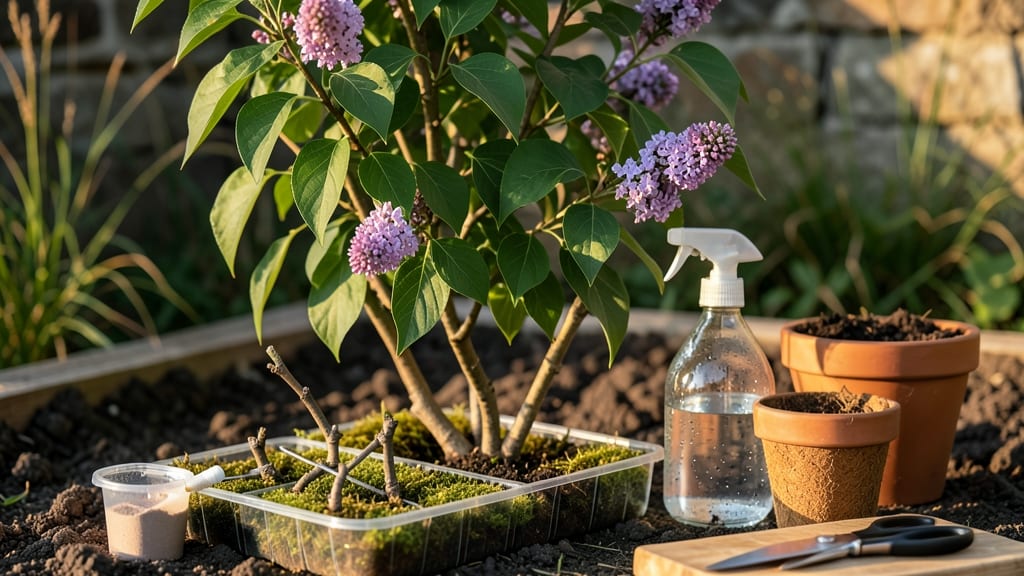
Growing a lilac bush from a cutting means free fragrant blooms in just a few seasons—if you time it right. 🌿 I’ve rooted dozens of cuttings, and the late summer/early fall window is your best shot for success. Lilacs root more easily then, and the cooler temps help prevent rot.
You’ll need sharp pruners, rooting hormone, and a pot with well-draining soil. The secret? Cutting just below a leaf node on a healthy, pencil-thick stem. Dip it in hormone, then plant it in moist soil, keeping it shaded and humid until roots form—usually in 6-8 weeks.
Once roots take hold, you’ll see new growth by spring, and by year two, you’ll have a full-sized bush. The key is patience and consistent moisture. I’ve even rooted cuttings in water first, then transplanted them—both methods work if you stay consistent.
This method saves money and lets you grow rare varieties. Just avoid overwatering, and your lilac will thrive. Ready to try?
Rooting Failures Explained
Understanding why lilac cuttings sometimes refuse to root can turn frustration into opportunity. Lilacs (Syringa spp.) are notoriously stubborn when it comes to propagation, but their reluctance often boils down to a few key biological and environmental factors.
Let’s break down the science behind why your cutting might be struggling—and how to fix it.
Lilac cuttings rely on auxin, a natural plant hormone that stimulates root growth. If the cutting lacks sufficient auxin—or if it’s produced in the wrong part of the stem—rooting becomes nearly impossible.
- Why it happens: Auxin is primarily concentrated in the apical bud (the topmost growth point) and the stem nodes (where leaves attach).
If you take a cutting from the middle of a woody stem (rather than just below a leaf node), you’re missing the hormone-rich zone. - Actionable fix: Always take cuttings from semi-hardwood (pencil-thick) stems with at least one leaf node and a few leaves.
Dip the cut end in rooting hormone (which mimics auxin) for a 10-second boost.
Lilac cuttings need consistent moisture to hydrate cells and aeration to prevent rot—but getting the balance right is tricky. Too much water drowns the cutting; too little stresses it.
- Why it happens:
- Overwatering: Soggy soil or waterlogged cuttings suffocate roots by blocking oxygen, leading to anaerobic conditions (where harmful bacteria thrive).
- Underwatering: Dry cuttings lose turgor pressure, causing cells to collapse before roots form.
- Actionable fix:
- Use a well-draining mix (50% perlite/sand + 50% peat or coconut coir).
- Keep the medium moist but not soggy—stick your finger in; if the top inch feels dry, water lightly.
- Mist cuttings daily to maintain humidity (60–70% ideal).
Lilacs are cool-season plants, and their rooting success hinges on temperature control. Too hot or too cold throws their metabolic processes out of whack.
- Why it happens:
- Too cold (<60°F/15°C): Slows cellular division, delaying root initiation.
- Too hot (>80°F/27°C): Speeds up respiration but burns roots before they form.
- Inconsistent light: Low light = weak, leggy stems; harsh direct sun = wilting from transpiration stress.
- Actionable fix:
- Ideal range: Keep cuttings in 65–75°F (18–24°C) during the day, cooler at night.
- Indirect light: Place under grow lights (12–14 hours/day) or in dappled shade (e.g., under a sheer curtain).
- Avoid heat mats unless using a propagation station with ventilation.
Even healthy cuttings can fail if pathogens hijack the process. Lilacs are prone to root rot (Phytophthora spp.) and powdery mildew (Erysiphe spp.), which thrive in damp, stagnant conditions.
- Why it happens:
- Bacterial soft rot (Erwinia spp.): Causes mushy stems from overwatering.
- Fungal infections: White fuzzy growth on leaves = mildew; blackened base = rot.
- Actionable fix:
- Sterilize tools with rubbing alcohol before cutting.
- Add fungicide (like mycorrhizal powder or neem oil spray) to the rooting medium.
- Remove infected cuttings immediately to prevent spread.
Lilacs have a specific window for successful propagation—miss it, and your cutting may as well be a paperweight.
- Why it happens:
- Too early (spring): New growth is too soft and lacks stored nutrients.
- Too late (fall/winter): Dormant stems won’t metabolize fast enough to root.
- Over-mature wood: Thick, woody stems (>1 year old) are lignified (hardened) and resistant to rooting.
- Actionable fix:
- Best time: Early summer (when new growth is semi-hardwood—flexible but not brittle).
- Avoid flowering stems: Blooms deplete energy; choose non-flowering side shoots.
Lilacs need balanced nutrition to root, but too many (or the wrong) fertilizers can burn tender roots before they form.
- Why it happens:
- High nitrogen (N): Promotes leafy growth but starves root development.
- Salt buildup: From tap water or synthetic fertilizers, which disrupts osmosis (water uptake).
- Actionable fix:
- Use rainwater or distilled water to avoid salts.
- Wait 4–6 weeks before fertilizing—roots need to establish first.
- Light feed: If needed, use diluted seaweed extract (low in salts, rich in micronutrients).
Not all lilacs root with equal ease. Some cultivars are genetically stubborn, while others are eager rooters.
- Why it happens:
- Hybrid lilacs (e.g., Syringa × hybrida) often root poorly compared to wild types (Syringa vulgaris).
- Older cultivars may have lower auxin production due to selective breeding for flowers over propagation.
- Actionable fix:
- Research your lilac’s variety—some (like ‘Katherine Havemeyer’) root more reliably.
- Try grafting as a backup for stubborn types (though it’s advanced).
Pro Tip 💡: Patience is key—lilac cuttings can take 4–12 weeks to root. If yours shows new leaves but no roots, it’s still alive! Gently check for roots after 8 weeks by tugging—if resistance, roots are forming.
Revive Your Cuttings: Step-by-Step Fixes
Growing a lilac bush from a cutting is entirely possible—but only if you address common pitfalls with the right techniques. Below, we’ll tackle the most frequent issues (like rot, wilting, or slow rooting) with practical, foolproof solutions and prevention tips to keep your lilac cuttings thriving.
Cause: Overwatering, poor drainage, or using unsterilized soil/media. Fix: Adjust your moisture and medium for a healthier start.
- 🔥 Trim the Base
- Snip off any black, mushy stems at a 45-degree angle to remove infected tissue. Use clean, sharp scissors to avoid spreading bacteria.
- 🍳 Repot in Fresh, Draining Mix
- Switch to a well-draining medium like:
- Perlite + peat moss (50/50 mix) or
- Sphagnum moss + sand (for humidity lovers).
- Avoid garden soil—it compacts and traps moisture.
- Switch to a well-draining medium like:
- 👨🍳 Reduce Watering
- Water only when the top inch of soil feels dry. Stick your finger in to check—overwatering is the #1 killer of cuttings.
- Pro Tip: 💡 Use a spray bottle for misting instead of drowning the cutting.
- ⏰ Boost Airflow
- Place cuttings under a fan on low speed (24/7) to mimic wind and prevent fungal growth. Aim for gentle breeze (not hurricane-force!).
Prevention:
- Sterilize tools with rubbing alcohol before each use.
- Use a humidity dome (or a plastic bag with holes) to retain moisture without soggy soil.
Cause: Underwatering, stress from transplant shock, or nutrient deficiency. Fix: Balance hydration and support with these adjustments.
- 🌡️ Check Humidity Levels
- Lilac cuttings thrive in 60–70% humidity. If your home is dry:
- Place the container on a pebble tray with water (never let cuttings sit in water).
- Group cuttings together to create a microclimate.
- Lilac cuttings thrive in 60–70% humidity. If your home is dry:
- 🥗 Fertilize Lightly
- After 4–6 weeks, add a diluted rooting hormone (like seaweed extract) or a weak liquid fertilizer (½ strength).
- Avoid high-nitrogen feeds—they promote leaf growth over roots.
- 🔄 Adjust Light Exposure
- Too much sun? Move to bright, indirect light (e.g., east-facing window).
- Too little light? Supplement with a grow light 12 hours/day.
Prevention:
- Acclimate gradually if moving cuttings outdoors. Start with 1 hour of shade, then increase over a week.
- Mist leaves daily to reduce transpiration (water loss).
Cause: Weak cuttings, wrong timing, or lack of rooting hormones. Fix: Optimize conditions for faster, stronger roots.
- 🎯 Choose the Right Cutting Time
- Best time: Late spring or early summer (when lilacs are actively growing).
- Avoid winter cuttings—they’re dormant and won’t root.
- ✨ Use a Rooting Hormone
- Dip the bottom 1–2 inches of your cutting in rooting powder (like Clonex) before planting.
- Alternative: Crush a willow branch (natural rooting stimulant) and rub it on the stem.
- 🔪 Test for Root Readiness
- After 6–8 weeks, gently tug the cutting. If light resistance is felt, roots are forming!
- No give? Wait another 2–3 weeks.
Prevention:
- Select healthy stems: Choose pencil-thick, semi-hardwood cuttings (not too soft, not too woody).
- Keep warm: Roots grow best in 65–75°F (18–24°C). Use a heat mat if your space is chilly.
Cause: Poor hygiene, high humidity, or outdoor contaminants. Fix: Act fast with natural or chemical solutions.
- 🐜 Identify the Pest
- Aphids/spider mites? Spray with neem oil (repeat every 5 days).
- Fungal spots? Treat with copper fungicide or baking soda spray (1 tsp baking soda + 1 quart water + drop of soap).
- 🌡️ Adjust Humidity
- If mold appears, increase airflow and reduce misting frequency.
- 🔄 Isolate Infected Cuttings
- Remove and dispose of severely affected cuttings to prevent spread.
Prevention:
- Quarantine new cuttings for 1 week before mixing with others.
- Rotate cuttings weekly to prevent one-sided growth (which attracts pests).
Final Pro Tip: 💡 Patience is key! Lilac cuttings can take 3–6 months to root—don’t give up if progress seems slow. With these fixes, your fragrant lilac bush will be ready for transplanting in no time!
Frequently asked questions
What’s the best time of year to take lilac cuttings?
Late summer to early fall is ideal—when lilacs produce semi-hardwood stems that are flexible but not too soft. Avoid winter cuttings (they’re dormant) and spring growth (too tender). The key is catching stems that are pencil-thick and actively growing but not flowering.
Can I root lilac cuttings in water instead of soil?
Yes, but it’s trickier! Lilacs root better in soil because water can cause rot. If you try it, use distilled water and change it every 3-4 days. Roots may form in 4-6 weeks, but transplant them to soil immediately after—lilacs hate being water-rooted long-term.
How do I know if my lilac cutting is rooting?
Gently tug the cutting after 6-8 weeks. If you feel slight resistance (not full strength), roots are forming! Look for tiny white roots at the base or new growth at the top. If it pulls out easily, wait another 2 weeks—roots take time.
Why are my lilac cuttings turning yellow?
Yellowing usually means overwatering or low light. Check your soil—it should be moist but not soggy. Move cuttings to bright, indirect light (east window) and reduce misting. Yellow leaves can also signal nutrient deficiency—try a weak seaweed fertilizer after 4 weeks.
How long until my rooted cutting becomes a full bush?
With patience! A rooted cutting may take 1-2 years to mature into a full-sized bush. In the first year, focus on establishing roots. By spring of the second year, you’ll see vigorous growth—prune lightly to encourage branching, and expect blooms in 3-4 years.