
Pruning
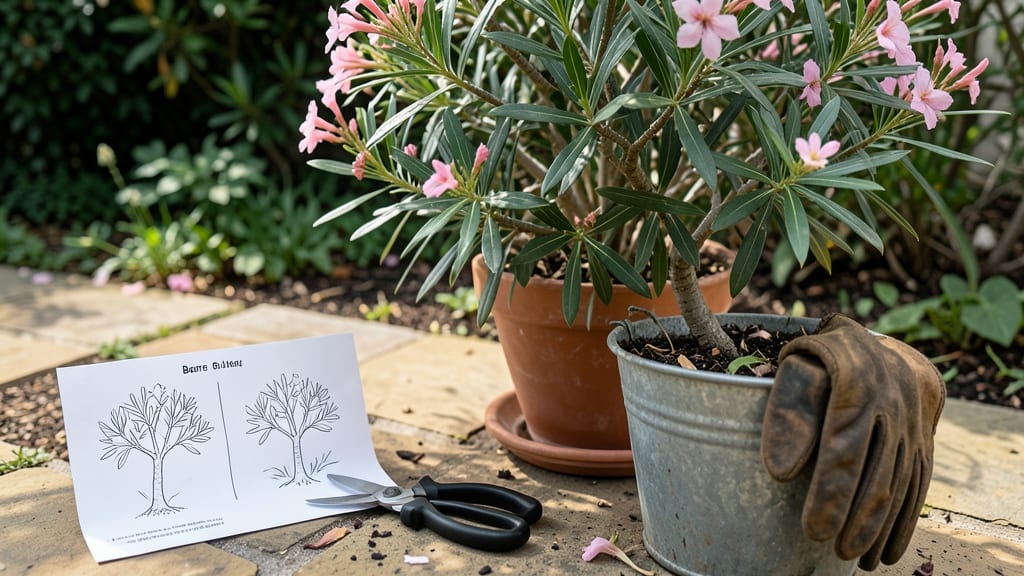
Pruning oleander bushes transforms them from scraggly to showstopping—cutting back oleander bushes is the secret to year-round blooms and lush growth. I’ve learned the hard way that timing and technique make all the difference, especially with that sticky sap.
One wrong cut can leave you with bare stems for months, but done right, your bush will rebound faster than you think.
The best time to prune is right after flowering, when new growth is already pushing out. You’ll need sharp bypass pruners (dull blades tear stems), heavy-duty gloves, and a bucket of soapy water—oleander sap irritates skin.
Start by removing dead or crossing branches first; these are the easiest cuts and clear space for air circulation. Think of it like giving your bush a haircut—clean lines mean healthier regrowth.
Within 4-6 weeks, you’ll see fresh green shoots sprouting from the cut stems, and by next season, your bush will be denser with more blooms. The key is to never cut more than one-third of the bush at once, or you’ll shock the plant.
I’ve pruned mine every year this way, and now it’s the star of my landscape—fragrant, full, and thriving—without a single dead branch in sight.
Works for both coastal climates and inland gardens, though coastal oleanders handle pruning slightly better. If you’re in a hot, dry area, water deeply after pruning to help the plant recover.
And remember: oleander sap is toxic, so keep kids and pets away while working—and always wash tools afterward to prevent cross-contamination.
📚 In This Guide
- What you need
- Instructions
- Tips and common mistakes
- Wrapping up and next steps
What you need
- ● Pruning shears or loppers: Choose bypass pruners (for clean cuts) or anvil pruners (for thicker branches). Opt for bypass for oleander to avoid crushing stems.
- ● Hand saw or pruning saw: For branches thicker than ½ inch. A curved-tooth saw works best to avoid tearing.
- ● Heavy-duty gloves: Oleander sap can irritate skin—go for nitrile-coated gloves (rated for thorns and chemicals).
- ● Safety goggles: Protect your eyes from debris and sap splashes.
- ● Disinfectant (70% isopropyl alcohol or bleach solution): Clean tools between cuts to prevent disease spread.
- ● Heavy-duty trash bags or bucket: For disposing of cuttings (oleander is toxic—never compost!).
- ● Ladder (if needed): Extendable or step ladder for tall bushes (ensure it’s stable and rated for your weight).
- ● Sharpener: Keep blades in top shape for cleaner cuts.
- ● Hose or bucket of water: Rinse tools and gloves post-pruning to remove sap.
- ● Garden twine or zip ties: Secure large branches if you’re pruning in stages.
- ● Mulch: Apply around the base after pruning to retain moisture and suppress weeds.
Instructions for cutting back oleander bushes
Here’s how to revive and shape your oleanders—when to cut, how much to remove, and what to watch for.
Time Your Pruning for Optimal Growth
Prune oleanders in late winter or early spring, just as new growth begins. This timing ensures you’re cutting back before the plant’s active season, allowing it to recover and produce fresh blooms. Avoid pruning in fall or winter—oleanders are semi-dormant then, and cuts won’t heal properly.
Look for swollen buds along the stems as your signal. These indicate the plant is waking up and ready to respond to pruning. If you’re in a warmer climate, you can also prune lightly after flowering to encourage a second flush of blooms, but never cut more than one-third of the plant at once.
Assess and Plan Your Cuts
Examine the bush for dead, diseased, or crossing branches—these are your first targets. Oleanders tolerate heavy pruning, but removing weak or crowded growth improves airflow and prevents fungal issues. Use clean, sharp pruners to make 45-degree cuts just above a leaf node or bud.
Step back and visualize the shape you want. Oleanders can be pruned into formal hedges, rounded mounds, or even small trees. Mark your cuts with a piece of string or your eye before snipping—oleanders grow back quickly, and you don’t want to overdo it. Aim to reduce the bush by no more than one-third in a single session.
Make the Cuts with Precision
Start by removing dead or damaged branches first—they won’t regrow and only take energy from the healthy parts. Cut these back to the main stem or a healthy bud. Next, shape the bush by trimming overlong or leggy branches to encourage bushier growth. Always cut just above a leaf node or bud to promote new growth in the right direction.
For thicker stems, make two cuts: the first just outside the branch collar (the swollen area where the branch meets the stem), and the second to clean up the jagged edge. Avoid leaving stubs—oleanders heal best from clean cuts. If you’re unsure where to cut, err on the side of leaving a little extra length; you can always trim more later.
Clean Up and Monitor Recovery
After pruning, rake up and dispose of all clippings—oleander leaves and stems contain mildly toxic sap, and composting them can harm other plants. Wear gloves if you’re sensitive to sap or have pets/kids around. Water the base of the bush deeply to help it recover, especially if you’ve made heavy cuts.
Watch for new growth within 2-4 weeks. Healthy oleanders will sprout fresh shoots from the cut areas, and you’ll see buds forming along the stems. If the plant looks stressed (yellowing leaves, no new growth), it may need fertilizer or more frequent watering. Avoid heavy pruning again until next season—oleanders need time to rebound.
Maintain Through the Growing Season
Once pruned, oleanders need regular care to stay healthy. Water deeply once a week (or more in extreme heat), keeping the soil moist but not soggy. Fertilize lightly with a balanced, slow-release fertilizer in spring and again after flowering to encourage strong growth and blooms.
Keep an eye out for pests like aphids or scale, which can stress newly pruned plants. A strong spray of water usually removes them, but severe infestations may need insecticidal soap. If your oleander flowers poorly after pruning, it might need more sunlight—oleanders thrive in full sun (6+ hours daily) and may not bloom as heavily in shade.
Tips & tricks for cutting back oleander bushes
Real talk: Pruning oleanders isn't rocket science, but these tricks will help you avoid common mistakes and get results that look intentional—not hacked. Here's what nobody tells you about shaping these tough plants.
Timing is Everything: That late winter/early spring window is critical because oleanders are semi-dormant in fall/winter, and cuts won't heal properly. I learned this the hard way after pruning too early and watching my plant struggle. The swollen buds are your visual cue—they're nature's way of saying "go ahead." In warmer climates, you can do light post-flowering pruning, but never exceed that one-third rule. Over-pruning stresses the plant and can reduce next year's blooms.
The One-Third Rule Matters: When the instructions say "no more than one-third," they mean it. I've seen people cut back half their oleander and wonder why it took a year to recover. Think of it like haircuts—you wouldn't shave your head bald, would you? Mark your cuts with string first to visualize the shape. Oleanders grow back quickly, but they can't handle drastic reductions in one session. For formal hedges, you might need to do this in stages over two seasons.
Cutting Technique Secrets: That 45-degree angle above the leaf node isn't just for looks—it directs water runoff away from the cut and promotes better healing. For thicker stems, the two-cut method prevents tearing. I always keep a small notebook by my pruners to sketch the plant's shape before cutting. This helps me visualize the final form and avoid uneven cuts. And remember: clean cuts heal faster than jagged ones. If you're unsure where to cut, leave a little extra length—you can always trim more later, but you can't un-cut a mistake.
Recovery Watch: After pruning, those 2-4 weeks are crucial for new growth. I've noticed that plants pruned in late winter often show buds by early spring, while those pruned in early spring might take the full 4 weeks. Keep an eye out for yellowing leaves—that's your signal the plant is stressed. A deep watering and light fertilizer application can help it bounce back faster. And don't forget: the toxic sap warning is serious. Wear gloves and dispose of clippings properly to protect pets and other plants.
Pro Tips for Cutting Back Oleander Bushes
- Real talk: Pruning oleanders isn't rocket science, but these tricks will help you avoid common mistakes and get resul...
- Timing is Everything: That late winter/early spring window is critical because oleanders are semi-dormant in fall/win...
- The One-Third Rule Matters: When the instructions say "no more than one-third," they mean it. I've seen people cut ba...
Frequently asked questions
Got questions about pruning your oleander bushes? You’re not alone! Here are some of the most common concerns—and their straightforward answers—to help you keep your plants thriving.
When is the best time to cut back oleander bushes?
Oleanders thrive when pruned in late winter or early spring (just before new growth starts). You can also do light trimming in summer to shape the plant, but avoid heavy cuts then—it stresses the bush. Never prune in fall; new growth won’t harden off before winter.
How much can I cut back oleander bushes without harming them?
Oleanders are tough! You can reduce them by up to ⅓ of their height in one season, but avoid drastic cuts (like 50% or more) unless reviving a severely overgrown plant. Focus on removing dead, diseased, or crossing branches first, then shape the rest. Pro tip: Never cut into old wood—oleanders bloom on new growth!
What should I do if my oleander leaves turn yellow after pruning?
Yellowing leaves post-pruning usually mean over-trimming or root shock. If only a few leaves yellow, it’s normal—new growth will replace them. For widespread yellowing, water deeply and avoid fertilizing for 4–6 weeks. If the problem persists, check for pests (like scale) or fungal issues (white powdery spots = powdery mildew).
Are there safer alternatives to pruning oleander bushes?
If you’re concerned about oleander’s toxicity (all parts are poisonous), consider non-toxic alternatives like bougainvillea, hibiscus, or frangipani for similar tropical vibes. For oleanders, wear gloves and long sleeves when pruning, and never burn clippings—sap can release toxic fumes. Compost them instead or dispose in sealed trash bags.
Can I prune oleander bushes in hot or cold weather?
Avoid pruning in extreme heat (above 90°F) or freezing temps (below 30°F). Heat stress weakens the plant, while cold snaps can shock new cuts. Best conditions: Mild days (60–75°F) with evening shade if you’re doing heavy pruning. Water before and after to help recovery.
How often should I prune oleander bushes?
Light shaping trims 2–3 times a year (spring, summer, and early fall) keep oleanders compact and blooming. Heavy pruning (like rejuvenation cuts) should happen every 3–5 years unless the bush is severely overgrown. Pro tip: Prune just after flowering to encourage next year’s blooms!
Wrapping up and next steps
Cutting back your oleander bushes doesn’t have to be a daunting task—with the right tools, timing, and techniques, you can keep them thriving year-round while boosting their beauty and health. 🌿 Whether you’re pruning for shape, growth, or seasonal renewal, remember that consistency and care make all the difference.
Now that you’re armed with knowledge, grab those shears and give your oleanders the attention they deserve!
Your next step? Schedule a quick pruning session this weekend—your bushes (and your curb appeal) will thank you! For extra confidence, revisit the FAQs or watch a short video tutorial to see the process in action.