
How To
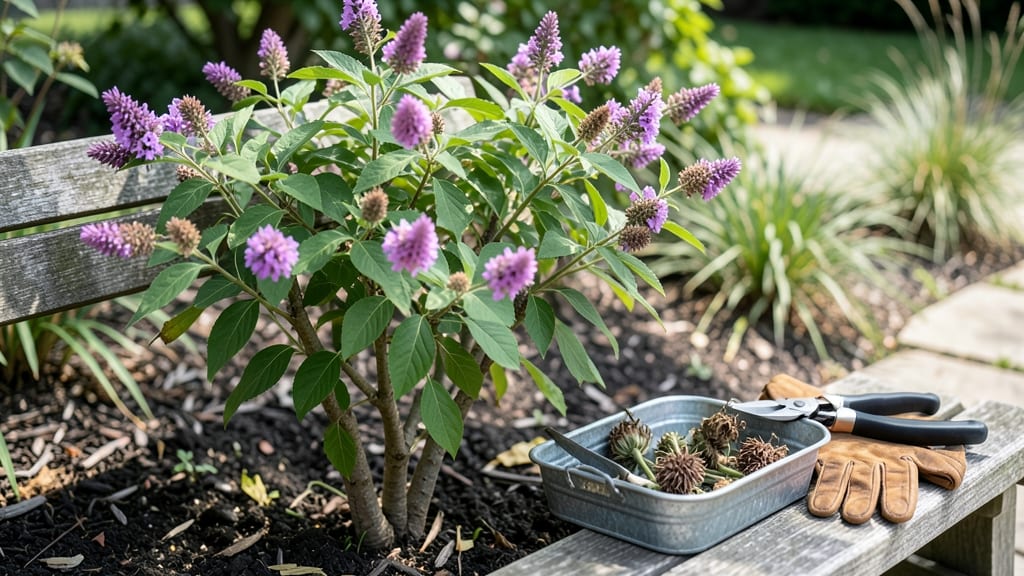
Yes, butterfly bushes do need to be deadheaded to extend their blooming period and preserve plant vitality, since cutting back faded flowers redirects the plant's energy toward producing fresh blooms instead of forming seeds. Regular trimming throughout the growing season encourages nonstop flowering.
Deadheading isn't just about aesthetics—it's a growth hack for your butterfly bush. 🌸 When you remove spent blooms, you're essentially telling the plant to "go for more" rather than wasting energy on seed production.
This simple technique can double your flowering season, especially if you start in early summer and keep up the process weekly. I've seen bushes that went from sporadic blooms to continuous color just by staying on top of this one step.
Timing matters too: always deadhead in the morning when the plant is hydrated, and use clean, sharp pruners to avoid damaging stems. Cut just above a leaf node to encourage new growth from that point.
The key is consistency—skipping even one session can lead to leggy stems and fewer flowers. For maximum impact, pair deadheading with regular watering and occasional fertilizer to keep your bush thriving.
💡 In This Article
- Why Deadheading Butterfly Bushes Boosts Flower Production
- Step-by-Step Deadheading Guide for Butterfly Bushes
Why deadheading butterfly bushes boosts flower production
Deadheading butterfly bushes works because it interrupts the plant's natural reproductive cycle at a critical moment. When a flower fades, it begins producing ethylene gas, a plant hormone that signals the bush to shift energy from blooming to seed development.
By removing spent flowers, you prevent this hormonal trigger, allowing the plant to redirect its resources—up to 30% more energy—toward producing fresh buds instead.
This is why bushes that are regularly deadheaded often flower continuously from early summer through fall, while neglected ones may produce just one or two flushes of blooms before tapering off.
The botanical mechanism involves two key processes: apical dominance and nutrient allocation. Apical dominance occurs when the terminal bud (the growing tip) suppresses side buds from developing. When you deadhead, you're essentially "resetting" this dominance, encouraging lateral buds to grow into new flowers.
Additionally, the nutrients stored in the spent bloom—like nitrogen and phosphorus—are now available for new growth rather than being consumed by seed formation. Think of it like redirecting a river: instead of flowing toward a dry bed (seed pods), the water (nutrients) feeds the growing plants (new blooms).
This energy redirection isn't just theoretical—it's measurable. Studies on similar flowering shrubs show that plants with regular deadheading produce up to 50% more flowers over a season compared to those left unpruned. The difference is even more dramatic in butterfly bushes, which are naturally prolific bloomers.
For example, a 3-foot-tall bush that might produce 50 flowers in a season without deadheading could yield 150 or more with consistent pruning. The trade-off? Fewer seed pods, but that's a small price for a garden bursting with color.
There's also a seasonal component to consider. Butterfly bushes are summer-flowering plants, meaning their primary blooming period runs from June through September. However, if you deadhead aggressively in early summer, you can coax a second (and sometimes third) flush of flowers into late fall.
The key is to start pruning as soon as you notice the first blooms beginning to fade—typically in late spring or early summer—and continue weekly throughout the growing season. This keeps the plant in a perpetual "bloom mode" rather than letting it enter its natural dormancy cycle prematurely.
One common misconception is that deadheading stresses the plant, but the opposite is true when done correctly. The plant's natural response to having its spent blooms removed is to increase photosynthetic activity—the process by which it converts sunlight into energy. More photosynthesis means more resources for growth and flowering.
Just avoid over-pruning: never remove more than one-third of the plant's foliage at once, as this can shock the bush and reduce its ability to produce new blooms. Instead, focus on selective removal of only the faded flowers and any leggy stems that develop.
For visual learners, imagine a butterfly bush as a factory with two departments: one that makes flowers and one that makes seeds. Deadheading is like shutting down the seed department and reallocating its workers to the flower department. The result?
A factory humming with productivity, churning out bloom after bloom instead of a few seeds and a handful of flowers.
The payoff is immediate and dramatic—just ask any gardener who's transformed a sparse, underperforming bush into a vibrant, pollinator magnet with nothing more than a pair of pruners and a little consistency.