
Plants
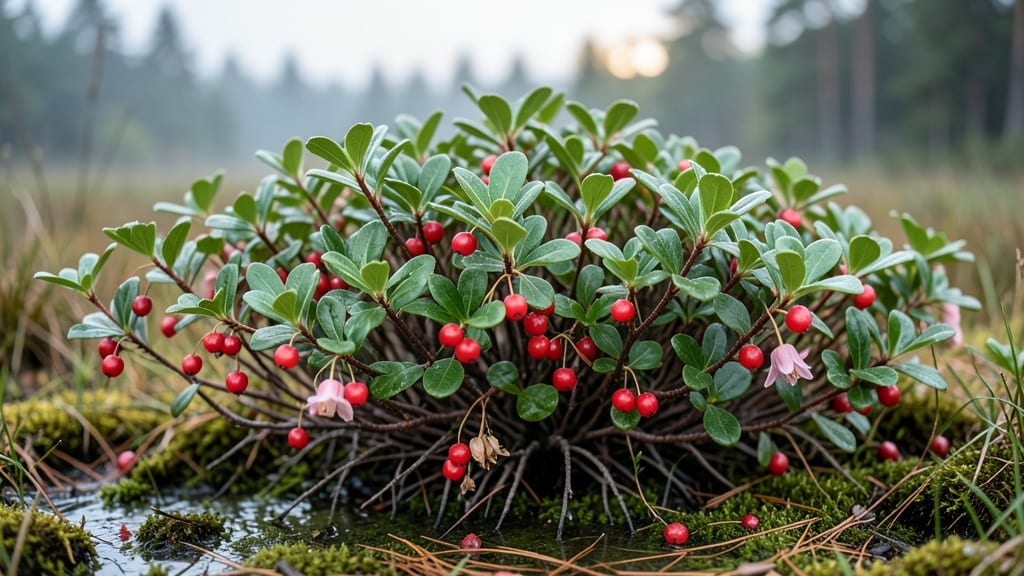
Cranberries grow on creeping vines called bushes, not trees, spreading horizontally across acidic wetlands where their woody stems thrive. These unique plants produce bright red berries from late summer through fall.
These low-growing plants adapt perfectly to their waterlogged habitats, with roots that spread just below the surface to absorb nutrients in flooded conditions. 🌿 Unlike traditional shrubs, cranberry vines can stretch up to 15 feet in ideal conditions, though they typically stay between 3-6 feet wide.
The acidic soil (pH 4.0-5.5) is crucial—their roots can't thrive in alkaline environments, which is why they're rarely found outside wetlands. What's fascinating is how their berries float when ripe, making them easy to harvest by flooding the fields—a technique used by commercial growers since the 1800s.
💡 In This Article
- Cranberry Plant Biology: Why Wetlands Are Essential
- Growing Cranberries at Home: Bog Garden Basics
Cranberry plant biology: why wetlands are essential
The cranberry's vine-like growth habit isn't just a quirk of nature—it's a perfect adaptation to its waterlogged home. These plants belong to the Ericaceae family, which includes other acid-loving species like blueberries and azaleas.
Their stems grow horizontally along the ground, forming dense mats that can spread 10-15 feet wide in ideal conditions. This sprawling form helps them stabilize in shallow water, where their roots develop specialized aerenchyma tissue—air channels that prevent drowning by allowing oxygen to reach submerged parts. 🌊
Their root systems are shallow but extensive, spreading just below the water's surface in natural bogs. This adaptation gives cranberries access to nutrients in the acidic, peat-rich soil (pH 4.0-5.5), which would be toxic to most plants.
The roots also absorb water directly through their leaves—a process called foliar uptake—since the soil is often saturated. What's remarkable is how their berries develop: they grow on pendulous stalks that dangle 1-2 inches above the water, positioning them perfectly for animal dispersal while keeping them protected from flooding.
Compare this to other wetland plants like cattails or water lilies, which have different survival strategies. Cattails grow upright with roots anchored deep in the mud, while water lilies float freely.
Cranberries, however, combine both approaches—their roots stay shallow but their vines spread horizontally, creating a living carpet that thrives in the 1-2 feet of standing water typical of bogs. This unique structure also helps them withstand seasonal flooding, which can last 6-8 months in northern climates where they're native.
The acidic environment isn't just a preference—it's a necessity. Cranberries can't tolerate alkaline soils because their roots lack the specialized mycorrhizal fungi that help other plants access nutrients in neutral pH conditions. Instead, they've evolved to absorb nutrients directly through their roots in acidic environments.
This is why you'll never find wild cranberries growing in garden soil or on hillsides—they're bog obligates, meaning their survival depends entirely on these specialized wetlands. 🌱
Another fascinating adaptation is their berry structure. Unlike most fruits that cling to plants, cranberries have four air pockets that make them buoyant when ripe. This floating ability serves two purposes: it helps them disperse via waterways, and it makes commercial harvesting possible by flooding fields to corral the berries.
The berries' bright red color comes from anthocyanins, pigments that also protect them from UV damage in their sun-exposed wetland habitats.
What most people don't realize is how cranberries handle winter. Their woody stems can survive -20°F temperatures by entering a dormant state, while their roots remain protected beneath the insulating layer of water and peat.
This hardiness explains why cranberries thrive in regions like Massachusetts and Wisconsin, where winters are cold but summers provide the 60-80°F temperatures needed for fruit production. The combination of cold winters and acidic wetlands creates the perfect conditions for these unique plants to flourish. ❄️