
Pruning
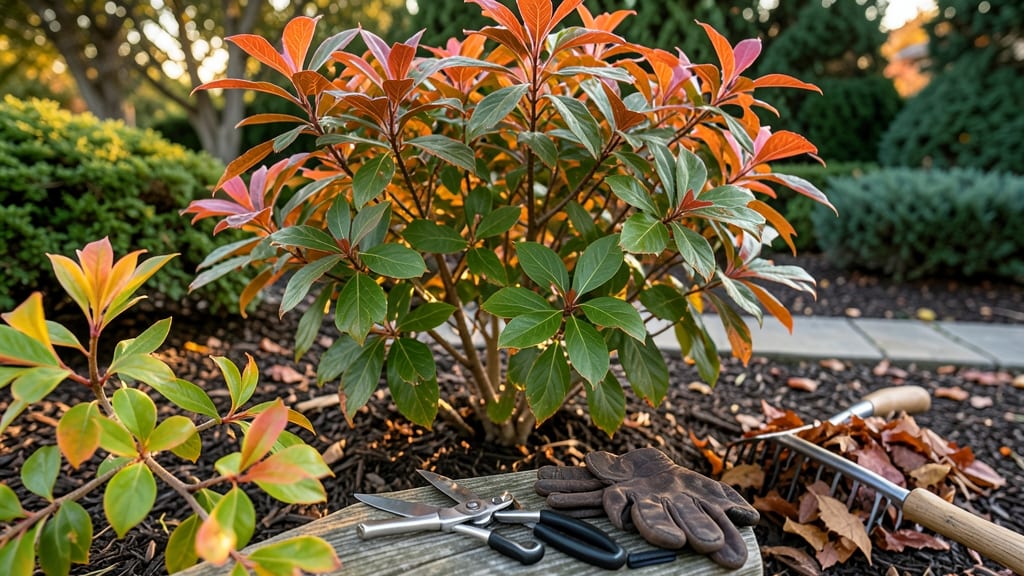
Late-winter pruning turns your Euonymus Burning Bush into a showstopper—and the timing is everything. ✂️ I’ve learned the hard way that cutting too early can shock the plant, while waiting too long risks losing the natural shape that makes this shrub so stunning.
The key is late winter, when dormancy ends but before new growth bursts forth.
You’ll need sharp pruners, gloves, and a clear vision of your shrub’s ideal shape—whether that’s a neat oval, a natural rounded form, or a multi-stemmed specimen. The goal is to remove dead wood first, then thin out crowded branches to improve airflow.
This isn’t just about aesthetics; it’s about healthier growth and fewer pests hiding in dense foliage.
By the time spring arrives, your pruned Burning Bush will be bursting with fresh green leaves and those signature pink-tinged stems that turn fiery red in fall. The secret?
Cut just above a bud or side branch at a slight angle, and avoid over-pruning—never remove more than one-third of the plant in a single session.
Pro tip: If your shrub looks leggy, focus on structural pruning—shortening the longest branches to encourage bushier growth. And always clean your tools between cuts to prevent spreading disease. Trust me, your neighbors will be asking for your secrets by next autumn.
📚 In This Guide
- What you need
- Instructions
- Tips and common mistakes
- Wrapping up and next steps
What you need
- ● Pruning shears or bypass pruners – Sharp, clean, and disinfected (70% isopropyl alcohol or bleach solution). Choose bypass for clean cuts (avoid anvil pruners—they crush stems).
- ● Loppers – For thicker branches (½"–1½" diameter). Opt for bypass loppers with a 4–6" cutting blade for precision.
- ● Hand pruners (felco or equivalent) – Compact, ergonomic, and replaceable blades for detailed work.
- ● Gloves – Leather or heavy-duty nitrile (3–5 mil thickness) to protect from thorns and sap.
- ● Disinfectant solution – 1 part bleach to 9 parts water (or rubbing alcohol) to sterilize tools between cuts and prevent disease.
- ● Pruning saw – Bow or folding saw with a fine-toothed blade (for branches >1½" diameter).
- ● Ladder or step stool – If your bush exceeds 6 feet tall, use a stable, 3-sided ladder (never a step stool for heights >4 feet).
- ● Trash bags or bucket – For collecting pruned branches (1–2 large bags or a 5-gallon bucket with a lid).
- ● Handheld leaf blower – Clears debris from the bush post-pruning.
- ● Sealing wax or pruning sealant – For large cuts (>½"), though not always necessary for Euonymus.
- ● Marking twine or flags – Helps identify branches to keep vs. remove in dense bushes.
- ● Safety glasses – Protects eyes from sap or debris (especially if using a saw).
- ● Pruning oil or sharpening stone – Keeps tools in top condition for next season.
Step-by-Step guide for late-winter euonymus Burning Bush pruning
Late winter is the perfect time to shape your euonymus for fuller growth—here’s how to do it right.
✂️ Step 1: Gather Tools and Assess the Plant
Start with clean, sharp pruning shears and a small pruning saw for thicker branches. I always disinfect my tools with rubbing alcohol first—this prevents spreading disease between cuts. Grab a ladder if your euonymus is taller than 6 feet, and wear gloves to protect against thorns and sap irritation.
Examine the plant for dead, crossing, or diseased branches. Euonymus handles pruning well, but removing these first ensures cleaner growth. Look for branches that rub against each other or grow inward—they’ll compete for light and weaken the plant. Mark these with a piece of twine or your memory before cutting.
✂️ Step 2: Prune for Structure and Shape
Begin by removing any dead or damaged wood first—cut back to the nearest healthy bud or branch collar. Euonymus responds well to pruning, so don’t fear cutting back up to one-third of the plant’s height if needed. For shaping, focus on opening the center to improve airflow and sunlight penetration.
Make cuts just above a leaf bud or lateral branch, angled slightly away from the bud. Avoid leaving stubs—this invites disease. If you’re pruning for a more rounded shape, remove branches that spoil the symmetry. For a natural look, step back occasionally to check your progress from all angles.
🌿 Step 3: Thin Out Overcrowded Branches
Thinning is where you’ll see the biggest difference in bushiness. Select branches that are growing inward or crossing others and cut them back to the main stem. Aim to remove no more than 20-25% of the plant’s total foliage in one session—this prevents stress. Focus on the lower third of the plant first to encourage new growth there.
Watch for "water sprouts"—those long, thin shoots that shoot up from the ground or branches. These steal energy from the rest of the plant. Snip them off at the base. You’ll notice the plant’s structure improve immediately, with more light reaching the center and encouraging fuller foliage.
⏰ Step 4: Clean Up and Monitor Recovery
After pruning, rake up and dispose of all clippings—don’t leave them beneath the plant, as they can harbor pests or disease. Give the plant a light watering if the soil feels dry to the touch, but avoid overwatering. Euonymus is drought-tolerant once established, so let the soil dry between waterings.
Over the next few weeks, keep an eye on the plant for new growth at the pruned areas. You’ll see fresh buds forming within 4-6 weeks, signaling the plant is recovering well. If you notice any yellowing leaves or wilting, it could mean you pruned too aggressively—next time, scale back slightly.
💧 Step 5: Fertilize for Strong New Growth
Once new growth appears, apply a balanced 10-10-10 fertilizer at half strength to encourage robust development. I like to mix it into the soil around the base rather than top-dressing, so it’s absorbed evenly. Avoid heavy nitrogen fertilizers—they promote leafy growth at the expense of strong stems.
Mulch around the base with 2-3 inches of organic mulch, like shredded bark, to retain moisture and regulate soil temperature. Keep the mulch a few inches away from the trunk to prevent rot. With proper care, your euonymus will reward you with denser foliage and vibrant fall color by season’s end.
Tips & tricks for perfect late-winter euonymus pruning
Late-winter pruning transforms your euonymus from a ragged shrub into a lush, well-defined hedge—here’s how to avoid common pitfalls and achieve professional results.
Tool Prep Matters: Beyond just sharpening your pruners, take 5 minutes to wipe down blades with rubbing alcohol between cuts on different branches. This prevents spreading fungal spores that can infect fresh cuts. I keep a small bottle of 70% isopropyl alcohol in my tool bag specifically for this purpose—it’s a game-changer for plant health. For thicker branches over ½-inch, use your pruning saw at a 45-degree angle to avoid tearing the bark, which creates entry points for disease.
Visual Pruning Guide: In Step 2, when shaping your euonymus, imagine an invisible "glass bowl" over the plant. Remove any branches that poke through this imaginary bowl—these are the ones growing outward and spoiling your desired rounded shape. For a more natural look, focus on creating a gentle taper from base to top, with the widest part about one-third up from the ground. This mimics the plant’s natural growth pattern and creates visual balance.
Thinning Strategy: The 20-25% foliage limit in Step 3 isn’t arbitrary—it’s based on the plant’s ability to regenerate. To visualize this, divide your plant into thirds (top, middle, bottom) and remove the most crowded branches from the middle third first. This opens up the center where light struggles to penetrate, while preserving the plant’s structural integrity. Pro tip: Remove entire branches rather than just trimming them back—this encourages stronger new growth from the base.
Recovery Timeline: Those 4-6 weeks of monitoring in Step 4 are critical for assessing your pruning success. Create a simple chart to track new growth—mark the date you finish pruning, then note when you first see buds appear (usually around 3 weeks). If you see no new growth by week 6, you may have been too aggressive. The key indicator of proper pruning is seeing fresh, vibrant leaves emerging from the base of the plant, not just the tips of remaining branches.
Pro Tips for Euonymus Burning Bush Pruning
- Late-winter pruning transforms your euonymus from a ragged shrub into a lush, well-defined hedge—here’s how to avoid common pitfalls and achieve professional results.
- Tool Prep Matters: Beyond just sharpening your pruners, take 5 minutes to wipe down blades with rubbing alcohol between cuts on different branches.
- Visual Pruning Guide: In Step 2, when shaping your euonymus, imagine an invisible "glass bowl" over the plant.
Frequently asked questions
Got questions about pruning your Euonymus Burning Bush? You’re not alone!
Here are the most common concerns—plus expert tips to keep your shrub thriving after your late-winter trim.
When is the absolute worst time to prune my Burning Bush?
Never prune after mid-summer (August–September) or during active growth spurts in spring. Late-winter (just before buds swell) or early spring is ideal. Pruning too late risks stunted flowering or winter dieback—especially in colder climates. Pro tip: If you miss late winter, wait until early spring (before leaves emerge).
How do I fix a Euonymus Burning Bush that’s too leggy or sparse?
Leggy growth usually means over-pruning in past years or poor light exposure. Revive it by:
- Thinning out 20–30% of old, dense stems at the base to improve airflow.
- Cutting back some long branches by ⅓ to encourage bushier regrowth.
- Fertilizing with a balanced 10-10-10 in early spring to boost vitality.
For severe cases, rejuvenation pruning (cutting all stems to 6–12 inches) in late winter can spark new growth—but expect a delayed recovery.
Can I prune my Burning Bush in hot summer weather?
Pruning in extreme heat (above 90°F/32°C) stresses the plant, leading to sunburn or fungal infections. If you must prune in summer, do it:
- On a cool, cloudy day (early morning or late evening).
- After a light rain to reduce stress.
- Avoid heavy cuts—stick to light shaping or deadwood removal.
For major pruning, wait for fall (after blooms fade) or next late winter.
Why are my Euonymus leaves turning yellow after pruning?
Yellowing leaves post-pruning usually signal over-pruning, nutrient deficiency, or root stress. Try this:
If yellowing persists, your shrub may need more time to recover—avoid pruning again until next late winter. Yes! If you want less pruning but similar colorful foliage, consider:
For evergreen options, try Ilex glabra (inkberry) or Pieris japonica (andromeda).
Are there dwarf or low-maintenance alternatives to Burning Bush?
Wrapping up and next steps
Pruning your Euonymus Burning Bush in late winter isn’t just about shaping—it’s about unlocking vibrant blooms and lush foliage all season long! 🌿 With the right tools, timing, and technique, you’ll transform your shrub into a stunning focal point.
Remember: patience and precision are key, and don’t forget to clean up those clippings for a tidy garden.
Ready to give your plant the TLC it deserves? Grab your pruners and start trimming today—your future bushier, healthier shrub will thank you! For extra confidence, review the FAQs or watch a quick video tutorial to see the process in action.