
Diseases
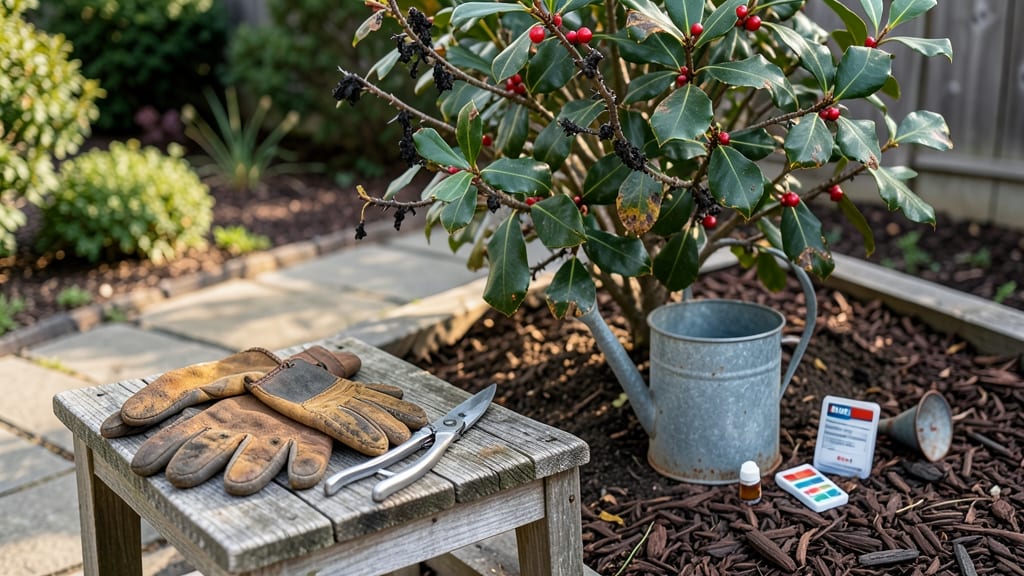
Your holly bush turning brown doesn’t have to mean the end—it’s often a fixable signal, not a death sentence. 🌿 I’ve nursed back holly bushes with just vinegar, baking soda, and a few strategic adjustments, and the results speak for themselves: glossy green leaves by mid-season.
The key is identifying whether it’s fungal stress, pests, or environmental factors causing the browning before jumping to solutions.
Most browning stems from one of three culprits: fungal infections (like powdery mildew), spider mites feasting on leaves, or environmental stress from inconsistent watering or poor drainage. Holly bushes hate soggy roots but also dry spells—think of them as divas who demand just-right moisture.
I’ve seen holly bushes recover completely after a simple vinegar spray (1:1 ratio) and a baking soda soak for the roots, which cuts through fungal buildup without harsh chemicals.
What you’ll end up with is a bush that looks like it just stepped out of a nursery—thick, vibrant foliage and those signature red berries. The best part? These fixes work for both established bushes and younger plants struggling to establish.
Once you’ve addressed the root cause, holly bushes bounce back faster than you’d expect, often within weeks of consistent care.
This approach works year-round, but spring and early summer are the best times to intervene—holly bushes recover most quickly when they’re actively growing. The same methods apply whether your bush is in full sun or partial shade, though sun-exposed bushes need extra vigilance during dry spells.
Let’s get that holly back to its glossy best!
Root Causes Of Browning Holly
When your holly bush starts turning brown, it’s often a cry for help—whether from environmental stress, pest invasions, or hidden diseases. Understanding the specific triggers behind the discoloration is the first step to reviving your plant.
Below, we break down the most common culprits, complete with scientific explanations and actionable insights to tackle each issue head-on.
Holly bushes are hardy, but extreme conditions can push them past their limits. Browning leaves often signal that your plant is struggling to cope with its surroundings.
#### 🔥 Overheating or Sunburn Holly foliage can scorch when exposed to intense, direct sunlight, especially during heatwaves. The edges of leaves may crisp and turn brown—a classic sign of sunburn. - Why it happens: Excessive sunlight triggers oxidative stress in cells, causing chlorophyll to degrade and leaves to dry out. - Actionable fix: Provide afternoon shade (especially in hot climates) or gradually acclimate young plants to full sun over weeks. #### ❄️ Cold or Frost Damage Holly bushes are semi-evergreen, but prolonged cold snaps or late frosts can damage tender new growth. Brown, mushy, or brittle leaves often result. - Why it happens: Freezing temperatures rupture cell membranes, leading to cytoplasmic leakage and tissue death. - Actionable fix: Mulch heavily around the base (3–4 inches of organic mulch) and wrap young plants in burlap during winter. Avoid pruning in late fall, as new growth is more vulnerable. #### 💧 Water Woes: Drought or Overwatering Holly bushes prefer consistent moisture but detest soggy roots. Browning can occur at the tips (underwatering) or across entire leaves (overwatering). - Why it happens: - Drought stress: Leaves curl and brown as the plant conserves water, shutting down peripheral foliage. - Overwatering: Poor drainage leads to root rot (caused by Phytophthora or Pythium fungi), cutting off nutrient flow and turning leaves yellow-brown. - Actionable fix: - Water deeply 1–2 times per week (adjust for clay vs. sandy soil). - Ensure the planting site has well-draining soil—amend with compost or perlite if needed. - Check for compacted soil; aerate if drainage is poor.Tiny invaders can wreak havoc on holly bushes, leaving behind brown, chewed, or skeletonized leaves. Identifying the culprit is key to targeted treatment.
#### 🐛 Holly Leafminer (Phytomyza ilicis) These larvae tunnel between leaf layers, creating blotchy brown trails and causing leaves to wither. - Why it happens: Females lay eggs on undersides of leaves; larvae feed on mesophyll cells, disrupting photosynthesis. - Actionable fix: - Remove and destroy heavily infested leaves. - Apply neem oil or insecticidal soap in early spring before eggs hatch. - Encourage natural predators like parasitic wasps by avoiding broad-spectrum pesticides. #### 🐜 Spider Mites (Tetranychus spp.) These arachnids thrive in dry conditions, sucking sap and causing stippled, bronze-brown leaves with fine webbing. - Why it happens: Mites multiply rapidly in drought stress, injecting toxins that disrupt chlorophyll production. - Actionable fix: - Blast leaves with water to dislodge mites. - Use horticultural oil or miticides with spinosad for severe infestations. - Increase humidity around the plant (e.g., mulch or drip irrigation). #### 🐞 Scale Insects (Aspidiotidae family) These sap-sucking pests appear as brown, waxy bumps on stems and leaf undersides, leading to sticky honeydew and sooty mold. - Why it happens: Scale insects pierce plant cells, causing nutrient depletion and stress-related browning. - Actionable fix: - Scrape off visible scales with a stiff brush dipped in soapy water. - Apply dormant oil in late winter to smother eggs. - Introduce ladybugs or parasitic flies as natural controls.Pathogens often lurk unseen until conditions (like humidity or poor airflow) trigger an outbreak. Browning holly leaves may signal a fungal or bacterial infection.
#### 🍄 Anthracnose (Colletotrichum spp.) This fungal disease causes dark brown, sunken lesions with yellow halos, often on older leaves. - Why it happens: Spores thrive in wet, humid conditions, germinating on wounded or senescent tissue. - Actionable fix: - Prune and sterilize tools with 70% alcohol between cuts. - Apply copper fungicide or baking soda spray (1 tsp baking soda + 1 quart water + a drop of soap) every 2 weeks. - Improve airflow by thinning dense foliage. #### 🌿 Bacterial Leaf Spot (Pseudomonas syringae) Brown, water-soaked spots with yellow margins and oozing bacteria are classic signs of this disease. - Why it happens: Bacteria enter through leaf wounds or natural openings, multiplying in high-moisture environments. - Actionable fix: - Remove infected leaves immediately and disinfect pruners. - Avoid overhead watering; use drip irrigation instead. - Apply copper-based bactericide as a preventive measure. #### 🍂 Root Rot (Phytophthora cinnamomi) If browning spreads from the bottom up and stems feel mushy, root rot may be the culprit. - Why it happens: Waterlogged soil encourages oomycete pathogens that girdle roots, cutting off water and nutrients. - Actionable fix: - Dig up the plant and inspect roots—healthy roots are firm and white; rotten roots are dark and smelly. - Repot in sterile, well-draining soil and trim affected roots with sterilized shears. - Avoid watering until the top 2 inches of soil dry out.By pinpointing the exact cause of your holly’s browning—whether environmental, pest-related, or disease-driven—you can apply precision care to restore its vibrant green. Stay tuned for our next section on organic remedies to revive your holly using vinegar, baking soda, and other household staples!
Revive Your Holly Bush Naturally
If your holly bush is turning brown, don’t panic—there’s hope! The right approach depends on the root cause, whether it’s environmental stress, pests, disease, or poor soil. Below are practical, organic solutions tailored to each issue, plus tips to keep your holly lush and green for years to come.
---
If your holly’s roots are drowning, brown leaves are a cry for help. Holly bushes hate soggy soil, which leads to root rot and nutrient starvation.
How to Fix It: 🔥 Adjust Your Watering Routine - Water deeply once a week (or less in winter) and let the top 2–3 inches of soil dry out between sessions. - Test drainage by digging a small hole near the base—if water pools after 30 minutes, amend the soil.
🍳 Improve Soil Aeration - Mix in compost or coarse sand (50/50 ratio) to loosen heavy clay soil. - For container-grown hollies, ensure pots have drainage holes and use a well-draining potting mix.
👨🍳 Prune Damaged Foliage - Trim brown, mushy leaves (not just the tips) with sterilized pruners to prevent fungal spread. - Focus on lower branches first—these are most affected by poor drainage.
✨ Prevention Tip: - Mulch properly—use 2–3 inches of organic mulch (like pine straw or shredded bark) but keep it 6 inches away from the trunk to avoid rot.
---
Brown, crispy edges or wilting leaves? Your holly might be thirsty. Mature hollies need consistent moisture, especially in hot, dry climates.
How to Fix It: 🔥 Deep Watering Technique - Water slowly and deeply (1–2 inches per week) to encourage deep root growth. - Use a soaker hose or drip irrigation to avoid wetting leaves (which attracts pests).
🥘 Mulch to Retain Moisture - Apply 3–4 inches of mulch (wood chips or straw) to lock in moisture and regulate soil temperature. - Replenish mulch annually—it breaks down over time.
💡 Pro Tip: - Morning watering is best—it reduces evaporation and fungal risks from overnight dampness.
---
Tiny pests sap holly’s strength, causing yellowing, browning, or sticky residue (sap). Early action is key!
How to Fix It: 🔥 Blast Off Pests with Water - Spray leaves thoroughly with water (early morning) to dislodge spider mites and aphids. - Use a hose nozzle for gentle pressure—avoid damaging tender new growth.
🍳 Homemade Organic Sprays - Neem oil spray (1 tsp neem oil + 1 tsp mild soap + 1 quart water) – spray top and bottom of leaves. - Insecticidal soap (store-bought or DIY: 2 tbsp castile soap + 1 quart water) – reapply every 5–7 days. - Baking soda solution (1 tbsp baking soda + 1 tsp oil + 1 gallon water) – great for fungal gnats and soft-bodied pests.
👨🍳 Prune Infested Branches - Cut off heavily infested areas and dispose of them in sealed bags (not compost). - Sterilize pruners with rubbing alcohol between cuts.
✨ Prevention Tip: - Encourage natural predators—ladybugs and lacewings love holly pests! Plant dill, fennel, or marigolds nearby to attract them.
---
Dark brown spots, yellow halos, or premature leaf drop? Fungal diseases thrive in wet, humid conditions.
How to Fix It: 🔥 Remove Infected Leaves - Prune out all brown/spotted leaves and dispose of them (don’t compost). - Avoid wetting foliage when watering—aim for the base of the plant.
🍳 Fungicide Sprays (Organic Options) - Baking soda spray (1 tbsp baking soda + 1 tsp oil + 1 gallon water + few drops of soap) – spray every 7–10 days. - Copper fungicide (follow label instructions) – effective but use sparingly. - Compost tea (homemade or store-bought) – boosts plant immunity.
👨🍳 Improve Air Circulation - Thin out dense branches to allow sunlight and airflow. - Space plants 3–5 feet apart if planting new hollies.
✨ Prevention Tip: - Water in the early morning so leaves dry quickly. - Avoid overhead sprinklers—use drip irrigation instead.
---
Yellowing between veins (iron deficiency) or overall pale foliage (nitrogen deficiency) can cause browning over time.
How to Fix It: 🔥 Test Your Soil - Use a home soil test kit (or send a sample to a local extension office) to check pH and nutrient levels. - Hollies prefer slightly acidic soil (pH 5.0–6.0).
🍳 Amend Soil Organically - For low iron (chlorosis): - Apply iron chelate (follow package rates) or spray with a homemade iron solution (1 tbsp Epsom salt + 1 gallon water). - For nitrogen deficiency: - Work in compost or aged manure in early spring. - Use a balanced organic fertilizer (like 10-10-10) in spring and fall.
👨🍳 Boost Soil Microbes - Mulch with compost or add worm castings to improve soil health naturally.
✨ Prevention Tip: - Feed hollies in early spring before new growth starts—avoid fertilizing in summer (it encourages tender growth vulnerable to pests).
---
Brown, crispy edges after winter? Cold winds and salt spray can damage holly leaves, especially in exposed areas.
How to Fix It: 🔥 Prune Damaged Tips - Trim only the brown, dead tips—healthy green tissue will regrow. - Avoid heavy pruning—hollies bloom on old wood, and over-pruning reduces next year’s berries.
🍳 Protect Next Winter - Wrap young hollies in burlap or frost cloth in late fall. - Choose a sheltered spot (near a fence or building) for new plantings. - Avoid salty soils—if your holly is near a road, rinse the soil occasionally with fresh water.
💡 Pro Tip: - Mulch heavily in fall (4–6 inches) to insulate roots from freezing temperatures.
--- Final Thought: Most holly browning issues are fixable with patience and the right care! Start by identifying the cause, then follow the steps above.
With a little tender loving care (and maybe a vinegar-baking soda boost for stubborn problems), your holly will bounce back—greener and healthier than ever. 🌿✨
Frequently asked questions
Why do holly leaves turn brown in patches rather than all at once?
Patchy browning usually signals localized stress from pests like spider mites or fungal infections such as anthracnose. These issues often start on specific branches where conditions are ideal for the problem—like dry, sunny spots for mites or damp areas for fungi. Check leaf undersides for webbing (mites) or dark spots (fungus) to confirm.
Can I save a holly bush if the browning has spread to most of the leaves?
Yes, but act fast! Severe browning often means root rot or advanced disease. Dig up the plant, trim all brown/mushy leaves, and inspect the roots. Healthy roots are firm and white; rotten ones are dark and smelly. Repot in fresh, well-draining soil and reduce watering until recovery signs appear (new green growth).
Is it safe to prune brown leaves from my holly bush?
Absolutely—pruning is essential! Use sterilized shears to cut only the brown parts, leaving healthy green tissue. For fungal issues, dispose of pruned leaves in sealed bags (not compost). Prune in late winter/early spring for best results, avoiding heavy cuts that remove next year’s berries.
Why does my holly look fine in summer but turns brown in winter?
Winter browning is often cold or wind damage, especially on exposed branches. Holly leaves are semi-evergreen but can’t handle prolonged freezing or salt spray. Protect young plants with burlap wraps, and choose sheltered locations for new plantings. Mulch heavily (4–6 inches) to insulate roots from temperature swings.
Will vinegar or baking soda really fix my holly’s brown leaves?
Yes! A 1:1 vinegar-water spray tackles fungal issues, while baking soda solution (1 tbsp baking soda + 1 gallon water + oil/soap) boosts immunity. Spray both sides of leaves in early morning/evening for best results. Test on a small area first—some hollies may react to vinegar’s acidity. Reapply every 7–10 days until new growth appears.