
Container Gardens
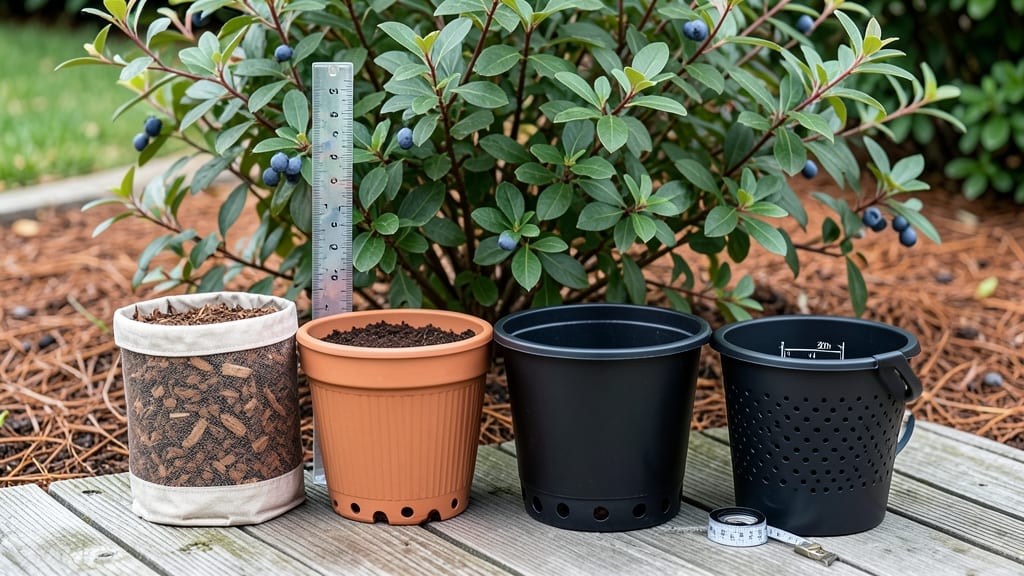
Growing a blueberry bush in a pot means you need a container that gives its roots the right space to thrive—at least 15 inches deep and wide for dwarf varieties, but much larger for standard types.
Picture this: you’ve spent months nurturing your 🫐 blueberry bush, only to watch it struggle because the pot is too small. That’s why getting the size right is the key to a bountiful harvest.
Container size isn’t just about diameter—depth matters too, especially for root health. A shallow pot will leave your blueberry bush thirsty, while a deep one ensures proper drainage and soil volume.
In this guide, I’ll break down the exact pot dimensions for every stage of growth, from seedlings to mature bushes, so you can avoid common mistakes and keep your blueberries happy and productive.
Minimum pot size requirements for blueberry bushes by variety type
Choosing the right pot size for your blueberry bush isn't just about fitting it in your space—it's about giving its roots the room they need to thrive. Blueberries are shallow-rooted but spread widely, so depth and diameter matter just as much as each other.
A pot that's too small will stunt growth and reduce fruit production, while one that's too large can lead to soggy soil and root rot. Let's break down the minimum pot size requirements based on your blueberry variety, so you can set your plant up for a bountiful harvest.
Dwarf varieties like 'Top Hat' or 'Peach Sorbet' are perfect for small spaces, but even these compact bushes need adequate room to grow. Standard varieties like 'Duke' or 'Patriot' have much larger root systems and require significantly bigger containers.
The key is matching your pot size to your plant's mature size and growth habits. Without the right dimensions, you'll struggle with poor fruiting, weak stems, and overall plant stress.
Here's a quick reference to help you visualize the ideal pot sizes for each blueberry variety type:
For dwarf varieties, a 12-15 inch diameter pot with equal depth is perfect. These compact bushes stay under 3 feet tall, making them ideal for patios or small balconies. The key here is ensuring the pot has enough drainage holes—at least 5—to prevent waterlogging, which blueberries hate.
Ceramic or plastic pots work well for these smaller varieties, as they're lightweight and easy to move around as needed.
When you move up to semi-dwarf varieties, you'll need significantly more space.
These bushes mature between 4-6 feet tall and require pots that are 18-24 inches in both diameter and depth. Fabric grow bags or fiberglass containers are excellent choices because they allow roots to breathe and prevent circling, which is common in rigid pots.
Don't forget to add a saucer to catch excess water and keep your patio clean.
The largest pots are needed for standard varieties, which can reach heights of 6-10 feet. These bushes need containers that are 24-36 inches in diameter and depth. Wooden half-barrels or large fabric pots are ideal because they provide the stability and root space these vigorous plants require.
The extra depth is crucial—it gives roots room to spread out and access nutrients without becoming root-bound. Seven or more drainage holes are essential to prevent water from pooling at the bottom.
One common mistake I see is assuming that bigger pots are always better. While it's true that blueberries need adequate space, a pot that's too large can hold too much moisture, leading to root rot.
Always choose a pot that's just slightly larger than your plant's root ball, with 2-3 inches of extra space around the edges. This gives roots room to grow without creating a soggy environment.
For example, a 5-gallon pot is perfect for a young dwarf blueberry, but upgrading to a 10-gallon pot within a year will support better growth.
Remember that blueberries are acid-loving plants, so your pot setup should include a soil mix designed for acidity (pH 4.5-5.5). Pair your pot with a high-quality peat-based or pine bark mix and consider adding a layer of perlite or sand to improve drainage.
This combination ensures your blueberry bush gets the ideal growing conditions, whether it's in a small ceramic pot or a large wooden barrel. With the right pot size and soil mix, you'll be well on your way to a thriving blueberry plant that produces delicious berries year after year.
🫐
How to choose the right pot size for your blueberry bush’s growth stage
Blueberry bushes grow at different rates depending on their variety and age, so their pot size needs change over time. A 5-gallon pot might work for a young seedling, but the same container will stunt a mature bush.
The key is understanding how much space your blueberry bush needs at each growth stage to thrive and produce fruit.
When I first started growing blueberries in containers, I made the mistake of keeping my dwarf variety in the same small pot for years. The result? Poor fruit production and stressed plants.
Don’t let this happen to you—let’s break down the ideal pot sizes for each stage of your blueberry bush’s life cycle.
Seedling Stage (0-1 year)
Use 5-gallon pots (12-14 inches diameter) with 1-2 drainage holes. Focus on root establishment before transplanting.
Juvenile Stage (1-3 years)
Upgrade to 7-10 gallon pots (15-18 inches diameter) when roots fill the current container. Critical for trunk thickness development.
Mature Fruiting Stage (3+ years)
Standard varieties need 15+ gallons (24+ inches diameter); dwarf varieties thrive in 3-5 gallons. Add 2-3 inches of extra depth for soil volume.
Signs Your Pot Is Too Small
Root circling, yellowing leaves, or fruit dropping prematurely? It’s time to repot into a 20-30% larger container with fresh, acidic soil.
Don’t wait until your blueberry bush shows stress signs to upgrade its pot. I recommend checking root growth annually in spring—gently remove the plant from its container and inspect the roots. If you see roots circling the bottom or sides, it’s time to move up to a larger pot.
This simple check can save your plant from root binding, which restricts nutrient and water uptake.
When repotting, choose a container that’s 2-3 inches larger in diameter than the current one. This extra space gives roots room to expand without overwhelming the plant. For example, if your semi-dwarf variety is in a 15-inch pot, move it to a 18-inch container.
Always use a well-draining, acidic soil mix (pH 4.5-5.5) to prevent root rot and encourage healthy growth.
Pro tip: If you’re growing multiple blueberry bushes in containers, consider using fabric grow bags for larger varieties. They prevent root circling and allow roots to breathe better than rigid plastic or ceramic pots. Just remember to water them more frequently, as fabric dries out faster.
With the right pot size at each stage, your blueberry bush will reward you with abundant fruit for years to come. Happy growing! 🫐