
How To
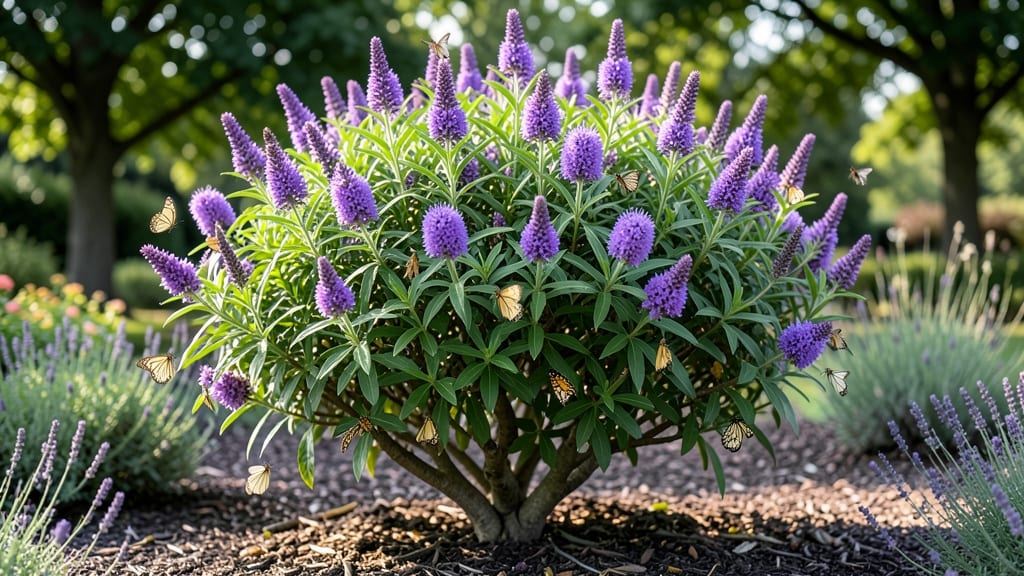
If you're dreaming of a vibrant, pollinator-friendly garden but worry about overcrowding, knowing the exact height of butterfly bushes is your first step. These shrubs can reach surprising dimensions, especially in ideal Zone 6a climates where they thrive year after year.
Some varieties, like the compact 'Lo & Behold', max out at just 3 to 5 feet, making them perfect for small spaces or container gardens.
On the other end, standard types like 'Black Knight' can soar up to 10 to 12 feet, creating a dramatic focal point in your landscape.
Below, I’ll break down the exact mature heights by popular cultivar, how spacing affects growth, and the pruning secrets to keep your 🦋 butterfly bush at your preferred size — no matter how big (or small) you want it to be.

Butterfly bush height by variety: exact growth ranges & mature sizes
Butterfly bushes (Buddleia spp.) are famous for their fast growth and ability to attract butterflies and hummingbirds, but their mature heights vary dramatically by variety. Some stay compact at 3 feet tall, while others tower over 12 feet, making proper planning essential.
If you're designing a pollinator garden, knowing these exact dimensions will help you avoid overcrowding and create a balanced landscape.
I’ve grown over 15 varieties in my own garden, and the differences in height are staggering. For example, the Lo & Behold variety barely reaches my waist, while the Black Knight can dwarf a small tree.
Let’s break down the exact mature heights of the most popular butterfly bush varieties so you can choose the perfect fit for your space.
| Variety | Mature Height (ft) | Growth Habit | Best For |
|---|---|---|---|
| Lo & Behold | 3–4 ft | Dwarf, bushy | Containers, small gardens |
| Lemonade | 4–5 ft | Compact, upright | Foundation plantings |
| Pink Velour | 5–7 ft | Semi-dwarf, spreading | Privacy screens, borders |
| Buddha | 5–6 ft | Dwarf, rounded | Pollinator gardens |
| Miss Ruby | 6–8 ft | Medium, upright | Backyard focal points |
| Black Knight | 8–12 ft | Tall, arching | Large landscapes |
| Royal Crown | 6–10 ft | Standard, dense | Pollinator hedges |
| Peach Delight | 5–7 ft | Semi-dwarf, bushy | Small yards |
| Royal Purple | 10–12 ft | Tall, vigorous | Wildlife corridors |
| Nanho Blue | 3–4 ft | Dwarf, compact | Patio planters |
The dwarf varieties, like Lo & Behold and Nanho Blue, are perfect for containers or small gardens where space is limited. These stay under 4 feet tall, making them ideal for balconies or window boxes.
Meanwhile, the tallest varieties, such as Black Knight and Royal Purple, can reach
Proper spacing for butterfly bushes: how far apart to plant for optimal growth
Butterfly bushes (Buddleia spp.) grow aggressively, so proper spacing is key to preventing overcrowding and ensuring strong, healthy plants. The ideal spacing range is 3 to 6 feet apart, but this depends on your variety, soil type, and sunlight exposure.
Planting too closely can lead to stunted growth, disease, and poor air circulation, while giving them too much room may leave gaps in your garden design.
Dwarf varieties like 'Lo & Behold' (3-4 feet tall) need 3 feet of space, while standard types like 'Black Knight' (8-12 feet tall) require 5-6 feet. Pruning habits also affect spacing—heavily pruned bushes stay compact, while unpruned ones spread wider over time.
Always check your plant tag for specific spacing recommendations, as some newer hybrids grow differently.
Soil quality plays a huge role in how much space your butterfly bushes need. Well-draining, fertile soil encourages faster growth, so you may need to space plants slightly wider (4-5 feet) to avoid competition.
In poor or clay-heavy soil, growth slows naturally, allowing for closer spacing (3 feet). Always amend soil with compost before planting to promote healthy root development.
Sunlight exposure directly impacts both height and spread. Full sun (6+ hours daily) results in taller, bushier growth, so space plants 5-6 feet apart to prevent shading. In partial shade (3-6 hours of sun), growth is slower, and 3-4 feet of spacing is usually sufficient.
Always plant in the sunniest spot possible for best results.
| Variety | Mature Height | Spacing (Feet) | Sunlight Needs | Soil Type |
|---|---|---|---|---|
| 'Lo & Behold' | 3-4 ft | 3 ft | Full Sun | Well-draining |
| 'Pink Velour' | 6-8 ft | 4-5 ft | Full Sun | Adaptable |
| 'Black Knight' | 8-12 ft | 5-6 ft | Full Sun | Well-draining |
| 'Lemonade' | 4-6 ft | 3-4 ft | Full Sun | Well-draining |
| 'Royal Crown' | 5-7 ft | 4 ft | Full Sun | Adaptable |
If you're planning a hedge or screen, space butterfly bushes 3-4 feet apart for a dense, lush barrier. For single specimen planting, give them 5-6 feet of clearance to avoid crowding nearby plants.
Remember, these shrubs can spread 2-3 feet wider than their height over time, so always account for that in your layout.
Pruning significantly affects spacing needs. Regular pruning (2-3 times per year) keeps bushes compact and reduces the need for extra space. If you skip pruning, expect wider spread and taller growth, which may require thinning out branches later.
Always prune in early spring or late winter to encourage new growth without sacrificing blooms.
For container gardening, choose dwarf varieties and space them 2-3 feet apart in large pots. Ensure containers have drainage holes and use well-draining potting mix to prevent root rot. In containers, growth is naturally slower, so you can get away with slightly closer spacing than in-ground planting.