
Companion Plants
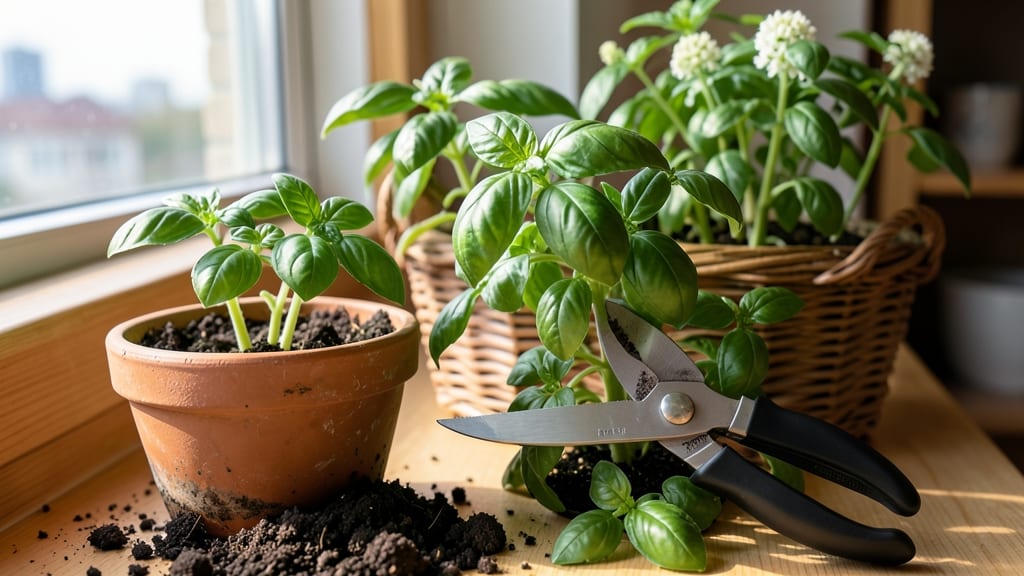
To make basil plants bushier, pinch off the top leaves when stems reach 6 inches, then prune side shoots to encourage branching. Use balanced fertilizer occasionally and ensure 6+ hours of sunlight daily for fuller growth.
Basil responds dramatically to pruning because it's a naturally bushy herb that grows best when you redirect its energy. 🌿 When you remove the top growth, you're essentially telling the plant to focus on developing more side stems instead of growing taller.
This technique works best when done consistently—every 2-3 weeks during the growing season—so the plant keeps producing dense foliage rather than leggy stems.
Light and nutrients play equally important roles in this process. Basil thrives in full sun, but too much direct heat can stress the plant, so morning sunlight with afternoon shade often works best.
For feeding, I recommend a balanced 10-10-10 fertilizer diluted to half strength every 4-6 weeks, which provides steady growth without burning the leaves.
💡 In This Article
- How Pruning and Pinching Stimulate Basil Growth
- Best Fertilizers and Care Tips for Bushy Basil
How pruning and pinching stimulate basil growth
Pruning basil works because of a natural plant process called apical dominance. At the very tip of each stem, the apical bud produces a hormone called auxin, which suppresses the growth of side buds.
When you pinch off this top growth, auxin production drops sharply, allowing dormant side buds to wake up and grow into new branches. This is why basil responds so well—it's hardwired to branch out when the main growing point is removed. 🔥
The timing of this pruning matters more than most gardeners realize. Basil stems should be at least 6 inches tall before pinching, as this ensures enough energy storage in the roots to support new growth.
I've found that waiting until the plant has 4-6 true leaves (not just seed leaves) gives the strongest response. Each pinch should remove about 1/3 of the plant's height, which creates just the right balance between stress and stimulation for the plant.
What happens next is fascinating: within 7-10 days, you'll see new shoots emerging from the leaf axils (the junctions where leaves meet stems). These side shoots grow at a 45-degree angle initially, which helps them capture more sunlight.
The key is to keep pruning these new side shoots when they reach 3-4 inches tall, which maintains that bushy shape rather than letting them grow long and leggy.
There's a common misconception that pruning harms the plant, but the opposite is true. When done correctly, pruning actually rejuvenates basil by improving air circulation, which reduces fungal diseases like powdery mildew.
The plant's root system also grows stronger as it redirects energy from vertical growth to lateral expansion. 🌱 For container-grown basil, this means you'll get more harvestable leaves over the season's lifespan.
One advanced technique I've used with great success is called selective pruning. Instead of removing all side shoots evenly, I leave the two strongest side shoots on each main stem to create a natural framework. This creates a more structured bush shape while still encouraging dense foliage.
The rule of thumb is to always prune just above a leaf node (where leaves and stems connect), as this is where new growth will emerge.
For those growing basil indoors under grow lights, the same principles apply but with slight adjustments. Since artificial light doesn't provide the same spectrum as sunlight, I increase the light duration to 14-16 hours per day when pruning to compensate for the temporary growth slowdown.
The plant will still branch out, but it needs that extra light to maintain vigor during the adjustment period.
Remember that basil's growth response is directly tied to its overall health. If your plant looks stressed (yellowing leaves, slow growth), hold off on pruning until it recovers.
This is especially true if you've recently transplanted or fertilized—the plant needs time to establish before you can stimulate new growth through pruning. 💫