
Shrubs
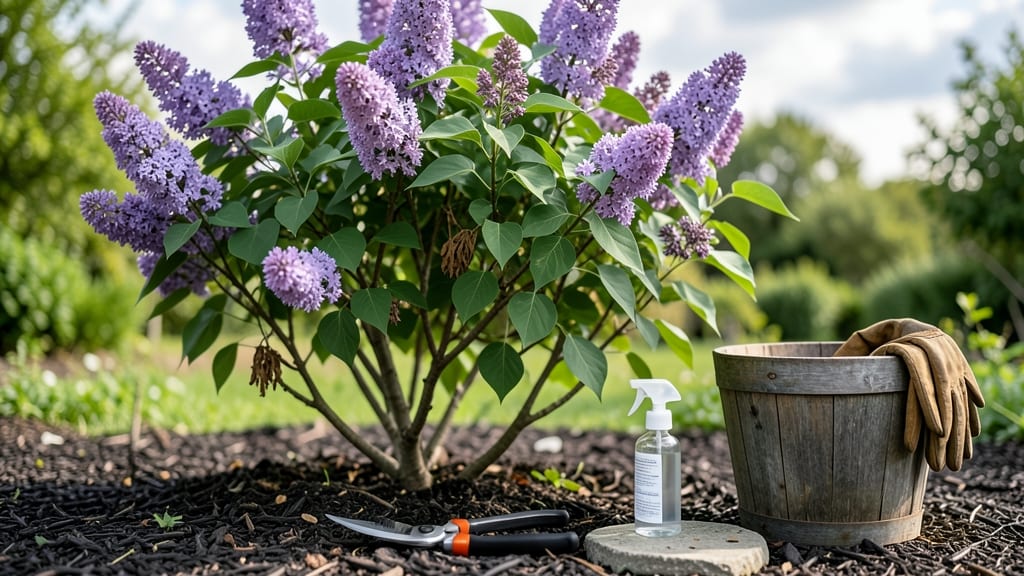
Lilac bush maintenance means pruning right after blooms fade to promote vigorous new growth, thinning crowded stems for better airflow, and applying balanced fertilizer in early spring. Removing spent flowers promptly and avoiding late-season cuts protects the plant from winter damage.
Pruning lilacs at the right time is everything—do it too early, and you'll cut off next year's flowers. 🌸 The key is to wait until the blooms have completely faded, usually in late spring or early summer, when the flower clusters turn brown.
This timing ensures you're only removing old wood while preserving the buds that form on new growth. I've found that lilacs respond best to a gradual shaping approach rather than drastic cuts, which can stress the plant and reduce flowering.
Beyond timing, your tools matter just as much. Use sharp bypass pruners for clean cuts and loppers for thicker stems—dull blades tear the bark, inviting disease. Always cut at a 45-degree angle just above a leaf node to encourage outward growth.
And here's a pro tip: if your lilac hasn't bloomed well, check for overcrowding—thinning stems by one-third annually improves both airflow and sunlight penetration, which directly boosts flower production.
💡 In This Article
- Best Pruning Timeline for Lilac Bushes
- Step-by-Step Lilac Pruning Techniques
Best pruning timeline for lilac bushes
Lilacs bloom on new wood from the previous year's growth, which means pruning at the wrong time can cost you next season's flowers. The critical window opens after blooms fade completely—typically between late May and early July—when flower clusters turn brown and crispy.
This timing ensures you're only removing old, spent stems while leaving next year's flower buds intact on the new growth that forms later in summer. Cutting too early (before blooms fade) risks removing potential buds, while waiting too long (after mid-July) can stress the plant before winter dormancy.
The science behind this involves the lilac's growth cycle: buds for next year's flowers form on the current season's stems after blooming ends.
If you prune before this happens, you're essentially cutting off next year's show. 🌿 For example, if you prune in early spring (March-April), you'll remove all flower buds that formed in late summer/fall.
This is why many gardeners swear by the "wait until after blooming" rule—it's not just tradition, it's biology. Lilacs also benefit from a light shaping cut in late winter (just before buds swell) to remove any dead or crossing branches, but avoid heavy pruning then.
Fall pruning is a common mistake that can weaken lilacs. Cutting in autumn (September-October) gives the plant no time to heal before winter, leaving fresh cuts vulnerable to frost damage and disease.
The exception is removing any dead or diseased branches at any time—these should be cut out immediately to prevent spread. Another pro tip: if your lilac hasn't bloomed well, check the timing—some varieties bloom earlier or later based on your climate zone.
For instance, in Zone 5, blooms may fade by early June, while in Zone 7, you might have until July.
Here's what happens if you miss the timing: Lilacs can develop a "bloom lag" where flowers become sparse or fail entirely. This often occurs when gardeners prune in late summer or fall, cutting back growth that would've formed next year's buds.
The plant then diverts energy to healing cuts instead of preparing for spring blooms. 🌸 To prevent this, mark your calendar for 6-8 weeks after peak bloom—that's your ideal pruning window. For example, if your lilacs peak in early May, aim for late June to early July.
Seasonal growth patterns also play a role. Lilacs grow most vigorously in early to mid-summer, which is why pruning then stimulates new growth that will bear next year's flowers.
The plant's natural cycle includes a period of dormancy in winter, followed by bud formation in late summer/fall, and flowering in spring. Understanding this rhythm helps you align your pruning with the plant's biological clock rather than working against it.
Consider these key factors when planning your pruning schedule:
- Climate zone: Adjust timing by 2-4 weeks earlier in cooler zones (Zones 3-5) and later in warmer zones (Zones 6-8)
- Variety: Some lilacs (like 'Katherine Havemeyer') bloom earlier than others (like 'Dwarf Korean')
- Plant age: Younger lilacs (3-5 years old) need minimal pruning; mature plants benefit from more aggressive thinning