
Fertilization
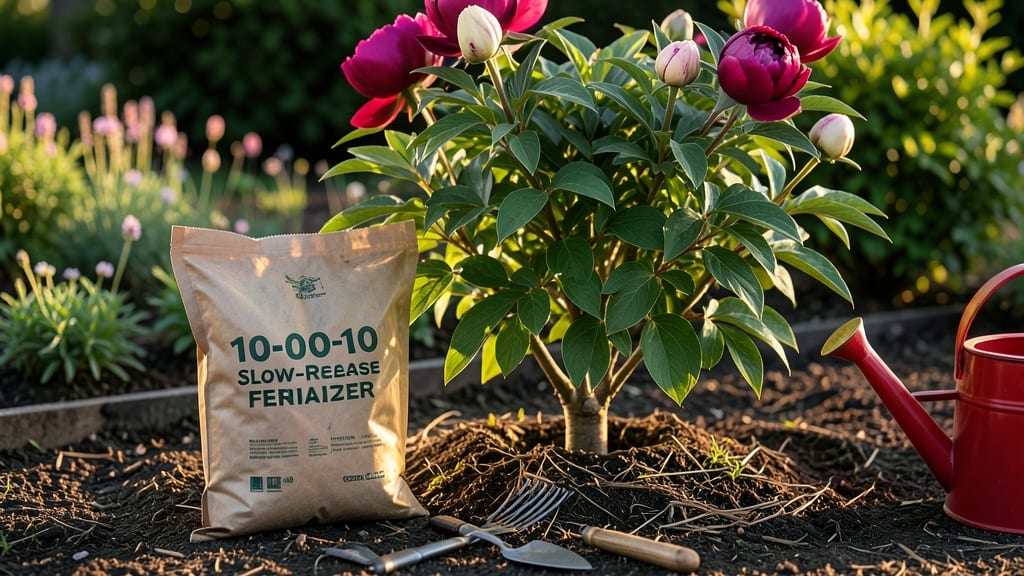
The right peony bush fertilizer with the perfect soil balance is the key to those showstopping blooms you’ve been dreaming of.
Struggling to get your peony bushes to bloom as long and vibrantly as you’d love? The secret might not be in the fertilizer itself—but in the soil pH you’re feeding them. Peonies thrive under very specific conditions, and a simple pH adjustment can transform your garden from lackluster to spectacular.
Most gardeners focus on the type of fertilizer, but the truth is, even the best organic or synthetic blend won’t work unless your soil pH is just right.
Peonies prefer a slightly acidic to neutral range, and getting it wrong can leave you with weak stems or no blooms at all.
In this guide, I’ll walk you through the best fertilizers for each growth stage, how to test and adjust your soil pH, and the common mistakes that keep peonies from reaching their full potential. Let’s get those bushes blooming like never before!

Peony bush fertilizer: the right soil pH for maximum blooms
Peonies are the showstoppers of spring gardens, but their vibrant blooms depend on more than just sunlight and water. The soil pH plays a critical role in nutrient uptake, and peonies are particularly finicky about their growing conditions.
When your peony bushes struggle to bloom or develop yellowing leaves, the culprit is often an imbalanced pH—either too acidic or too alkaline. Getting this right can mean the difference between lush, long-lasting blooms and a sad, sparse display.
Peonies thrive in soil with a neutral to slightly alkaline pH range of 6.5 to 7.5. This range ensures they can absorb essential nutrients like phosphorus, calcium, and magnesium—key players in root development and flower production.
If your soil pH strays outside this range, your peonies may suffer from nutrient deficiencies, stunted growth, or even leaf discoloration. The good news? Testing and adjusting your soil pH is simpler than you think, and it’s one of the most effective ways to boost your peony bushes’ performance.
Before diving into adjustments, it’s essential to diagnose your soil. Many gardeners overlook this step, assuming their soil is "fine" because it looks dark and rich. However, visual cues like yellowing leaves or poor blooming are red flags that your soil might be off-balance.
Testing your soil’s pH is a quick process that can save you time and frustration in the long run. Once you know where your soil stands, you can make targeted amendments to create the perfect environment for your peonies to thrive.
Adjusting your soil pH starts with a simple soil test. You can purchase an affordable home pH test kit from your local garden center or mail a sample to a soil testing lab for a more precise analysis.
To test your soil at home, follow the kit instructions, which typically involve mixing soil with water and comparing the color to a chart. For lab testing, collect soil samples from multiple spots around your peony bushes, about 6 inches deep, and mix them together before sending.
This gives you an accurate reading of your soil’s overall condition.
If your soil tests too acidic (below 6.5), the solution is to raise the pH by adding pelletized lime or wood ash. These amendments work by neutralizing acidity, allowing your peonies to access the nutrients they need.
For alkaline soil (above 7.5), you’ll need to lower the pH using elemental sulfur or aluminum sulfate. These materials gradually acidify the soil over time, so patience is key. Always follow the package instructions for application rates, as overcorrecting can be just as harmful as the original imbalance.
Once you’ve adjusted your soil pH, it’s important to monitor the results. Peonies are slow to respond to changes, so give them at least one full growing season before expecting dramatic improvements.
During this time, focus on providing balanced fertilization, such as a 5-10-10 NPK blend, to support root and flower development. Avoid high-nitrogen fertilizers, which can encourage leafy growth at the expense of blooms. Instead, opt for fertilizers with a higher phosphorus content to promote flowering.
Another critical step is mulching your peony bushes after adjusting the soil pH. A layer of 2-3 inches of organic mulch, like shredded bark or compost, helps maintain soil moisture, regulates temperature, and slowly improves soil structure over time.
Mulch also prevents weeds from competing with your peonies for nutrients, giving your plants the best chance to thrive. Just be sure to keep the mulch a few inches away from the plant’s base to avoid rot.
Remember, peonies are perennials, meaning they’ll come back year after year if given the right care. By maintaining the ideal soil pH and providing consistent fertilization, you’ll set the stage for stunning blooms for decades.
The effort you put into balancing your soil now will pay off in longer stems
Best organic and synthetic fertilizers for peony bushes by growth stage
Choosing the right fertilizer for peony bushes depends on their growth stage—spring, summer, or fall—because each phase demands different nutrients. Organic options like bone meal and worm castings provide slow-release nutrition, while synthetic NPK blends offer precise control over nitrogen, phosphorus, and potassium levels.
Let’s break down the best choices for each stage to maximize those stunning blooms.
In early spring, when peony shoots first emerge, focus on a low-nitrogen fertilizer to encourage strong root development without excessive foliage. Composted manure or a balanced 5-10-10 NPK blend works well.
Avoid high-nitrogen fertilizers, which can weaken blooms. For established bushes, a light application of fish emulsion (5-5-5) can provide a gentle nutrient boost without overwhelming the plant.
🌱 Pros and Cons: Peony Fertilizer Types
Organic Fertilizers
- Pros: Slow-release, improves soil health, no burn risk
- Cons: Requires more frequent applications, slower results
Synthetic NPK Blends
- Pros: Precise nutrient control, fast-acting, easy to measure
- Cons: Can cause burn if overapplied, no soil benefits
Compost/Worm Castings
- Pros: Rich in micronutrients, improves soil structure
- Cons: May attract pests if not fully decomposed
During summer, when peonies are blooming, avoid fertilizing entirely. The plant is already pulling nutrients from the soil to support flowers and foliage. Instead, focus on mulching with compost to retain moisture and provide a slow nutrient release.
If you notice yellowing leaves, a chelated iron supplement can address deficiencies without disrupting blooming cycles.
In fall, as peonies prepare for dormancy, a low-nitrogen fertilizer like bone meal (3-15-0) can strengthen roots for next year’s growth.
Apply it 6-8 weeks before frost to allow time for uptake. Worm castings are another excellent choice—they improve soil structure and provide gentle, long-term nutrition without the risk of over-fertilization.
For newly planted peonies, skip fertilizers entirely the first year. Focus on well-draining soil and mulch application to reduce stress.
In subsequent years, follow the spring/fall schedule above. Over-fertilizing is a common mistake—too much nitrogen leads to lush foliage but fewer blooms, while excess phosphorus can harm beneficial microbes in the soil.
My favorite organic-synthetic combo is using compost tea in spring for micronutrients, followed by a 5-10-10 NPK blend in early summer if growth stalls. Always water deeply after fertilizing to prevent root burn. With the right approach, your peonies will reward you with larger, longer-lasting blooms year after year. 🌸