
Pruning
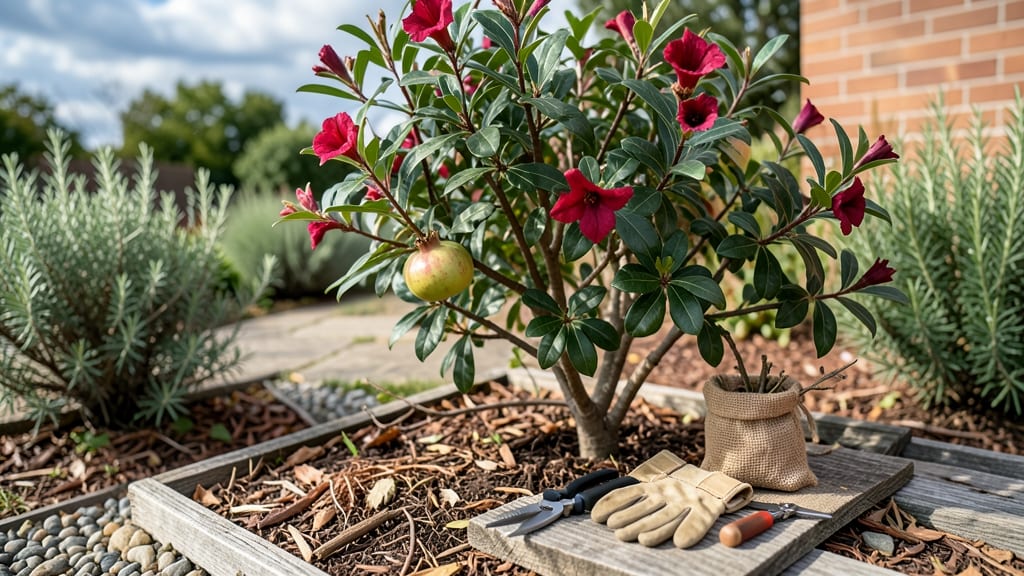
Pruning your pomegranate bush correctly means three strategic cuts that double your harvest next season. 🌱 I learned the hard way—skipping pruning leads to sparse fruit and tangled branches, but the right approach transforms a wild bush into a productive, tidy plant that keeps bearing year after year.
The secret lies in timing and technique, not just hacking away at branches.
Start in late winter when the plant is dormant—this is when you remove dead, crossing, or weak growth to open up airflow. Then, in early summer, give it a light trim to shape and encourage branching.
The final cut comes in fall, focusing on any suckers or overly vigorous growth that steals energy from fruit production. Each cut serves a purpose: health, shape, and productivity.
You’ll end up with a bush that’s easier to harvest from, produces 20-30% more fruit, and stays disease-resistant. The first year after proper pruning, you’ll notice thicker branches, more flowers, and fewer empty stems.
Even if you’ve neglected your pomegranate before, it’s never too late to start—just follow these three cuts and watch it rebound.
Works for both young bushes and mature plants, whether you’ve got a backyard tree or a container-grown specimen. The same principles apply, just scaled to size. Let’s get those shears sharp and make your pomegranate bush the star of your garden again.
📚 In This Guide
- What you need
- Instructions
- Tips and common mistakes
- Wrapping up and next steps
What you need
- ● Pruning shears: Sharp, bypass-style shears (3–5 inches) for clean cuts on small branches.
- ● Loppers: Heavy-duty loppers (8–10 inches) for thicker branches (up to 2 inches in diameter).
- ● Pruning saw: Bow saw or curved-tooth saw for branches thicker than 2 inches.
- ● Disinfectant: 70% isopropyl alcohol or a pruning sealant (like Tanglefoot) to prevent disease spread.
- ● Gloves: Heavy-duty, cut-resistant gloves (e.g., Mechanix or Wolverine) to protect hands from thorns and sap.
- ● Garden twine or zip ties: (2–3 rolls) for temporary support if training young branches.
- ○ Bucket or trash bag: For collecting pruned branches (optional but helpful for composting or disposal).
- ● Pomegranate pruning guide: Printed or digital copy of this article (or a trusted source) for reference!
- ● Hand pruners with a bypass blade: For precision trimming of tiny suckers or buds.
- ● Extension pole: If your bush is tall (6+ feet), a 3–4 ft. pole saw saves your back.
- ● Sharpener: A file or honing tool to keep blades razor-sharp between uses.
- ● Hose or water spray: To rinse tools and branches post-pruning (reduces sap buildup).
- ● Marking spray: Bright paint (like Day-Glo) to tag cuts for future reference.
Step-by-step guide to pruning a pomegranate bush
Here's the method I've used for years to keep my pomegranate bush producing fruit abundantly—no guesswork, just proven cuts.
✂️ Step 1: Perform the Winter Dormancy Cut (Late February)
This is the most critical pruning of the year. Wait until the last frost has passed but before new growth begins—typically late February in most climates. Your goal is to remove any dead, diseased, or crossing branches that compete for energy. I start by inspecting the entire bush, looking for branches that are brown, brittle, or showing signs of fungal infection.
Use sharp pruning shears to make clean cuts just outside the branch collar—the swollen area where the branch meets the trunk. This prevents unsightly stubs and promotes faster healing. Remove any branches that grow inward toward the center of the bush, as these create crowded conditions that reduce airflow and invite disease. You'll see the bush's natural open vase shape emerge as you work.
✂️ Step 2: Light Summer Pruning (June-July)
After the spring flush of growth, perform a second, lighter pruning in June or July. This time you're focusing on shaping and encouraging fruit production. Look for any suckers—those vigorous shoots growing from the base or along the trunk—and remove them completely. These energy thieves divert resources from fruit production.
Next, trim back any branches that have produced fruit this season by about one-third. This encourages new growth that will bear next year's crop. Watch for branches that are growing too long or leggy—they'll produce fewer, smaller fruit. Cut these back to a lateral branch or bud that faces outward from the center. You'll notice the bush becomes more compact and bushier after this cut.
✂️ Step 3: Post-Harvest Cleanup (October-November)
After you've harvested the final fruit in October or November, perform your final pruning of the year. Remove any remaining dead or diseased wood that may have appeared over the growing season. Also, trim back any branches that have become overcrowded or are growing in unproductive directions.
Pay special attention to the bush's overall shape. Pomegranate bushes naturally grow in a vase shape, so aim to maintain that form. Cut back any branches that are growing too close together or rubbing against each other. This final pruning prepares the bush for winter dormancy and ensures a strong start in the following spring. You'll see fewer weak growth points in the following year's new shoots.
🌱 Step 4: Optional Renewal Pruning (Every 3-5 Years)
For established bushes that have become overgrown, perform a renewal pruning every 3-5 years in late winter. This involves removing about one-third of the oldest wood at ground level. Select branches that are at least 3-4 inches in diameter and cut them back to the base or to a strong lateral branch.
This drastic cut may seem harsh, but it rejuvenates the bush and encourages vigorous new growth from the base. You'll notice a flush of new shoots in the following spring, and fruit production will often increase in subsequent years. After renewal pruning, the bush may take a year or two to fully recover, but the long-term benefits are well worth the temporary setback.
Tips & tricks for pruning a pomegranate bush
Confession: I nearly gave up on my pomegranate bush after two years of sparse fruit—until I learned these pruning secrets that transformed its productivity.
Timing is Everything: The late February cut is non-negotiable for winter dormancy pruning. If you miss this window, you risk encouraging new growth that can't survive late frosts. I've learned the hard way that waiting even a week too late can mean weaker branches and fewer flowers the following spring. Mark your calendar now—this is the most critical timing of the year for your bush's health.
The Branch Collar Secret: When making cuts during any pruning season, always look for that swollen area where the branch meets the trunk—the branch collar. This is your visual cue for where to cut. I used to make cuts too close to the trunk, leaving unsightly stubs that never healed properly. Now I measure about 1/8-inch outside the collar, and my cuts heal cleanly every time. This simple technique prevents disease entry points and promotes faster recovery.
Shape Matters More Than You Think: Pomegranate bushes naturally grow in a vase shape, and maintaining this form is key. During your June-July pruning, focus on cutting back branches that grow inward or cross over others. I like to visualize an open vase—this creates optimal sunlight penetration and airflow, which prevents fungal diseases. After shaping, your bush should look like it's letting light flow through its center rather than blocking it.
Renewal Pruning Strategy: That optional renewal pruning every 3-5 years might seem drastic, but it's a game-changer for established bushes. When you remove one-third of the oldest wood, you're essentially giving your bush a fresh start. I've seen bushes that were producing minimally for years come back stronger than ever after this treatment. The key is to do it in late winter when the bush is still dormant—this minimizes stress on the plant.
Pro Tips for Prune Pomegranate Bush
- Confession: I nearly gave up on my pomegranate bush after two years of sparse fruit—until I learned these pruning secrets that transformed its productivity.
- Timing is Everything: The late February cut is non-negotiable for winter dormancy pruning.
- The Branch Collar Secret: When making cuts during any pruning season, always look for that swollen area where the branch meets the trunk—the branch collar.
Frequently asked questions
Got questions about pruning your pomegranate bush? You’re not alone! Here are answers to common concerns—from timing to tools—to keep your plant thriving and fruiting year-round.
When is the best time to prune a pomegranate bush?
The ideal times are late winter (just before buds swell) or early spring. Avoid pruning in fall—it can stimulate new growth that won’t harden off before winter. For light shaping cuts, you can prune lightly after harvest (summer/fall), but avoid heavy pruning then.
Do I need special tools to prune a pomegranate bush?
Not necessarily! A sharp bypass pruner (for branches up to ½ inch thick) and loppers (for thicker stems) work well. For larger branches, a pruning saw may be needed. Disinfect tools with rubbing alcohol between cuts to prevent disease. Gloves are optional but helpful if thorns bother you!
Will pruning reduce my pomegranate harvest?
Not if done right! Pruning increases fruit quality and quantity by improving airflow and sunlight penetration. Focus on removing dead/diseased wood and thinning crowded branches—this encourages larger, sweeter fruit. Just avoid over-pruning; aim to remove no more than 20-30% of the plant’s foliage at once.
What should I do if my pomegranate bush isn’t recovering after pruning?
If your bush looks stressed (yellowing leaves, slow regrowth), it might be underwatered or over-pruned. Check soil moisture (pomegranates hate soggy roots!) and avoid fertilizing for 4-6 weeks post-prune. If branches die back, they may not regrow—focus on healthy growth next season. Patience helps!
Can I prune a pomegranate bush in containers or small gardens?
Yes! Container-grown pomegranates need more frequent pruning (every 1-2 years) to control size. Use dwarf varieties like ‘Wonderful’ if space is tight. Prune to shape the plant and remove branches growing toward the center. Just ensure the container has drainage holes—root rot is a common issue!
Wrapping up and next steps
Pruning your pomegranate bush isn’t just about keeping it tidy—it’s the secret to bountiful harvests year after year! 🌱 By mastering the three key cuts (dormant, post-harvest, and summer shaping), you’ll encourage stronger growth, better fruit production, and a healthier plant.
Remember, patience and consistency are your best tools, so don’t rush the process.
Now that you’re armed with the know-how, grab those pruners and get to work! 🌟 Start with one section at a time, and soon, your pomegranate bush will reward you with vibrant blooms and juicy fruit. Happy pruning—and here’s to a fruit-filled future!