
Shrubs
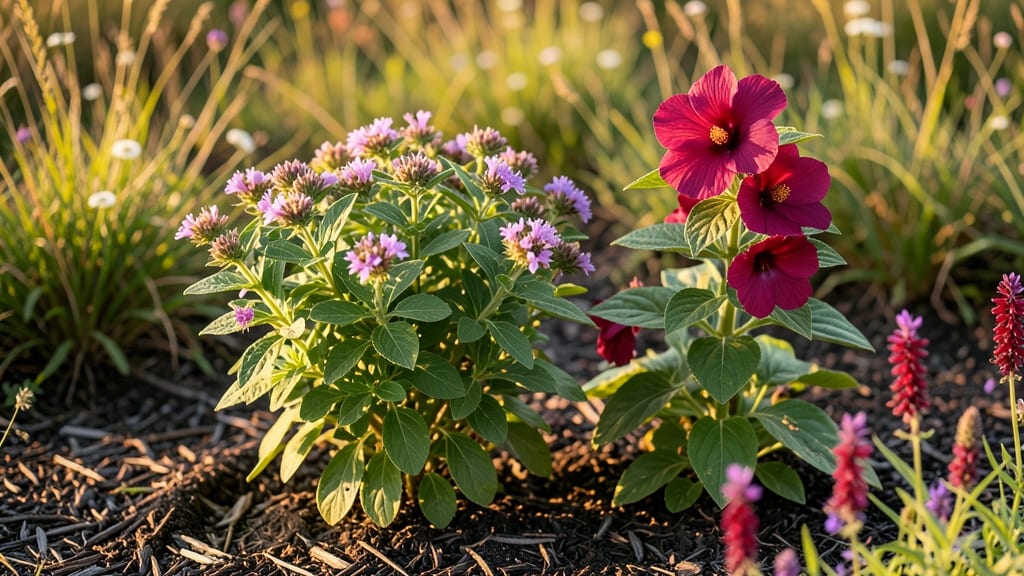
Texas heat turns most gardens into wilting memories—but not with purple bushes that thrive year-round. 🌿 These hardy shrubs bring bold color, fragrance, and privacy while surviving droughts and blazing summers without complaint.
I’ve tested the toughest varieties in my North Texas yard, and these are the ones that never let me down. The secret lies in their roots: deep, drought-resistant systems paired with waxy leaves that lock in moisture.
Wisteria’s cascading blooms, Texas Betony’s lavender spikes, and Purple Smoke Bush’s velvety foliage all handle 100°F+ temps like it’s nothing. Plant them along fences, borders, or as standalone statement plants—they’ll reward you with months of blooms and minimal fuss. What you’ll love most is how these bushes transform a space.
Imagine your morning coffee shaded by a 10-foot-tall Purple Smoke Bush, its smoky purple leaves contrasting with creamy spring flowers. Or the way Wisteria’s fragrant purple blooms turn your patio into a springtime sanctuary. They’re the kind of plants that make neighbors stop and ask, “What’s that?”
Best part? They’re low-maintenance. Prune once a year, water occasionally, and watch them grow. Whether you’re filling a large yard or a small urban lot, these Texas-tough purple bushes deliver color, fragrance, and privacy without the high-maintenance drama.
📚 In This Guide
- What you need
- Instructions
- Tips and common mistakes
- Wrapping up and next steps
What you need
- ● Shrubs: 3–5 mature purple-blooming shrubs (e.g., Abelia, Weigela, or Dwarf Fountain Grass for contrast). Choose 3–5 ft tall for quick privacy.
- ● Soil: 1–2 yards of well-draining garden soil (amend with compost for fertility). Texas clay? Mix in sand or peat moss (1 part amendment per 2 parts soil).
- ● Mulch: 2–3 bags of organic mulch (pine bark or shredded leaves) to retain moisture and regulate soil temp.
- ● Fertilizer: Slow-release granular fertilizer (10-10-10 or 12-4-8) for planting, + balanced liquid fertilizer (e.g., 20-20-20) for seasonal feeding.
- ● Watering supplies: Garden hose with soaker hose or drip irrigation kit (for deep watering).
- ● Watering can (for hand-watering young plants).
- ● Pruning tools: Bypass pruners (for clean cuts).
- ● Loppers (for thicker stems).
- ● Garden shears (for shaping).
- ● Digging tools: Shovel, trowel, and garden fork (for breaking up compacted soil).
- ● Planting aids: Plant tags (to track varieties).
- ● Stakes + twine (for support if needed).
- ● Pest control: Neem oil or insecticidal soap (for aphids/mealybugs).
- ● Decorative touches: Garden rocks or edging (for a polished look).
- ● Solar-powered landscape lights (to highlight foliage at night!).
- ● Location: Full sun to partial shade (6+ hours of sunlight daily for best blooms). Avoid low-lying areas (poor drainage = root rot).
- ● Timing: Plant in early spring or fall (avoid Texas summers—heat stress is real!).
- ● Soil test: Check pH (ideal: 6.0–7.0). Adjust with lime (to raise pH) or sulfur (to lower) if needed.
- ● Water access: Ensure a nearby spigot or irrigation setup for consistent watering.
How to select and plant purple privacy bushes in Texas
Texas heat and humidity demand the right purple shrubs—here’s how to pick and plant them for year-round color and fragrance.
🌿 Step 1: Choose the Right Purple Shrubs for Texas
Texas’s USDA Hardiness Zones 7-10 and intense sun require shrubs that thrive in heat and drought. Texas Sage (Leucophyllum frutescens) and Dwarf Yaupon Holly (Ilex vomitoria 'Nana') are top picks—they bloom purple in fall/winter, handle 100°F+ temperatures, and stay fragrant. Crape Myrtle (Lagerstroemia 'Natchez') also delivers stunning lavender blooms but prefers slightly more moisture.
Check your soil type—Texas clay drains poorly, so amend with 3-4 inches of compost to improve aeration. If your area gets fewer than 20 inches of rain yearly, opt for Texas Sage or Wax Myrtle (Morella cerifera), both drought-tolerant. Avoid moisture-loving shrubs like Purple Smoke Bush (Cotinus) unless you’re in East Texas with higher humidity.
🪴 Step 2: Prepare the Planting Site for Heat and Drainage
Dig holes twice as wide as the root ball but only as deep—planting too deep suffocates roots. Texas’s alkaline soil (pH 7.5-8.5) works for most purple shrubs, but Yaupon Holly prefers slightly acidic soil (pH 5.0-6.5). If needed, mix in sulfur or peat moss to adjust pH before planting.
Space shrubs 6-10 feet apart for full privacy—closer spacing leads to overcrowding and poor airflow, inviting fungal diseases like powdery mildew. If using Texas Sage, group plants 8-10 feet apart for a lush, purple-hued hedge. Mulch with 2-3 inches of pine bark to retain moisture and regulate soil temperature, but keep mulch 6 inches away from stems to prevent rot.
☀️ Step 3: Plant and Water for Texas Conditions
Place the shrub in the hole, ensuring the top of the root ball sits level with soil—burying the stem too deep causes rot. Backfill with native soil mixed with compost, then water deeply to settle roots. First watering should be 1-2 gallons per plant, enough to soak 12 inches deep. After planting, water every 2-3 days for 2 weeks to encourage root establishment.
In Zone 8-10, avoid overhead watering after midday—evaporation in heat wastes water and promotes fungal growth. Instead, use drip irrigation or soaker hoses to deliver moisture directly to roots. If your area gets scorching summer sun, provide afternoon shade for the first month to reduce transplant shock.
✂️ Step 4: Prune and Maintain for Year-Round Fragrance
Prune Texas Sage and Crape Myrtle immediately after flowering (late fall/winter) to shape and encourage dense growth. Cut back 1/3 of the oldest stems to the ground—this rejuvenates the plant and prevents woody, leggy growth. Yaupon Holly tolerates light pruning in early spring but avoids heavy cuts, as it flowers on old wood.
Fertilize once yearly in early spring with a balanced, slow-release fertilizer (10-10-10)—Texas soil is often nutrient-rich, so over-fertilizing leads to weak growth. Watch for aphids or spider mites in summer heat; treat with neem oil if you spot sticky leaves or webbing. In Zone 7, protect tender shrubs like Crape Myrtle with burlap wraps during sudden cold snaps below 25°F.
Tips & tricks for perfect purple privacy bushes in Texas
Creating a fragrant, year-round privacy screen in Texas heat requires a few strategic moves—here’s what I’ve learned from years of trial and error.
Soil Preparation is Everything: Texas clay is notorious for poor drainage, but you can transform it with the right amendments. Beyond the 3-4 inches of compost mentioned in Step 1, I recommend adding 1 part perlite to 3 parts native soil when backfilling the planting hole. This creates better aeration for roots, especially crucial for Texas Sage which thrives on well-draining conditions. For Yaupon Holly, mix in 1/4 cup of sulfur per hole if your soil tests above pH 6.5—this prevents nutrient lockout that can stunt growth.
Watering Strategy for Extreme Heat: The 2-week watering schedule in Step 3 is perfect, but here’s the secret: use a moisture meter to verify when roots are established. I’ve seen plants wilt after 2 weeks when soil still felt damp—this means the roots hadn’t fully extended. For Zone 8-10, switch to deep watering every 5-7 days once established, giving each plant 3-5 gallons to encourage deep root growth. Early morning watering (before 8 AM) prevents fungal issues from humidity buildup.
Pruning for Maximum Fragrance: When pruning Texas Sage and Crape Myrtle after flowering (Step 4), I cut back 1/3 of the oldest stems to the ground but leave the youngest stems untouched. These younger stems produce the most fragrant blooms next season. For Crape Myrtle specifically, avoid "crape murder"—never cut into old wood or you’ll sacrifice next year’s flowers. Use sharp bypass pruners and make cuts at a 45-degree angle just above a leaf node to promote faster healing.
Seasonal Care Adjustments: In summer, I monitor my purple bushes daily for signs of stress—yellowing leaves on Texas Sage often mean it’s time for a deep watering. For winter protection in Zone 7, I’ve found that wrapping Crape Myrtle stems with burlap and insulating foam pipe sleeves (not just burlap) provides better protection against temperature swings below 25°F. This extra insulation prevents the bark from splitting, which is a common issue with sudden cold snaps.
Pro Tips for Purple Bushes In Texas
- Creating a fragrant, year-round privacy screen in Texas heat requires a few strategic moves—here’s what I’ve learned from years of trial and error.
- Soil Preparation is Everything: Texas clay is notorious for poor drainage, but you can transform it with the right amendments.
- Watering Strategy for Extreme Heat: The 2-week watering schedule in Step 3 is perfect, but here’s the secret: use a moisture meter to verify when roots are established.
Frequently asked questions
Got questions about adding purple bushes in Texas to your landscape? Here are some common ones—and their answers—to help you get started with confidence!
What are the best purple shrubs for Texas heat and drought?
The top picks for Texas’ climate include Abelia ‘Kaleidoscope’ (heat-tolerant with pink-purple blooms), Lantana ‘New Gold’ (drought-resistant with purple flowers), and Texas Sage (Leucophyllum frutescens), which thrives in full sun and blooms purple after rain. Check the materials section for soil prep tips!
When is the best time to plant purple bushes in Texas?
For Texas, aim for fall (September–November) or early spring (February–March) to avoid peak summer heat. Fall planting gives roots time to establish before winter, while spring avoids drought stress. Avoid planting in extreme summer heat—roots need moisture to grow!
How do I keep my purple bushes lush and blooming all year?
Start with well-draining soil (amend with compost if needed) and mulch to retain moisture. Prune lightly after blooming to encourage new growth, and water deeply but infrequently (1–1.5 inches per week). Fertilize in early spring with a balanced, slow-release formula for steady color.
Why aren’t my purple bushes blooming like they should?
Common culprits include over-fertilizing with high nitrogen (promotes leaves, not flowers), poor drainage, or lack of sunlight. Try moving to a sunnier spot, adjusting fertilizer to a low-nitrogen, high-phosphorus blend, and pruning to improve airflow. Purple bushes often need a little TLC to reward you with blooms!
Are there any purple bushes that attract pollinators?
Lantana and Texas Sage are magnet for butterflies and bees, while Abelia and Salvia ‘May Night’ (a purple favorite) also draw pollinators. Planting these alongside native wildflowers creates a pollinator paradise—plus, they’ll keep your yard vibrant year-round!
Wrapping up and next steps
Transforming your Texas landscape with purple bushes isn’t just about beauty—it’s about creating a fragrant, low-maintenance privacy screen that thrives year-round. From Texas Ranger to Dwarf Yaupon, these shrubs bring color, texture, and even wildlife benefits to your yard with minimal effort. 🌿✨
Ready to take the next step? Start by selecting the perfect variety for your space, then gather your tools and get planting! Whether you’re a seasoned gardener or a beginner, these purple powerhouses make it easy to elevate your outdoor oasis—one fragrant branch at a time.