
Pruning
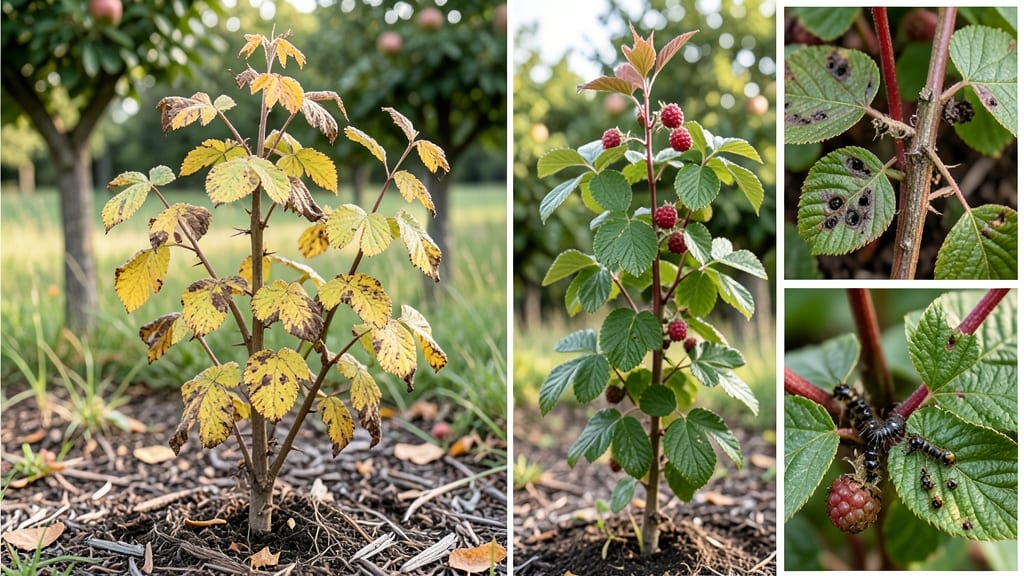
When your raspberry bush problems turn those tangled canes into more of a weed patch than a productive harvest, you're not alone. 🌿 Last summer, my raspberry patch turned into a jungle of yellowing leaves and weak growth—until I learned the right fixes for overgrowth and disease.
The key is catching problems early, whether it's fungal spots, cane borers, or canes that just got too crowded.
Most issues start with poor airflow or overwatering, which turns your bushes into pest magnets. I now check for powdery mildew (white fuzz) or spider mites (tiny webs) every two weeks, and prune out dead canes in late winter before new growth starts.
Organic neem oil spray keeps pests at bay without harsh chemicals, and mulching helps prevent soil-borne diseases.
By summer, your bushes will look lush and productive instead of struggling. You'll harvest sweeter berries, fewer pests, and canes that stand strong—not flop over from overcrowding. The secret is a year-round maintenance schedule that keeps problems from snowballing.
Works for both summer-bearing and everbearing varieties, and adapts to containers or in-ground plantings. Let's get those canes back in shape!
📚 In This Guide
- What you need
- Instructions
- Tips and common mistakes
- Wrapping up and next steps
What you need
- ● Pruning shears: Bypass pruners (sharp, sterilized) for clean cuts on canes. Quantity: 1 pair (replace if dull).
- ● Loppers: For thicker canes (1/2"–1" diameter). Quantity: 1 pair.
- ● Garden saw: For stubborn, oversized canes. Quantity: 1.
- ● Disinfectant: 70% isopropyl alcohol or bleach solution (1 part bleach : 9 parts water) to sterilize tools between cuts. Quantity: Small spray bottle or container.
- ● Gloves: Heavy-duty gardening gloves (nitrile-coated for durability). Quantity: 1 pair.
- ● Trash bags: Heavy-duty for removing diseased or pruned canes. Quantity: 2–3.
- ● Fungicide: Copper-based or sulfur-based (for fungal diseases like Botrytis or Phytophthora). Quantity: Follow label instructions.
- ○ Insecticide (optional but helpful): Horticultural oil or neem oil for pests like spider mites or aphids. Quantity: Small spray bottle.
- ● Mulch: Organic (straw, wood chips) or inorganic (gravel) to suppress weeds and retain moisture. Quantity: Enough to cover 2–3 inches around the base.
- ● Label markers: For tagging canes if you’re experimenting with training methods.
- ● Knee pads: Because raspberry bushes will make you kneel. 😉
- ● Soil test kit: To check pH/nutrient levels if you suspect poor health.
- ● Trellis or stakes: For supporting new canes (if your bush needs structure).
- ● Watering can or hose with nozzle: For post-pruning hydration.
Diagnosing and fixing common raspberry bush problems
Raspberries are tough, but even the hardiest plants need help when issues like canes, pests, or disease creep in. Here’s how to spot and solve the most stubborn problems year-round.
🌿 Step 1: Identify Overgrowth and Prune Strategically
Overgrowth happens when old canes crowd out new growth, reducing fruit production. Start by removing all dead or diseased canes—they’ll snap easily at the base or have blackened, hollow centers. Use clean, sharp pruners to cut at a 45-degree angle just above a healthy bud.
Next, tackle the floral canes (last year’s fruit-bearing stems). These are thicker, woody, and often have leaf scars. Cut them down to the ground completely. The remaining primocanes (current year’s growth) will produce fruit next season—leave these for now unless they’re crossing or rubbing against each other.
Here’s the thing—raspberries need airflow. If canes are growing too densely, thin them out by removing the weakest stems. Aim for 6-8 canes per plant for optimal light penetration and fruit quality. Prune on a dry day to prevent fungal spores from spreading.
✂️ Step 2: Address Disease Pressure with Preventative Pruning
Fungal diseases like cane spot (purple or black spots on stems) and botrytis (gray mold on fruit) thrive in damp, crowded conditions. When pruning, sterilize your tools with rubbing alcohol between cuts to avoid spreading pathogens.
Look for yellowing leaves with brown spots—a classic sign of cane spot. Remove infected canes immediately and do not compost them. Instead, bag and discard them in yard waste. For botrytis, prune out mummified berries and any affected foliage, then improve airflow around the plant.
I’ve found that summer pruning (light thinning in July) reduces disease spread by opening up the plant. Just avoid heavy pruning during wet weather—wait for a dry spell to minimize fungal risks.
🐛 Step 3: Manage Pest Infestations Before They Worsen
Spider mites, aphids, and Japanese beetles love raspberries. Check the undersides of leaves for webbing (mites) or sticky residue (aphids). For light infestations, a strong spray of water dislodges pests—do this early in the morning to avoid damaging foliage.
If pests persist, use neem oil (mix 1 tablespoon per quart of water) or insecticidal soap as a preventative spray after harvest. Avoid chemical sprays during flowering or fruiting—you’ll harm pollinators and risk residue on berries.
Real talk: birds are the real fruit thieves. Protect ripening berries with bird netting (stretch it loosely over the plant) or reflective tape to deter them. I’ve had success with netting secured with stakes—just don’t let it touch the canes, or it’ll trap moisture and invite mold.
💧 Step 4: Adjust Watering and Soil to Prevent Common Issues
Raspberries need consistent moisture, but soggy soil leads to root rot. Water deeply once a week (more in extreme heat) and aim for 1-1.5 inches of water per week. Use a soaker hose to deliver water at the base—avoid overhead sprinklers, which promote fungal diseases.
If your soil is too dense, amending with compost improves drainage and nutrient uptake. Yellowing leaves with pale veins? That’s chlorosis, often caused by poor iron uptake in alkaline soil. Test your soil and add chelated iron or sulfur if needed.
Don’t over-fertilize—raspberries prefer lean soil. A balanced 10-10-10 fertilizer in early spring is plenty. Too much nitrogen leads to lush foliage but fewer berries. Watch for wilting leaves—this could signal underwatering, overwatering, or even root-bound canes.
⏰ Step 5: Plan Year-Round Maintenance for Long-Term Health
Winter is the best time to renew mulch—spread 2-3 inches of organic mulch (straw or wood chips) around the base to insulate roots and suppress weeds. Remove old mulch in spring to prevent rot.
In early spring, scout for overwintering pests like raspberry crown borers. Look for sawdust-like frass at the base of canes or tiny holes in stems. Treat with beneficial nematodes or bacillus thuringiensis (Bt) if you spot damage.
Here’s the moment that matters: rotate pruning tools annually. Old, dull blades tear canes and invite infections. Invest in a high-quality bypass pruner—it’s worth the splurge for clean cuts that heal faster.
Tips & tricks for managing raspberry bush health
Between us, these are the insights that saved my raspberry patch from becoming a tangled mess—lessons learned after years of trial and error with canes, pests, and stubborn diseases.
Pruning Precision: When you're cutting floral canes in Step 1, make your cuts just above a healthy outward-facing bud—this ensures new growth emerges in the right direction. I learned this the hard way after pruning too close to the base and ending up with bare stems. Also, mark your tools with a permanent marker after each pruning session to track when they were last sterilized—this prevents cross-contamination between plants.
Disease Detection: In Step 2, don't just look at the leaves—check the canes themselves for subtle signs of cane spot. Run your fingers along the stems; healthy canes feel smooth, while infected ones develop rough, corky spots. For botrytis prevention, I've started using a fan on low setting near the plants during humid days to improve airflow without damaging foliage. The difference in fruit quality is noticeable.
Pest Prevention Strategy: For bird protection in Step 3, I recommend using lightweight bird netting that's secured with T-posts rather than stakes. This creates a more stable barrier that doesn't shift in wind. And here's what nobody tells you—birds often return to the same spots, so if you notice them focusing on one area, add extra protection there first. Also, consider planting companion flowers like marigolds nearby; they repel many garden pests naturally.
Soil Health Maintenance: The 10-10-10 fertilizer recommendation in Step 4 is spot-on, but I've found that adding a handful of Epsom salt (magnesium sulfate) to the fertilizer mix in early spring helps prevent chlorosis in alkaline soils. The magnesium boosts chlorophyll production, giving leaves that vibrant green color. Just be careful not to overdo it—too much magnesium can cause its own set of problems.
Pro Tips for Raspberry Bush Problems
- Between us, these are the insights that saved my raspberry patch from becoming a tangled mess—lessons learned after years of trial and error with canes, pests, and stubborn diseases.
- Pruning Precision: When you're cutting floral canes in Step 1, make your cuts just above a healthy outward-facing bud—this ensures new growth emerges in the right direction.
- Disease Detection: In Step 2, don't just look at the leaves—check the canes themselves for subtle signs of cane spot.
Frequently asked questions
Got questions about keeping your raspberry bushes healthy and thriving? Here are some of the most common concerns—plus quick fixes to tackle them head-on!
Why are my raspberry canes dying back so aggressively?
Raspberry canes die back naturally after fruiting, but excessive die-off (especially in summer) often signals stress. Check for overcrowding, poor drainage, or fungal diseases like cane blight. Prune aggressively in late winter to improve airflow, and mulch to retain moisture.
When is the best time to prune raspberry bushes?
Timing depends on your raspberry type! For summer-bearing varieties, prune old canes in late winter/early spring (before buds swell). For fall-bearing (everbearing) types, prune after harvest—remove all canes to the ground. Never prune in fall for summer-bearing bushes!
How do I get rid of aphids and spider mites on my raspberry plants?
Aphids and mites love raspberries—but you can blast them away! Start with a strong water spray to knock them off. For stubborn infestations, use neem oil or insecticidal soap (apply in early morning to avoid harming bees). Introduce ladybugs as a natural predator for long-term control.
Can I replace raspberry bushes with something easier to maintain?
If raspberries feel too high-maintenance, consider blackberries (thornless varieties are easier to harvest) or currants/gooseberries (less prone to disease). For zero-pruning options, try blueberries (acidic soil required) or strawberries (perennial varieties need minimal upkeep).
My raspberries are small and tasteless—what’s wrong?
Small, bland berries often mean nutrient deficiency or overcrowding. Feed with a balanced fertilizer (10-10-10) in early spring, then switch to a low-nitrogen, high-potassium blend (like 5-10-10) when flowers appear. Thin canes to 6–8 per plant for better airflow and fruit size.
Still stumped? Drop your raspberry woes in the comments—we’ve got solutions!
Wrapping up and next steps
Raspberry bushes may seem stubborn, but with the right tools and knowledge, you can tackle overgrowth, disease, and pests like a pro! 🌱 From pruning in layers to choosing disease-resistant varieties, small, consistent efforts will keep your bushes thriving.
Remember, healthy bushes mean sweeter berries—so don’t let challenges discourage you.
Ready to take action? Start by inspecting your bushes weekly and applying the fixes you’ve learned. Whether it’s trimming, mulching, or treating pests, consistency is key. Happy gardening—your future raspberry harvest will thank you! 🍓✨