
Pests
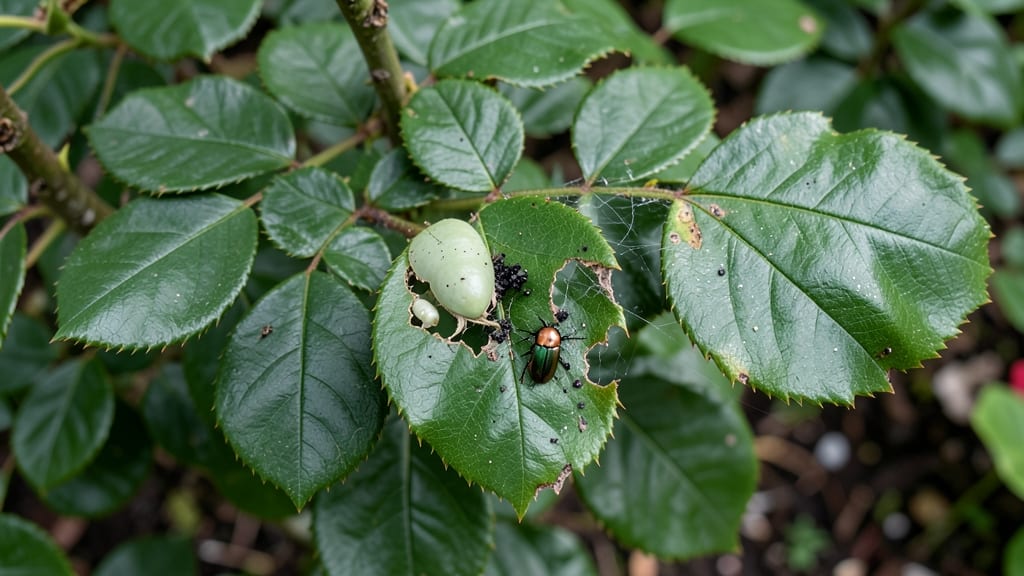
Your rose bush leaves being eaten is a clear SOS from your shrub—and ignoring it means fewer blooms next season. 🌹 I’ve seen aphids strip a bush bare in weeks, while deer can turn a prized hybrid tea into a skeleton overnight.
The good news? Most damage is preventable with the right mix of early detection and targeted action.
Start by identifying the culprit: aphids leave sticky residue, caterpillars create ragged holes, and deer leave clean-cut edges. Slugs? They slime-trail their way across leaves at night. Once you spot the damage, act fast—aphids multiply daily, while deer return night after night if you don’t deter them.
Organic sprays like neem oil work for insects, but deer need physical barriers or repellents applied every few weeks.
You’ll see results within days if you catch it early: new growth appears, leaves stop wilting, and your bush regains its vigor. The key is consistency—check for pests weekly during growing season, and prune damaged stems immediately to redirect the plant’s energy.
A healthy rose bush can bounce back surprisingly fast when you give it the right defense.
This works for all rose types—hybrid teas, floribundas, even climbing roses—because the pests target leaves, not the roots. The same principles apply whether you’re dealing with a backyard bush or a container-grown specimen. Let’s get your roses back to their full, thorny glory.
The Hidden Culprits Behind Lost Leaves
When your rose bush leaves start disappearing, it’s rarely a random act—it’s a targeted buffet. Understanding why these leaves are being munched is the first step to reclaiming your shrub. Below, we break down the most common reasons, backed by science, so you can identify the culprit and act fast.
Most leaf loss in rose bushes is due to insects, which see your shrub as an all-you-can-eat salad bar. Here’s how they strike:
#### 🔥 Japanese Beetles: The Aggressive Leaf SkeletonsThese shiny, copper-green beetles with white tufts on their sides are notorious for skeletonizing leaves—chewing away the soft tissue while leaving the veins intact. Why they do it: Adult beetles feed on foliage to fuel their energy, while larvae (grubs) devour roots.
A single beetle can destroy a leaf in hours, and swarms can strip a bush bare in days.
Key signs: Irregular holes, chewed edges, and a trail of greenish-black frass (insect droppings).
#### 🍳 Aphids: The Sap-Sucking SwarmAphids—tiny, pear-shaped insects—don’t eat entire leaves but pierce cells to suck sap, causing leaves to curl, yellow, or wilt. Why they target roses: Their sticky honeydew (a byproduct of feeding) attracts mold and ants, creating a secondary pest problem. Heavy infestations weaken the plant, making it vulnerable to disease.
Key signs: Sticky residue on leaves, distorted new growth, and ants "herding" aphids for their honeydew.
#### 👨🍳 Rose Slugs & Sawfly Larvae: The Camouflaged ChewersThese caterpillar-like pests (often mistaken for slugs) blend into foliage, feasting on leaves at night. Why they’re sneaky: Rose slugs (sawfly larvae) have a smooth, slug-like body but no slime trail, while sawfly larvae have a distinctive looper gait (arching their backs as they move).
They prefer tender new growth, which they strip to the midrib.
Key signs: Ragged, window-pane-like holes in leaves and frass clinging to the undersides.
#### 🥘 Spider Mites: The Microscopic MenaceToo small to see without magnification, spider mites cause stippling (tiny white or yellow dots) on leaves by piercing cells to feed. Why they thrive on roses: They love dry, dusty conditions and multiply rapidly in hot weather. Heavy infestations lead to leaf drop and weakened stems.
Key signs: Fine webbing on leaf undersides, bronze or silver discoloration, and leaves that appear "speckled."
Not all leaf loss is due to pests—sometimes, your rose bush is under environmental stress, making it an easier target (or causing it to shed leaves preemptively).
#### 💡 Overwatering or Poor Drainage: The Drowning EffectRoses hate "wet feet." Why it happens: Overwatering or compacted soil leads to root rot, cutting off the plant’s nutrient supply. As a survival mechanism, the bush may drop leaves to conserve energy. Actionable clue: Check for yellowing leaves with brown edges or a foul smell at the base.
#### ✨ Underwatering or Heat Stress: The Wilting ResponseDrought or extreme heat causes leaves to curl and crisp at the edges. Why roses react this way: They prioritize root health over foliage, shedding leaves to reduce water loss via transpiration. Key sign: Dry, brittle leaves that crumble when touched, often paired with wilting despite moist soil.
#### 🎯 Nutrient Deficiencies: The Hungry PlantA rose bush with nitrogen, magnesium, or iron deficiencies produces weak, pale, or yellowing leaves—making them easy prey for pests or causing the plant to drop them voluntarily. Why it matters: Nitrogen fuels leaf growth; magnesium (a component of chlorophyll) keeps leaves green; iron is critical for photosynthesis.
Quick test: Yellowing between leaf veins? Likely iron deficiency. Yellow edges with green veins? Magnesium or potassium issue.
While insects are the usual suspects, larger animals can also turn your rose bush into a snack. Here’s how:
#### 🦌 Deer, Rabbits, and Squirrels: The Selective SnackersThese herbivores clip leaves and stems cleanly, often targeting young shoots. Why they do it: Roses contain geraniol and citronellol (compounds that repel some pests), but these same chemicals can attract animals seeking fresh greens. Heavy browsing stunts growth and invites disease.
Key signs: Leaves with clean, jagged edges (not chewed) and missing entire stems.
#### 🐇 Rodents: The Nighttime NibblersMice, voles, or gophers may girdle stems or chew leaves at the base, especially in winter. Why they target roses: The woody stems provide shelter, and the bark is soft enough to gnaw. This can kill the plant if the damage reaches the cambium layer.
Key signs: Shredded stems, burrows near the base, or holes in the soil.
Use this 3-step diagnostic table to identify the culprit quickly:
| Symptom | Likely Culprit | What to Do Next |
|---|---|---|
| Holes with chewed edges, frass | Japanese beetles, caterpillars | Check leaf undersides for larvae; apply neem oil or Bacillus thuringiensis. |
| Sticky residue, curled leaves | Aphids, scale insects | Spray with soapy water or introduce ladybugs. |
| Speckled leaves, webbing | Spider mites | Blast leaves with water; use miticides if severe. |
| Yellowing edges, wilting | Over/underwatering, heat stress | Adjust watering; mulch to retain moisture. |
| Clean, jagged leaf loss | Deer, rabbits | Install fencing or repellent sprays. |
Stop the Leaf Munching Now
When your rose bush leaves start disappearing, it’s time to act fast! The good news? Most of these pests can be managed with simple, effective strategies. Below, we’ve mapped out the best fixes based on the culprit—plus tips to keep your roses thriving long-term.
Think of this as your emergency repair kit for leaf-eating invaders.
Japanese beetles are the worst offenders, skeletonizing leaves in days. Here’s how to evict them:
- 🔥 Handpick them—Fill a bucket with soapy water and crush beetles into it during peak feeding hours (early morning or late afternoon). Pro tip: Wear gloves to avoid their irritating secretions!
- 🍳 DIY traps—Mix a gallon of water with 2 tbsp dish soap and a splash of neem oil. Spray directly on beetles (avoid flowers to protect pollinators).
- 🌿 Plant beetle-repelling companions—Marigolds, catnip, and garlic deter them naturally. Place these near your roses.
- 🛡️ Commercial controls—Use pyrethrin-based sprays (like Safer® Brand) or neem oil for organic protection. Reapply after rain.
💡 Prevention: Apply milky spore powder (a natural bacteria) to your soil in early spring to reduce beetle populations long-term.
Tiny but mighty, these sap-suckers weaken roses quickly. Fight back with these tactics:
- 💦 Strong water spray—Hose off leaves with a forceful stream to knock off aphids. Do this daily until they’re gone.
- 🍳 Soap spray recipe—Mix 1 tbsp mild liquid soap (like Castile) + 1 quart water in a spray bottle. Test on a small leaf first!
- 🕷️ Introduce predator bugs—Ladybugs and lacewings love eating aphids. Buy them online or attract them with dill or fennel plants.
- 🌡️ Neem oil treatment—Spray neem oil (follow label rates) every 5–7 days to suffocate mites and disrupt their life cycle.
💡 Prevention: Encourage beneficial nematodes in your soil—they hunt mites and aphid eggs. Apply in spring and fall.
These nocturnal nibblers leave glossy trails and ragged holes. Stop them with these tricks:
- 🛡️ Copper tape—Wrap copper ribbon around rose pots or create a 2-inch-wide barrier in garden beds. The electric shock repels them!
- 🥗 Beer traps—Bury a shallow dish filled with beer near the bush. Slugs crawl in and drown. Refresh every few days.
- 🌿 Crushed eggshells or diatomaceous earth—Sprinkle around the base of the rose. The sharp edges deter slugs (reapply after rain).
- 🌙 Nighttime patrols—Handpick slugs with a flashlight and drop them in soapy water. Do this for 3–4 nights in a row.
💡 Prevention: Water roses in the morning instead of evening to reduce slug-friendly dampness.
If large herbivores are the problem, you’ll need physical defenses:
- 🏞️ Install an 8-foot fence—Deer can jump high! Use woven wire or electric fencing for best results.
- 🌿 Plant deer-resistant barriers—Boxwood, barberry, or Russian olive around your roses create a natural buffer.
- 🎯 Motion-activated sprinklers—Devices like ScareCrow spray water when they approach, startling them away.
- 🚫 Hang reflective objects—Old CDs, aluminum pie pans, or deer-resistant sprays (like Liquid Fence) can deter them.
💡 Prevention: Avoid planting roses near wooded edges where deer graze. Prune lower branches to make them less accessible.
While you’re battling pests, give your roses a health boost to bounce back faster:
- 💧 Deep watering—Water at the base (not leaves) to reduce fungal risks and encourage strong root growth.
- 🍄 Fertilize wisely—Use a balanced rose fertilizer (like 10-10-10) in early spring and mid-summer. Avoid over-fertilizing, which attracts pests.
- ✂️ Prune damaged leaves—Remove heavily chewed foliage to redirect the plant’s energy to new growth.
- 🌿 Mulch heavily—Apply 2–3 inches of organic mulch (like shredded bark) to retain moisture and suppress weeds.
With these strategies, your rose bush will be back to lush and pest-free in no time. Stay vigilant—early action is key to keeping those leaves safe!
Frequently asked questions
How do I tell if deer are eating my rose bush leaves?
Look for clean, jagged edges on leaves—not chewed or torn. Deer typically clip leaves and stems completely, often targeting new growth. You may also spot browsing marks on lower branches or find small piles of droppings nearby. Check for tracks or rub marks on fences or tree trunks at dawn or dusk.
Will neem oil work for all pests eating rose leaves?
Neem oil is effective against aphids, spider mites, and Japanese beetles, but it won’t stop larger pests like deer or slugs. For slugs, use copper tape or diatomaceous earth. For deer, you’ll need physical barriers like fencing or repellent sprays. Always apply neem oil in the evening to avoid harming bees.
Can I still save my rose bush if most leaves are gone?
Yes! Prune back heavily damaged stems to encourage new growth. Focus on removing only the worst-affected leaves—healthy stems will regenerate foliage quickly. Fertilize with a balanced rose food (like 10-10-10) and water deeply at the base. With consistent care, your bush can recover within 4-6 weeks, especially if the roots are still strong.
Why do my roses get eaten every year around the same time?
This usually means seasonal pests like Japanese beetles (peak in July-August) or rose slugs (active in spring and fall). Deer and rabbits also follow predictable patterns, often browsing in early morning or evening. Plan ahead by applying preventive treatments (like neem oil or milky spore) 2-3 weeks before the usual damage period.
Are there any rose varieties less likely to be eaten?
Some roses are more resistant to pests than others. Try hybrid teas like 'Double Delight' or floribundas such as 'Iceberg', which have thicker leaves that deter some insects. For deer-prone areas, consider native roses like Rosa rugosa—their thorns and strong scent often keep herbivores away. However, no variety is completely pest-proof!