
Plants
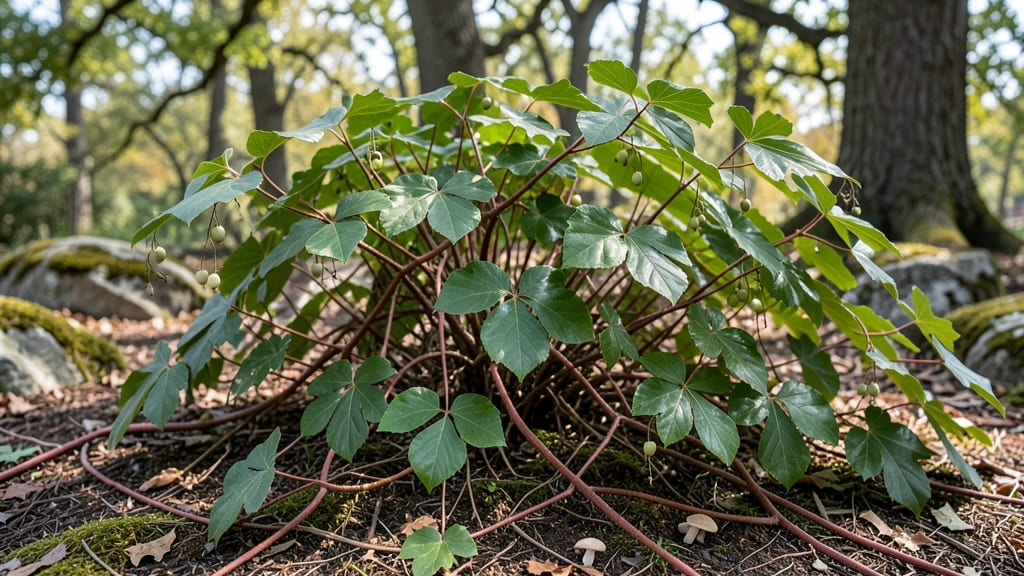
What does a poison ivy bush look like? That warning isn't just folklore—it's your first clue. Poison ivy's glossy, triangular leaves grow in clusters of three, with smooth or slightly jagged edges that catch the light differently than harmless lookalikes. The middle leaf always has the longest stem, creating a distinct fan shape when mature, and its vines can climb trees or sprawl across the ground like an aggressive green carpet.
Don't rely on leaves alone—the stems are another dead giveaway. New growth appears red or pinkish, while mature stems turn brown and develop a waxy sheen. The plant's sticky sap (urushiol) clings to everything it touches, and even dead vines can trigger reactions.
That said, Virginia creeper (five leaflets) and boxelder (seven leaflets) are common impostors, so always double-check before grabbing or disturbing a vine.
The real danger isn't the plant itself—it's the itchy, blistering rash that appears 12-48 hours after skin contact. Some people react mildly (redness, swelling), while others develop oozing blisters that last weeks.
The sap lingers on tools, pets, and even clothing, so washing with cold water and soap within 10 minutes is your best defense. If you see these signs in your yard, consider calling a professional for removal—this isn't a battle for amateurs.
Here's the hard truth: No one should touch poison ivy. If you're dealing with an infestation, wear thick gloves, long sleeves, and goggles, then use a vine killer or smother it with thick mulch.
And if the rash spreads beyond your hands or face, see a doctor—some reactions require prescription creams. Better safe than itchy for a month.
The Science Behind Its Reaction
Poison ivy’s infamous itchy rash isn’t just an annoying nuisance—it’s the result of a clever chemical defense system that evolved over millions of years. When you encounter this plant, your skin reacts to a potent irritant called urushiol, a colorless, oily resin found in all parts of the plant.
But why does this happen? Let’s break down the key triggers and mechanisms behind the body’s over-the-top response.
🧬 Urushiol: The Plant’s Chemical Weapon
Urushiol is the villain in this story. It’s a naturally occurring compound that poison ivy (and its cousins, poison oak and poison sumac) produces to deter herbivores and predators. When the plant’s leaves, stems, or roots are damaged—whether by a hike, a pet’s paw, or even wind—urushiol is released.
This oil can linger on tools, clothing, or even your skin for years if not properly cleaned.
Once urushiol makes contact with your skin, it binds to proteins in your skin cells.
Your immune system then recognizes these modified proteins as foreign invaders, triggering an allergic reaction. Not everyone reacts the same way: about 15-30% of people have little to no sensitivity, while others experience severe blistering. This variation is due to differences in immune response and exposure history.
Pro Tip: 💡 Urushiol doesn’t have to be fresh to cause a reaction—it can remain potent for up to five years on contaminated surfaces!
🛡️ Your Immune System’s Overreaction
When urushiol penetrates your skin, your body’s defense mechanisms kick into high gear. Here’s how it plays out:
- Step 1: Sensitization – On your first exposure, your immune system may not react immediately. Instead, it “learns” to recognize urushiol as a threat and produces antibodies (like IgE) to target it.
- Step 2: Inflammation – With repeated exposure, your immune system releases histamine, a compound that causes itching, redness, and swelling. This is your body’s way of trying to flush out the “invader.”
- Step 3: Blister Formation – In severe cases, your skin may develop fluid-filled blisters as a result of cytokine release, signaling other immune cells to the area.
The rash itself is a delayed reaction—symptoms typically appear 12 to 48 hours after exposure, though they can take up to a week to fully develop.
This lag time is why many people unknowingly spread urushiol to other parts of their body (or even to pets!) before realizing they’ve been exposed.
Fun Fact: 🌡️ Scratching the rash can worsen it by spreading urushiol to new areas and increasing the risk of infection.
🌿 How the Plant Spreads Its Sap
Poison ivy doesn’t just sit idly by—it actively spreads urushiol through several mechanisms that maximize your exposure:
| Mechanism | How It Works | Real-World Example |
|---|---|---|
| Leaf Damage | Crushing, cutting, or even brushing against leaves releases urushiol oil. | Hiking through dense foliage or camping near poison ivy patches. |
| Vine Contact | Vines contain high concentrations of urushiol, especially near the roots. | Grabbing a vine to climb or tie a rope around it. |
| Animal Transfer | Pets or wildlife can track urushiol on their fur, then transfer it to your skin or clothes. | A dog rolling in poison ivy and then licking your hand. |
| Tool Contamination | Gardening tools, lawnmowers, or even firewood can harbor urushiol for years. | Using a chainsaw to cut down a poison ivy-infested tree. |
Even the plant’s roots contain urushiol, so digging near poison ivy can be just as risky as touching the leaves.
The oil is so sticky that it can even become airborne when burning poison ivy—never burn it!—as the smoke can carry urushiol particles into your lungs, causing severe respiratory issues.
Pro Tip: ✨ Wear long sleeves, gloves, and closed-toe shoes when working near suspected poison ivy to minimize direct contact.
🔬 Why Some People Suffer More Than Others
Not everyone who touches poison ivy breaks out in hives. The severity of the reaction depends on several factors:
- Genetics – Some people’s immune systems are hyper-sensitive to urushiol due to genetic predisposition.
- Frequency of Exposure – Frequent contact (like working outdoors) can lead to stronger reactions over time.
- Amount of Urushiol – Heavy exposure (e.g., crushing leaves) results in more severe rashes.
- Skin Condition – Broken skin, sweating, or heat can increase absorption of the oil.
- Age – Children often have more severe reactions because their immune systems are still developing.
Interestingly, urushiol can also cause reactions in pets, though their symptoms (like drooling, paw licking, or swelling) may differ from human rashes. If your pet shows signs of irritation after outdoor play, wash their paws and fur immediately with soap and water.
How to Treat and Prevent Poison Ivy
If you’ve spotted a poison ivy bush—or worse, touched it—your next steps should focus on immediate relief and long-term prevention. Whether you’re dealing with a rash, identifying the plant, or avoiding future encounters, these practical solutions will help you stay safe and comfortable.
---
If you’ve already come into contact with poison ivy, act fast to minimize irritation and speed up healing.
- Wash the affected area 🧼 - Use cool water and mild soap (like Castile soap) within 10–15 minutes of exposure to remove urushiol oil (the irritant). - Scrub gently—do not scrub too hard, as it can spread the oil further.
- Apply a soothing ointment 🧴 - Hydrocortisone cream (1%) reduces itching and swelling. - Calamine lotion or baking soda paste (mix with water) can also relieve discomfort. - Avoid scratching—it worsens the rash and risks infection.
- Take oral antihistamines 💊 - Benadryl (diphenhydramine) or Zyrtec can help with itching and help you sleep if symptoms are severe. - For severe reactions, see a doctor—oral steroids (like prednisone) may be prescribed.
- Use cool compresses ❄️ - Apply a damp, cool cloth to reduce inflammation and soothe the skin.
---
If you need to eliminate poison ivy from your yard or garden, protection is key—the plant’s oils linger even after it’s dead!
- Wear protective gear 🛡️ - Long sleeves, gloves, and goggles (to avoid eye contact). - Disposable coveralls are best—never reuse clothing that may have touched the plant.
- Cut the plant at the base ✂️ - Use heavy-duty pruners or a string trimmer to avoid hand contact. - Bag the clippings immediately—do not burn them (urushiol can spread through smoke).
- Apply vinegar or herbicide 🌱 - White vinegar (50% solution) can kill small patches—spray directly on leaves. - Glyphosate-based herbicides (like Roundup) work well for larger infestations. - Reapply every 1–2 weeks until the plant is fully dead.
- Smother regrowth 🌱💀 - Cover the area with cardboard or thick mulch to block sunlight and prevent regrowth.
---
The best solution? Never come into contact in the first place! Here’s how to stay safe:
- Learn to identify poison ivy 🍃 - Remember the rhyme: "Leaves of three, let it be!" - Avoid areas with dense, vine-like growth or clusters of three shiny leaves.
- Keep your skin covered 🧢👖 - Wear long pants, closed-toe shoes, and a hat when hiking or gardening. - Spray clothing with a barrier cream (like Technu Poison Ivy Cream) before outdoor activities.
- Clean tools and pets 🐕🔧 - Wash gardening tools, shoes, and pet paws with soap and water after outdoor use. - Urushiol can cling to pets—bathe them if they’ve been in an infested area.
- Protect your home 🏠 - Inspect firewood, mulch, and landscaping materials before bringing them inside. - Check for poison ivy in compost piles or near fences—it loves to climb!
--- - Avoid hot showers—they can worsen itching. Stick to lukewarm water. - Try colloidal oatmeal (like Aveeno) for extra-soothing relief. - Keep nails short to prevent scratching and infection. - If blisters form, do not pop them—let them heal naturally.
--- While most poison ivy rashes clear up in 1–3 weeks, seek medical help if: - The rash spreads to your face or genitals. - You develop fever, swelling, or pus (signs of infection). - The rash covers large areas of your body (oral steroids may be needed).
--- Final Thought: Poison ivy may be pesky, but with the right steps, you can treat it effectively and prevent future encounters. Stay vigilant, act fast, and keep your skin (and yard) safe! 🌿💪
Frequently asked questions
Can poison ivy grow as a shrub or only as a vine?
Poison ivy is incredibly adaptable! While it often appears as a vine climbing trees or sprawling along the ground, it can also grow as a shrub-like bush in sunny, open areas. Look for its characteristic three-leaf clusters arranged alternately along woody stems that can reach 3 feet tall or more. The shrub form is common in disturbed soils like garden edges or forest clearings.
How can I tell if a dead vine is still poison ivy?
Dead poison ivy remains dangerous because urushiol oil can persist for years. Look for the distinctive three-leaflet pattern even on dried stems, or check for the plant's hairy, brown roots when you dig. If you're unsure, avoid touching it—dead vines can still cause reactions. When in doubt, use long tools to dispose of suspicious plant matter in sealed bags.
What's the difference between poison ivy and Virginia creeper?
The key difference is the leaf count: poison ivy always has three leaflets, while Virginia creeper has five leaflets per stem. Also, Virginia creeper leaves are more rounded and have a blue-green tint, while poison ivy leaves are more shiny and pointed. Another clue: Virginia creeper's vines have purple-black berries in fall, while poison ivy berries are white or pale green.
Can pets get poison ivy rashes?
Yes, pets can absolutely develop reactions! While they typically don't get the same blistering rashes as humans, they may show symptoms like excessive drooling, paw licking, redness, or swelling. The urushiol oil can cling to their fur and transfer to your skin when petting them. If you suspect your pet has been exposed, wash their paws and fur immediately with mild soap and water.
Why does poison ivy sometimes have red stems?
New growth on poison ivy often appears with red or pinkish stems as a natural defense mechanism. This coloration helps the plant attract pollinators while also signaling to herbivores that it's toxic. As the plant matures, these stems turn brown and develop a smooth, waxy texture. The red stems are particularly noticeable in spring when new leaves emerge.