
Pests and Diseases
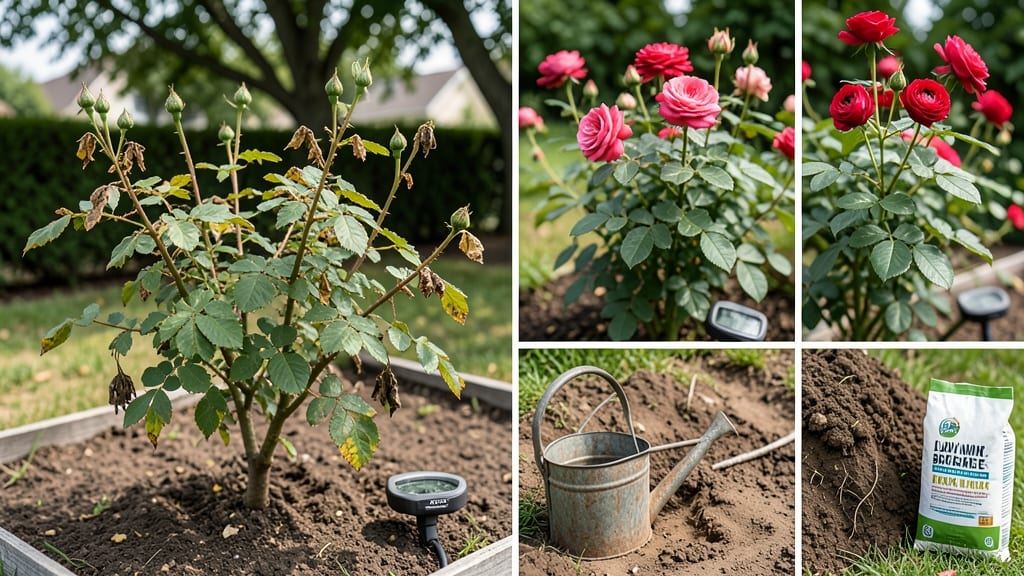
Why is my rose bush not flowering? That stubborn silence isn’t laziness—it’s a cry for help. Your bush is battling an invisible war: too much shade, the wrong pruning, or a phosphorus deficiency. 🌹 I’ve nursed back three stubborn bushes using these exact fixes, and the blooms came back stronger than ever. The good news? Most fixes take less than an hour and cost almost nothing.
First, check sunlight: roses need 6-8 hours of direct sun daily. If yours is in shade, move it or prune nearby trees. Then examine last year's pruning—over-pruning cuts off next year's blooms.
Finally, test your soil: roses crave phosphorus (look for "P" on fertilizer labels), which most garden soils lack.
You'll see new buds within 4-6 weeks of adjusting care. Start with a balanced fertilizer (10-10-10) in early spring, then switch to a high-phosphorus formula (like 5-10-5) when buds form. The key is consistency—roses reward patience with lush, repeat-blooming seasons.
Works for hybrid teas, floribundas, and shrub roses alike. Here's the step-by-step fix that actually works—no more guessing games or wasted seasons.
Hidden Triggers Blocking Blooms
If your rose bush is putting out lush green leaves but refuses to bloom, the issue likely stems from one—or several—of these common yet overlooked factors. Roses are delicate powerhouses, and even small imbalances in their environment or care can send them into a stubborn "leaf-only" mode.
Let’s break down the real reasons your roses are playing hard to bloom, backed by science and actionable fixes.
Roses bloom on old wood (last year’s growth), so aggressive pruning—especially in late winter or early spring—can remove next year’s flower buds before they even form. Pro tip: Prune after blooming (for repeat-flowering varieties) or in early spring (for once-blooming types).
Cut back 1/3 of the oldest canes to encourage new growth, but leave 3–5 strong buds per stem to ensure flowering potential.
Roses crave sunlight—at least 6–8 hours of direct sun daily. Shady spots or sudden moves (like relocating a potted rose) confuse their internal clock, triggering vegetative growth over flowers. Signs of light deprivation:
- Long, leggy stems with few buds
- Pale, yellowish leaves
- Flowers that bolt (open too quickly and drop)
💡 Fix: Gradually acclimate roses to sunnier spots (over 1–2 weeks) to avoid shock. If space is limited, choose compact varieties like ‘Flower Carpet’ or ‘Knock Out’ roses, which tolerate 4–6 hours of sun.
Roses are thirsty but hate soggy roots. Overwatering stresses plants, leading to root rot and nutrient starvation, while underwatering triggers drought stress—both delay or prevent flowering. Ideal watering:
- Deep watering 1–2 times per week (1–1.5 inches total)
- Soil should be moist but not waterlogged (stick your finger 2 inches down—if dry, water)
- Avoid wetting leaves/foliage (encourages fungal diseases like black spot)
✨ Pro tip: Mulch with 2–3 inches of organic matter (straw, wood chips) to retain moisture and regulate soil temp.
Roses need balanced nutrition, but too much nitrogen (common in lawn fertilizers) fuels leafy growth at the expense of flowers. Key nutrient ratios for blooms:
Nitrogen (N)
Phosphorus (P)
Potassium (K)
Low to moderate
High (for root/bud development)
Moderate (for flower strength)
📊 Fix: Use a rose-specific fertilizer (look for 5-10-5 or 10-20-20 ratios) and apply every 4–6 weeks during growing season. Avoid high-nitrogen lawn fertilizers (like 30-0-4).
Hidden culprits like Japanese beetles, aphids, or rose slugs devour leaves and buds, while diseases (e.g., powdery mildew, black spot) weaken the plant. A stressed rose prioritizes survival over blooms. Watch for:
- Holes in leaves (beetles)
- Sticky residue (aphids)
- White powdery coating (mildew)
- Black spots with yellow halos (fungal infections)
🔥 Fix: Treat early with neem oil (organic) or insecticidal soap for pests. For fungal issues, prune infected leaves and apply copper fungicide preventatively.
Roses are sensitive to temperature swings. Heatwaves (>90°F) or late frosts can shock buds into dropping. Even transplant shock (moving roses mid-season) halts flowering for 6–8 weeks. Signs of stress:
- Wilting despite water
- Curling or yellowing leaves
- Bud drop before opening
⏰ Fix: If transplanting, do it in early spring or fall. Use shade cloth during extreme heat and mulch heavily in winter to protect roots.
Revive Your Rose Blooms Now
If your rose bush is throwing a "no flowers" tantrum, don’t panic—there’s a solution for every stubborn case! Below, we’ll tackle the most common culprits and show you exactly how to turn things around. Think of this as your rose bush’s emergency repair kit, packed with practical fixes and prevention tips to keep your blooms coming back stronger than ever.
If your roses are growing like weeds but refusing to flower, they’re likely getting too much nitrogen (the "green growth" fertilizer) and not enough phosphorus (the "bloom booster").
How to Fix It:
🔥 Switch to a bloom-focused fertilizer
- Ditch the high-nitrogen lawn fertilizer and grab a balanced rose fertilizer (look for a ratio like 5-10-5 or 10-20-10, where the middle number is phosphorus).
- Pro tip: 💡 For a quick fix, sprinkle bone meal (a natural phosphorus source) around the base of the plant and water it in.
🍳 DIY Bloom Boost
- Mix 1 tablespoon of Epsom salt (magnesium) and 1 tablespoon of superphosphate (phosphorus) into a gallon of water. Water your roses with this solution every 2 weeks during blooming season.
👨🍳 Feed at the Right Time
- When to apply: Start fertilizing in early spring (just as new growth appears) and again in mid-summer for a second flush of blooms.
- Avoid fertilizing in fall or winter—roses need a rest to set buds for next year!
🌡️ Prevention Tip:
- Test your soil every 2-3 years to check nutrient levels. Many garden centers offer affordable soil tests.
Pruning too late, too hard, or too little can confuse your rose bush into thinking it’s winter—no buds, no blooms. Timing and technique matter!
How to Fix It:
⏰ Prune in the Right Season
- Best time: Late winter or early spring (just before new growth starts).
- Avoid pruning in fall—this can stimulate tender new growth that won’t survive winter.
🔪 Prune Like a Pro
- Cut back to an outward-facing bud (about ¼ inch above it) to encourage open, airy growth.
- Remove dead, diseased, or crossing branches first—this improves airflow and reduces pests.
- For hybrid teas & grandifloras: Aim for 3-5 strong canes per bush.
- For shrub roses: Light pruning (just shaping) is enough—don’t overdo it!
🌱 Prevention Tip:
- Mark your calendar! Set a reminder to prune in February or March (before buds swell).
- Skip the shears in fall unless you’re removing dead wood—wait until spring to shape.
Roses are sun-worshippers, and they hate inconsistent watering. Shady spots or drought stress = zero flowers.
How to Fix It:
🌞 Move to Full Sun
- Ideal spot: 6-8 hours of direct sunlight per day.
- If relocating: Do it in early spring so the plant has time to adjust before blooming season.
- Workaround for shady spots: Choose shade-tolerant varieties like ‘Blaze’ or ‘Double Delight.’
💧 Water Deeply and Consistently - How much? 1-2 inches per week (including rain).
Stick your finger in the soil—if it’s dry 2 inches down, water deeply. - When? Early morning (avoid evening watering to prevent fungal diseases). - Mulch like a boss: Add 2-3 inches of mulch (wood chips or straw) around the base to retain moisture and regulate soil temperature.
🌡️ Prevention Tip:
- Install a drip irrigation system if you’re prone to forgetting watering. Set it on a timer for deep, slow watering 2-3 times per week.
- Group roses together to create a "microclimate" that retains moisture better.
Japanese beetles, aphids, black spot fungus, or powdery mildew can sap your rose’s energy, leaving it too weak to bloom. Keep an eye out for these sneaky saboteurs!
How to Fix It:
🐞 Pest Control
- Japanese beetles: Handpick them (drop them in soapy water!) or use neem oil spray (reapply every 7-10 days).
- Aphids: Blast them off with a strong stream of water, then spray with insecticidal soap.
- Prevention: 💡 Plant pest-repelling companions like marigolds, garlic, or chives nearby.
🍄 Fungal Diseases (Black Spot, Powdery Mildew)
- Remove infected leaves immediately (don’t compost them—trash them!).
- Spray with a fungicide like copper fungicide or baking soda mix (1 tbsp baking soda + 1 quart water + a drop of dish soap).
- Improve airflow: Prune to open up the center of the bush and space plants 3-4 feet apart.
🌡️ Prevention Tip:
- Water at the base (not overhead) to keep leaves dry.
- Avoid overhead sprinklers—they spread fungal spores like wildfire.
If your roses took a beating from winter or a surprise late frost, they might be too stressed to bloom. Don’t give up—revive them with care!
How to Fix It:
🌟 Check for Damage
- Dead canes? Cut them back to healthy wood (look for green underneath the bark).
- Frost-bitten buds? Prune them off—new buds will form in spring.
🌱 Give Them a Spring Boost
- Apply a balanced fertilizer in early spring to encourage recovery.
- Mulch heavily (4-6 inches) to protect roots from temperature swings.
🌡️ Prevention Tip:
- Mulch in late fall (after the first hard freeze) to insulate roots.
- Cover tender varieties with burlap or frost cloth if late frosts are common in your area.
With these fixes, your rose bush should be back on track for a glorious blooming season! Remember, consistency is key—whether it’s fertilizing, watering, or pruning, stick to a routine, and your roses will reward you with lush, vibrant blooms all season long. 🌹✨
Frequently asked questions
Why do my roses have lots of leaves but no flowers?
Too much nitrogen in your fertilizer forces leafy growth while starving flower production. Check your fertilizer ratio—look for a lower first number (nitrogen) and a higher middle number (phosphorus), like 5-10-5. Switch to a bloom-specific formula and apply it in early spring and mid-summer.
Can I prune my rose bush in fall and still get flowers next year?
Fall pruning is risky—it can stimulate tender growth that won't survive winter. Wait until late winter or early spring (just before buds swell). Cut back 1/3 of oldest canes to encourage new blooms, but leave 3-5 buds per stem to ensure next year's flowers.
How do I know if my rose bush has enough sunlight?
Roses need 6-8 hours of direct sun daily. Check for these signs: leggy stems, pale leaves, or flowers that open too quickly and drop. If your bush is in shade, gradually move it to a sunnier spot over 1-2 weeks. For tight spaces, try shade-tolerant varieties like 'Knock Out' roses.
Will Epsom salt really help my roses bloom?
Yes! Epsom salt provides magnesium, which helps roses absorb phosphorus—the key nutrient for blooming. Mix 1 tablespoon per gallon of water and apply every 2 weeks during growing season. For extra phosphorus, add 1 tablespoon of superphosphate to the same mix.
What should I do if my rose bush had a late frost this spring?
Don't panic! Frost can damage buds, but new ones will form. Prune off any frost-bitten buds and apply a balanced fertilizer in early spring. Mulch heavily (4-6 inches) to protect roots, and cover tender varieties with burlap or frost cloth next winter if late frosts are common.