
Light Requirements
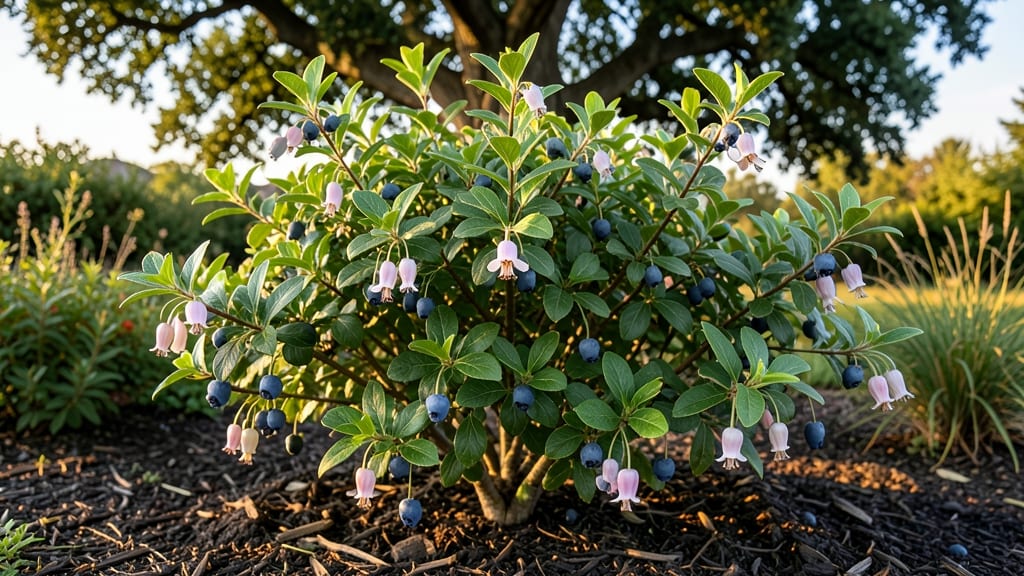
Your blueberry bush thrives on the right light requirements—6 to 8 hours of sunlight daily—to produce the sweet, plump berries you love—but too much shade shrinks fruit size and cuts yields by nearly half.
If your blueberry bushes aren’t delivering the harvest you expect, you might be missing the mark on light. Too little sun leads to small, tart berries, while too much can stress the plant in hot climates.
The key is finding that sweet spot where your bushes get enough light to thrive without burning out.
In USDA Zone 6a, where spring planting kicks off in March, positioning matters. A south-facing spot ensures maximum sunlight during the critical growing months, while partial shade in afternoon heat can protect delicate foliage.
I’ll walk you through the ideal light setup, how to spot deficiencies, and even which varieties handle less sun better.
By the end, you’ll know exactly how to adjust your garden layout for bigger, juicier berries—no guesswork required.

Optimal sunlight hours for blueberry bushes: the science behind fruit size
Blueberries are sun-worshippers, and their fruit size is directly tied to how much sunlight they receive. Northern highbush varieties (like 'Bluecrop') need 5-6 hours of sun daily, while southern highbush types (such as 'Southern Highbush') thrive with 6-8 hours.
This difference isn't just about survival—it's about berry plumpness and sugar content. Too little light stunts growth, while too much can stress the plant, both leading to smaller, tart berries.
Sunlight drives photosynthesis, which fuels fruit development. When blueberries get optimal sunlight, they produce more chlorophyll and sugars, resulting in larger, sweeter berries. The critical window is between morning sun (6 AM–10 AM) and afternoon sun (2 PM–6 PM).
Morning light kickstarts energy production, while afternoon light ensures the plant can store enough energy for ripening. Without this balance, berries stay small and underdeveloped.
Here’s how sunlight affects blueberry growth at different stages:
- Flowering stage: Needs full sun to set fruit properly.
- Fruit development: Requires consistent light for berry expansion.
- Ripening phase: Direct sun enhances flavor and color.
| Variety Type | Optimal Sunlight (Hours/Day) | Fruit Size Impact | Best For |
|---|---|---|---|
| Northern Highbush | 5-6 hours | Medium-large berries (0.5–0.75 inches) | Zones 4–7 |
| Southern Highbush | 6-8 hours | Large berries (0.75–1 inch) | Zones 7–10 |
| Lowbush (Wild) | 4-5 hours | Small berries (0.25–0.5 inches) | Zones 3–6 |
| Rabbiteye | 7-8 hours | Very large berries (0.75–1.25 inches) | Zones 6–9 |
If you’re growing northern highbush varieties in a partial-shade garden, aim for at least 5 hours of direct sun. These bushes can tolerate dappled shade (like under tall trees), but their berries will be 20-30% smaller than those in full sun.
For southern highbush or rabbiteye varieties, 6+ hours of sun is non-negotiable—they need intense light to develop their signature large, sweet berries.
Position your blueberries where they’ll get morning sun and afternoon shade if temperatures exceed 90°F (32°C). Afternoon shade prevents heat stress, which can cause berries to split or dry out.
In USDA Zones 8-10, use light shade cloth (30-50%) during peak afternoon heat to protect the plants while still allowing enough light for fruit development.
Ever notice how berries on the sunniest side of the bush are always bigger? That’s because direct sunlight increases sugar production in the fruit. The chloroplasts in leaves (powered by sunlight) convert carbon dioxide and water into glucose and fructose, which the plant shuttles to developing berries.
Without enough light, this process slows, leading to smaller, less flavorful berries. Think of sunlight as the fuel for berry growth—cut it off, and you’re limiting your harvest.
For container-grown blueberries, place pots in the sunniest spot on your patio or balcony. South-facing windows or reflective surfaces (like white walls) can help maximize light exposure.
If your space only gets 3-4 hours of sun, choose dwarf varieties like 'Top Hat', which tolerate lower light better than standard bushes. Just expect smaller yields and berries compared to full-sun plants.
One common mistake is assuming more sun is always better. While blueberries love light, intense afternoon sun in hot climates can overheat the soil, leading to root stress and poor fruit set.
In arid regions (Zones 9-11), mulch heavily with straw or wood chips to keep roots cool. This balance of light and shade is key to maximizing both quantity and quality of your blueberries.
Pro tip: Use a sunlight tracker (like a simple DIY stake with a shadow marker) to monitor how much light your bushes get throughout the day. Adjust their position every few weeks to ensure they’re getting consistent sunlight exposure.
Even a 1-hour difference in daily sun can impact fruit size by 10-15%. Small adjustments now can mean
Signs your blueberry bush isn’t getting enough light (and how to Fix it)
Your blueberry bush might be silently screaming for more sunlight, even if it looks healthy at first glance. When these shrubs don’t get their required 6-8 hours of direct light, they show subtle (and not-so-subtle) signs that directly impact your harvest.
The most obvious clue? Tiny, underdeveloped berries that lack the sweetness and size you expect. Even worse, these small fruits often fail to ripen properly, leaving you with a bitter harvest.
Beyond the fruit, watch for sparse foliage and long, leggy stems stretching toward any available light source. This "reaching" behavior is your bush’s way of compensating for insufficient sunlight. You might also notice yellowing leaves, particularly on the lower branches, as the plant struggles to photosynthesize efficiently.
These visual cues all point to one root cause: your blueberry bush isn’t getting the light it needs to thrive.
Blueberries require full sun (6+ hours daily) to produce quality fruit. Without it, you’ll see:
- 50% smaller berries (or none at all)
- Poor flavor development (tart instead of sweet)
- Weak stems prone to breakage
If you’re dealing with a partial-shade garden, don’t despair—there are ways to compensate. Start with selective pruning to remove any branches growing toward shaded areas. This encourages energy to focus on sun-exposed growth.
For container-grown blueberries, consider relocating your pots to a south-facing balcony or using reflective surfaces like white walls to bounce extra light onto the plants.
Another clever trick is companion planting with light-loving plants that won’t compete for sunlight. Try pairing your blueberries with dwarf fruit trees or ornamental grasses that grow taller but cast minimal shade.
Just avoid planting anything that will block light during the critical morning hours when blueberries need energy to kickstart their day.
For established bushes in permanent shade, consider seasonal adjustments. In late winter, prune to remove any dead or crowded branches that might be blocking what little light exists.
Then, apply a light mulch of pine needles (which also helps maintain acidic soil) to protect roots while allowing maximum light penetration to the canopy.
Remember, blueberries are sun-worshippers that reward proper light with bigger, sweeter berries and healthier growth. Even a few extra hours of sunlight can make a dramatic difference in your harvest. Start monitoring your bush’s light exposure today—your future blueberry pancakes (or smoothies) will thank you!