
Pruning
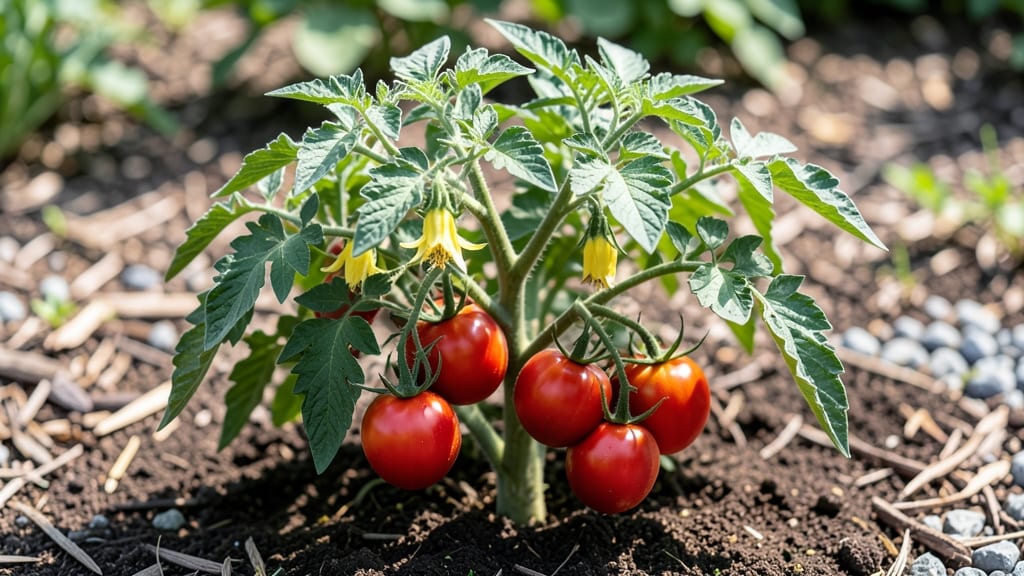
Your bush beef tomatoes could be heavy enough to snap branches—unless you prune them right. 🌱 These compact, determinate plants produce 2-pound fruits but need strategic cuts to support their weight without sacrificing yield.
The key is balancing air flow, sunlight, and structure so every slice of beefsteak-sized tomato makes it to your plate.
Determinate means they grow to a set height (usually 3-4 feet), so pruning isn’t about shaping but about preventing disease and breakage. Start by removing suckers—those little shoots between stems and leaves—when they’re 1-2 inches long.
Keep 3-4 main stems for airflow, and pinch off any leaves touching the soil to stop rot. The goal? More tomatoes, less stress on the plant.
By mid-season, you’ll see the payoff: thicker stems, fewer cracked fruits, and longer harvests. Even if you miss a pruning day, these tomatoes are forgiving—just focus on removing diseased leaves and supporting heavy clusters with cages or stakes.
The result? A bush that looks like a mini orchard of beefy tomatoes instead of a sad, drooping mess.
Works for containers, raised beds, or in-ground plots—just adjust spacing to 18-24 inches apart for airflow. The same rules apply whether you’re growing in full sun or partial shade (though yield drops in the latter). Master this, and you’ll never waste another tomato again.
📚 In This Guide
- What you need
- Instructions
- Tips and common mistakes
- Wrapping up and next steps
What you need
- ● Pruning shears – Bypass-style (sharp, clean blades, 5-7 inch length) – 1 pair
- ● Gloves – Heavy-duty, cut-resistant (to protect from thorns and sap) – 1 pair
- ● Disinfectant solution – 70% isopropyl alcohol or bleach-water mix (1 part bleach : 9 parts water) – small spray bottle
- ● Garden twine or zip ties – For staking (if needed) – 5-10 pieces
- ○ Sharp knife or pruning saw – For thicker stems (optional but helpful) – 1
- ● Bush beef tomato plants – Healthy, mature plants (6-8 weeks old, 12-18 inches tall) – Quantity varies
- ● Hand pruners with ergonomic grip – For comfort during long sessions
- ● Plant markers – To label pruned sections if tracking growth
- ● Compost bin or bag – For collecting pruned debris
- ● Plant food or fertilizer – Balanced 10-10-10 or tomato-specific – Post-pruning boost
- ● Sun hat & sunscreen – Because even gardeners need shade breaks! 😎
Strategic pruning for bush beef tomatoes
Here's how to maximize fruit production while keeping your plants healthy and strong.
✂️ Step 1: Identify the Main Stem and First Fruit Clusters
Bush beef tomatoes grow determinately, meaning they produce fruit along a main stem before flowering at the top. Start by locating the first 3-4 fruit clusters—these are your plant's primary production zones. These clusters form where the stem meets a leaf, typically 4-6 inches apart down the main stem.
Look for small flower buds that will develop into tomatoes. These early clusters are critical—they'll set fruit first and support the plant's structural integrity. If you see any suckers (side shoots) growing between the main stem and these first clusters, you'll address those next. Don't remove these yet; their position matters.
🌿 Step 2: Remove Lower Leaves and Suckers Below First Clusters
Use clean, sharp pruning shears to snip off all leaves and suckers below the lowest fruit cluster. This ensures airflow and sunlight reach the developing tomatoes, reducing disease risk and improving fruit quality. You'll also prevent blossom end rot by avoiding overcrowding at the base.
Focus on suckers—those small shoots growing from the joint between the main stem and a leaf. These compete with your fruit for energy. If a sucker is smaller than a pencil, remove it entirely. Larger suckers can be pinched off with your fingers. Work your way upward, leaving only the first 3-4 clusters intact.
✂️ Step 3: Thin Fruit Clusters for Optimal Yield
Once your clusters form pea-sized tomatoes, thin them to 3-5 tomatoes per cluster. Overloaded clusters produce smaller, underdeveloped fruit. Gently twist off excess tomatoes at the base—don't cut, as this can damage the stem. Leave the largest, healthiest tomatoes; they'll have the best flavor and size.
Watch for uneven ripening—if one tomato in a cluster stays green while others ripen, it's likely because of poor airflow. This is your cue to prune nearby leaves to improve circulation. Thin clusters every 7-10 days as new tomatoes form. This ongoing maintenance keeps production steady.
☀️ Step 4: Prune for Light and Airflow as the Plant Matures
As your bush beef tomato reaches 4-5 feet tall, focus on selective pruning to maintain an open canopy. Remove any yellowing or diseased leaves immediately—they harbor pathogens that spread quickly. Trim back overly dense foliage near the top to allow sunlight to reach the upper fruit clusters.
Pay attention to new suckers forming above the first clusters. If they're smaller than 2 inches, pinch them off. Larger suckers can be pruned back to a single leaf, leaving a small stub to encourage branching. This redirects energy to your existing fruit while preparing the plant for a second flush of production.
⏰ Step 5: Late-Season Pruning for Ripening and Harvest
When your plant is 80% ripe, shift focus to harvest support. Remove all leaves above the top fruit cluster to direct the plant's energy toward ripening. This also prevents sunscald on exposed tomatoes. If your plant is overloaded with green fruit, thin aggressively—leave only the most mature tomatoes to ripen fully.
Prune weekly during the final 4-6 weeks of the season. Focus on deadheading (removing spent flowers) to avoid sapping energy from ripening fruit. If your tomatoes stop setting new fruit, prune back one-third of the plant's height to stimulate a final flush. Harvest daily once tomatoes turn color—ripe bush beef tomatoes won't ripen further off the vine.
Tips & tricks for perfect bush beef tomato pruning
These strategic cuts will transform your tomato harvest from decent to spectacular without sacrificing plant health.
Timing Secret: The 7-10 day thinning window in Step 3 is your best friend. I've found that checking clusters every 7 days—rather than waiting the full 10—lets you catch overloaded clusters before they become problematic. This prevents the "one green tomato" syndrome where uneven ripening occurs due to poor airflow.
Tool Technique: Sterilize your pruning shears between cuts with rubbing alcohol (70% is ideal) to prevent spreading disease. I use a small spray bottle to keep the alcohol handy while working. This is especially critical when removing diseased leaves in Step 4—contaminated tools can turn a healthy plant into a disease hotspot overnight.
Visual Cue: When thinning clusters in Step 3, look for tomatoes that are noticeably smaller than their siblings. These are the ones to remove—they'll never catch up in size or flavor. The largest, most uniform tomatoes in each cluster should be your priority, as they'll develop the best flavor and structural integrity.
Seasonal Strategy: In Step 5, when your plant reaches 80% ripeness, I recommend removing leaves above the top cluster in stages rather than all at once. Start with the top third of leaves, wait 3-4 days, then remove the next third. This gradual exposure prevents sunscald while still directing energy to ripening fruit.
Pro Tips for Bush Beef Tomato
- These strategic cuts will transform your tomato harvest from decent to spectacular without sacrificing plant health.
- Timing Secret: The 7-10 day thinning window in Step 3 is your best friend.
- Tool Technique: Sterilize your pruning shears between cuts with rubbing alcohol (70% is ideal) to prevent spreading disease.
Frequently asked questions
How often should I prune my bush beef tomato?
Prune your bush beef tomato once every 1–2 weeks during the growing season (spring to early summer). Focus on removing suckers (side shoots) and lower leaves to improve airflow. Over-pruning stresses the plant—aim for 20–30% of foliage removal max per session. Pro tip: Stop pruning 4–6 weeks before your first frost to let energy focus on fruit ripening.
What’s the best way to prune without damaging the plant?
Use clean, sharp pruners (or your fingers for small suckers) and cut at a 45-degree angle just above a leaf node or outward-facing branch. Avoid tearing—this invites disease. Never prune more than 1/3 of the plant at once, and sterilize tools with rubbing alcohol between cuts to prevent bacterial spread. Timing matters: Prune in the morning so wounds heal faster in daylight.
Will pruning reduce my tomato yield?
Not if done right! Pruning increases yield by directing energy to fewer, larger fruits. Bush beef tomatoes (like ‘Beefsteak’ or ‘Brandywine’) benefit from removing suckers and lower leaves to prevent disease and boost air circulation. Key: Leave 3–5 main stems for indeterminate types or prune lightly for determinate varieties. Secret: Prune aggressively early in the season, then taper off as fruit sets.
Can I use the same pruning tips for all tomato varieties?
Nope! Bush beef tomatoes (indeterminate) need regular suckering and staking, while smaller varieties (like cherry tomatoes) thrive with minimal pruning. Determinate types (e.g., ‘Roma’) rarely need pruning—just remove diseased leaves. Always check your plant’s growth habit before cutting! Quick fix: Label your plants to track pruning needs.
What if my tomato plant looks stressed after pruning?
Stress is normal post-pruning, but yellowing leaves, wilting, or no new growth signal over-pruning. Fix it: Water deeply, add a balanced fertilizer (10-10-10), and stop pruning for 2–3 weeks. If leaves droop but stay green, it’s just adjusting—keep an eye on pests. Prevent future stress: Prune on calm days to avoid wind damage.
Wrapping up and next steps
Mastering bush beef tomato pruning is your secret weapon for a bursting harvest—without overloading your plants or risking disease.
By focusing on strategic cuts (like removing suckers and thinning leaves), you’ll boost airflow, sunlight, and fruit quality while keeping your garden thriving. Now’s the time to put your new skills into action!
Ready to transform your tomato game? Grab your pruners, head outside, and give your plants the care they deserve. Watch those beefy tomatoes grow bigger and tastier than ever! 🌱🍅