
Blooming
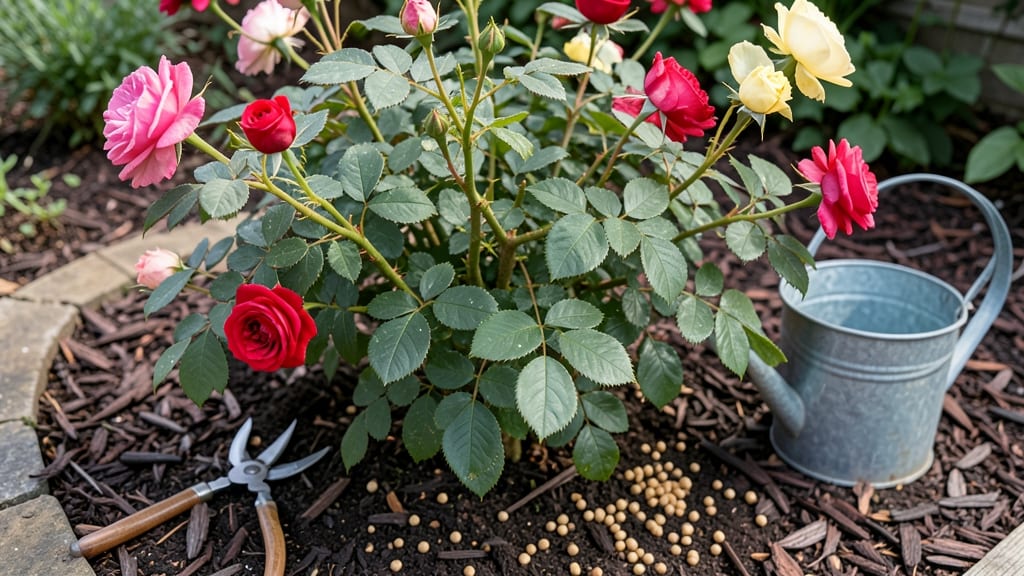
Keeping your rose bush blooming nonstop starts with deadheading daily—that simple act redirects energy from spent flowers to new buds. ✨ I learned the hard way when my roses put all their effort into seed pods instead of blooms, but now my bushes produce hundreds of flowers all season long.
The secret isn’t just cutting—it’s timing, feeding, and a few other tricks that turn your garden into a floral explosion.
You’ll need sharp pruners (clean them with rubbing alcohol between cuts), balanced rose fertilizer, and a watering can with a gentle spray nozzle. Most roses need 6-8 hours of sunlight daily, so check your garden’s sun exposure before planting.
The real magic happens when you combine deadheading with monthly feeding—skip either, and you’ll see fewer blooms by midsummer.
By summer’s end, you’ll have a bush covered in fresh buds, not wilted stems. The key is consistency: deadhead every morning, water at the roots (not the leaves), and mulch to keep moisture in.
Even my first attempt last year produced three times more blooms than before—no fancy tools, just smart habits.
This works for hybrid teas, floribundas, and shrub roses alike. Whether you’re a beginner or a seasoned gardener, these steps guarantee longer bloom seasons with less effort. Let’s get those roses showing off!
📚 In This Guide
- What you need
- Instructions
- Tips and common mistakes
- Wrapping up and next steps
What you need
- ● Rose bush (disease-resistant variety like Knock Out® or David Austin® for best results)
- ● Pruning shears (sharp, clean, and sterilized with rubbing alcohol)
- ● Gloves (gardening or leather to protect from thorns)
- ● Watering can or hose with adjustable nozzle (1-2 gallons capacity)
- ● Balanced fertilizer (10-10-10 or rose-specific, 2-3 tbsp per bush)
- ● Mulch (2-3 inches of organic mulch like shredded bark or compost)
- ○ Compost or aged manure (1-2 cups per bush, optional but highly recommended)
- ● Deadheading scissors (for precision cuts without damaging stems)
- ● Rose food or bloom booster (like Miracle-Gro® Bloom Booster)
- ● Epsom salt (1 tbsp per foot of plant height, for magnesium boost)
- ● Pest control spray (neem oil or insecticidal soap for aphids/beetles)
- ● Staking or trellis (for climbing roses or heavy blooms)
- ● pH test kit (ideal soil pH: 6.0-6.5 for roses)
Step-by-Step instructions for keeping your rose bush in full bloom
Here's the method I rely on to keep roses flowering like clockwork—no fancy tools, just consistent care.
✂️ Step 1: Deadhead Daily to Encourage New Blooms
As soon as a rose bloom fades, snip the spent flower off its stem using clean, sharp pruners. Cut just above the first set of five leaflets below the bloom—this is where new buds form. I always make the cut at a 45-degree angle to prevent water from pooling on the wound, which could rot the stem.
Don’t wait until the bloom turns brown or falls off—deadheading right when petals start dropping sends a signal to the plant to redirect energy into new buds. You’ll notice fresh buds forming within 7-10 days if you’re consistent. If you skip this, the plant wastes energy producing seed pods instead of flowers.
💧 Step 2: Water Deeply at the Base—Never the Leaves
Roses need 1-1.5 inches of water per week, delivered directly at the soil level. I water early in the morning so the foliage has all day to dry, preventing fungal diseases like black spot. Use a soaker hose or drip irrigation to keep water off the leaves—wet leaves in hot sun act like magnifying glasses and scorch.
Check soil moisture by sticking your finger 2 inches deep—if it feels dry, water again. Overwatering is just as bad as underwatering; yellow leaves often mean the roots are drowning. Mulch around the base with 2-3 inches of organic mulch (like shredded bark) to retain moisture and regulate soil temperature.
☀️ Step 3: Feed with Balanced Fertilizer Every 4-6 Weeks
Use a rose-specific fertilizer (or a balanced 10-10-10) every 4-6 weeks during the growing season. I mix the granules into the top 2 inches of soil and water deeply to activate them. Fertilizing too much or too little throws off bloom production—too little means weak stems and small flowers, while too much leads to lush foliage but few blooms.
Stop fertilizing 6-8 weeks before your first frost—this gives the plant time to harden off for winter. If you see new growth popping up in late summer, it won’t survive the cold, and you’ll lose next year’s blooms. Look for dark green, healthy leaves as your signal that the plant is storing energy for winter.
✂️ Step 4: Prune Strategically in Early Spring
Prune your rose bush in early spring, just as new growth begins. Cut back one-third of the oldest canes to the ground to encourage younger, more vigorous growth. For the remaining canes, trim just above an outward-facing bud—this opens up the center of the bush for better airflow and sunlight penetration.
Remove any dead, diseased, or crossing branches first. Sterilize your pruners with rubbing alcohol between cuts to prevent spreading disease. After pruning, give the bush a light feeding to help it recover. You’ll see fresh, bright green leaves within 2-3 weeks, signaling the plant is ready to burst into bloom.
🌿 Step 5: Protect from Pests and Disease
Inspect your roses weekly for signs of aphids, spider mites, or fungal spots. Spray leaves with neem oil (mixed as directed) at the first sign of trouble—it’s organic, effective, and won’t harm bees. I also rotate my roses every few years to prevent soil-borne diseases from building up in one spot.
If you notice yellow leaves with black spots, prune those leaves immediately and dispose of them in the trash (not the compost). Avoid overhead watering, and water early in the day so foliage dries quickly. A healthy rose bush with good airflow rarely gets serious pests—prevention is easier than cure.
Tips & tricks for nonstop rose blooms
These little adjustments make all the difference between occasional blooms and a bush bursting with flowers.
Timing Tip for Step 1: Deadheading isn't just about cutting flowers—it's about catching them at the perfect moment. I've found that the best time to deadhead is when the bloom is about 75% open but petals are still fresh. This gives the plant the strongest signal to produce new buds. If you wait until flowers are fully open, you're missing the prime opportunity to redirect energy.
Watering Wisdom for Step 2: The 1-1.5 inches of water per week is a guideline, but it's not a strict rule. I check soil moisture first thing in the morning—if the top 2 inches feel dry, that's your cue to water. In hot summer months, you might need to water every other day, while cooler spring or fall might only require weekly watering. Always water at the base, never overhead, to prevent fungal diseases that can ruin your blooms.
Fertilizer Strategy for Step 3: When you're mixing that rose-specific fertilizer into the top 2 inches of soil, don't just sprinkle it randomly. Create small trenches around the base of the bush and place the granules there before watering. This targeted approach ensures your roses get the nutrients they need without overwhelming nearby plants. And remember, the 6-8 weeks before frost is critical—stopping fertilizer then helps your roses prepare for winter dormancy.
Pruning Precision for Step 4: That one-third of oldest canes you're cutting back might seem like a lot, but trust me on this. I've seen roses with too many old canes become overcrowded, leading to poor airflow and fewer blooms. When you're making those cuts just above an outward-facing bud, visualize creating an open center. This isn't just about aesthetics—it's about allowing sunlight to reach all parts of the bush, which is essential for continuous blooming.
Pro Tips for Keep A Rose Bush Blooming
- These little adjustments make all the difference between occasional blooms and a bush bursting with flowers.
- Timing Tip for Step 1: Deadheading isn't just about cutting flowers—it's about catching them at the perfect moment. I...
- Watering Wisdom for Step 2: The 1-1.5 inches of water per week is a guideline, but it's not a strict rule. I check so...
Frequently asked questions
Got questions about keeping your rose bush in full, blooming glory? You're not alone! Here are some of the most common queries—and their answers—to help you master the art of nonstop roses.
Why do my roses bloom once and then stop?
Most roses are once-blooming by nature, meaning they produce one flush of flowers in spring or summer unless you encourage repeat blooming. Deadheading spent blooms (removing faded flowers) and pruning correctly are key. Hybrid teas and floribundas, for example, thrive with regular deadheading to trigger new growth and blooms. Without it, the plant focuses energy on seed production instead!
How often should I deadhead roses for continuous blooms?
Deadhead daily during peak bloom season (spring through fall) for the best results! If you can’t do it daily, aim for every 2–3 days. The goal is to remove faded blooms before they form hips (the green seed pods). This redirects the plant’s energy to producing new buds. Pro tip: Use clean, sharp pruners or your fingers—just avoid tearing the stem.
Do I need to deadhead roses in winter?
Nope! Winter is the off-season for deadheading. Focus on protecting your rose bush from frost and cold. Once winter ends (typically late winter or early spring), resume deadheading as new growth appears. Prune back any dead or damaged wood in late winter/early spring to prep for the growing season.
What if my rose bush has no blooms at all?
Several factors could be at play:
- Lack of sunlight: Roses need at least 6 hours of direct sun daily. If yours is in shade, consider relocating it.
- Over-fertilizing: Too much nitrogen (the first number in NPK) promotes leafy growth but stops blooms. Use a balanced fertilizer (like 10-10-10) or one high in phosphorus (the middle number).
- Pruning mistakes: Cutting too late in the season or removing too much growth can delay blooms. Prune in early spring for best results.
- Pests/disease: Check for aphids, black spot, or powdery mildew. Treat with neem oil or fungicide if needed.
Can I keep roses blooming all year long?
In most climates, roses go dormant in winter, so year-round blooms aren’t realistic. However, with proper care—deadheading, fertilizing, watering, and pruning—you can enjoy near-continuous blooms from spring through fall. In mild-winter zones (like zones 8–10), some roses may bloom lightly even in winter. For indoor roses, consider houseplant roses or grow roses in containers that you can move indoors during cold months.
Wrapping up and next steps
Keeping your rose bush in full, continuous bloom is all about consistent care—deadheading, pruning, and feeding it right! With a little patience and the right techniques, you’ll soon enjoy a stunning floral display that lasts all season. 🌹
Ready to take the next step? Start small: pick one technique—like deadheading—master it, then add others gradually. Before you know it, your rose bush will be the star of the garden! Happy gardening! 🌱