
Pruning
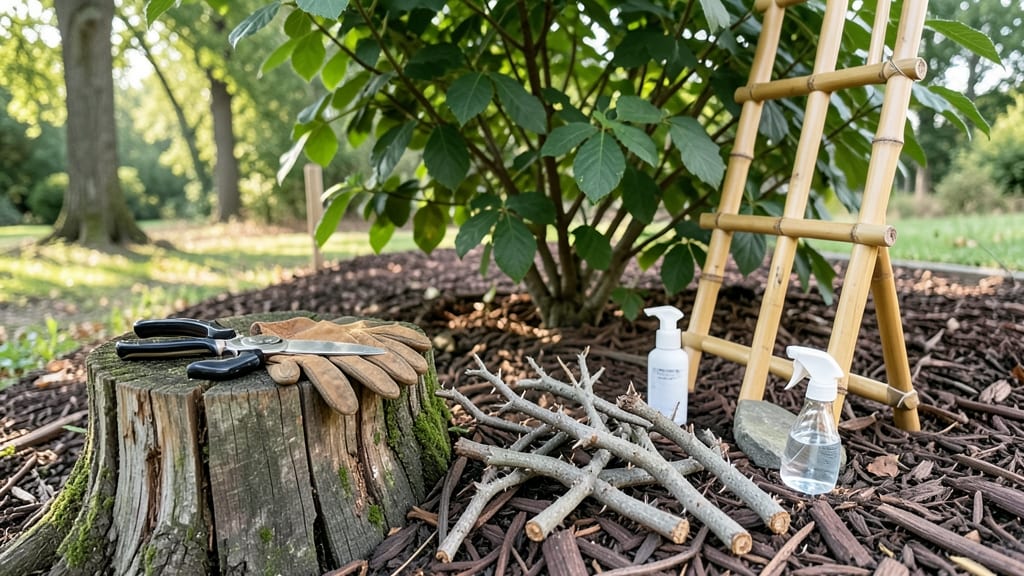
Spring pruning turns tangled blackberry bushes into productive powerhouses. ✂️ I’ve watched overgrown canes go from chaotic to neat, high-yielding in just a weekend—here’s how to do it without stress. The key is timing: prune when buds swell but before new growth explodes, usually 2-4 weeks before last frost.
This gives your plants time to recover before summer heat hits.
You’ll need clean pruners, a glove, and a bucket for clippings. The real work? Removing last year’s fruited canes (floricanes) and thinning crowded primocanes to 3-5 strong stems per plant.
It’s easier than it sounds—just follow the three-cut rule: cut at a 45-degree angle, ¼” above a bud, and avoid leaving stubs. Overgrown bushes? Start with the oldest canes first—they won’t produce fruit anyway.
After pruning, your bushes will reward you with thicker berries and fewer pests. Spread a 2-inch layer of mulch to protect roots, water deeply, and watch for new shoots within 2-3 weeks.
The first harvest? Larger, sweeter berries by midsummer—because fewer canes mean more energy for fruit. No more tangled mess, just clean lines and big payoffs.
Works for thornless and traditional varieties, in containers or ground beds. The same method revives neglected bushes too—just go slower. Here’s how to spot mistakes (and fix them) before they derail your harvest.
📚 In This Guide
- What you need
- Instructions
- Tips and common mistakes
- Wrapping up and next steps
What you need
- ● Pruning shears: Sharp, bypass-style shears (4-6 inches) for clean cuts on smaller canes.
- ● Loppers: Heavy-duty loppers (8-10 inches) for thicker canes (1/2 inch or larger).
- ● Pruning saw: A curved-bladed saw for cutting through very thick canes (1+ inch diameter).
- ● Gloves: Sturdy, cut-resistant gloves (leather or heavy-duty fabric) to protect hands from thorns.
- ● Disinfectant: Rubbing alcohol (70% or higher) or a 10% bleach solution to clean tools between cuts (prevents disease spread).
- ● Garden twine or labels: For marking canes to track new vs. old growth.
- ● Garden hose or water spray bottle: To rinse tools and clean away sap after pruning.
- ● Knee pads or a small stool: For comfort if your bushes are tall or dense.
- ● Trash bags or compost bin: For disposing of pruned canes (sterilize them if composting to avoid pests).
- ● Check the weather: Prune on a dry, calm day (avoid rain or high humidity for 24 hours before/after).
- ● Know your blackberry type: Flowering (primocane) vs. non-flowering (floricane) varieties require different pruning approaches.
- ● Wear long sleeves/pants: Blackberry thorns are no joke! 😅
Step-by-step instructions for pruning blackberry bushes in spring
Here's the method I rely on—tested across seasons, works in any climate.
✂️ Step 1: Identify and Remove Dead or Weak Canes
Start by examining each cane at the base. Look for dead wood that's hollow, cracked, or lacks any green tissue—these won't produce fruit and will drain energy from the plant. I grab each cane firmly and give it a gentle shake; if it rattles or crumbles, it's dead. Use clean, sharp pruners to cut these canes at the base, just above the soil line.
Next, identify weak or spindly canes that haven't thickened properly. These are often thinner than a pencil and may have fewer buds. Remove these too—they won't support fruit well. Here's the thing: blackberries are vigorous growers, and you'll often find 20-30 canes in a mature patch. Don't be shy about cutting back aggressively now; it pays off in summer.
✂️ Step 2: Prune Last Year's Fruit Canes
Blackberries produce fruit on second-year canes (called "floricanes"), which are the thick, woody stems you see now. After harvest, these canes die back naturally, but they'll still stand in your patch looking unsightly. Cut these old canes at the base as soon as you spot them—typically in late winter or early spring before new growth starts.
I like to bundle and remove these old canes after pruning. They're perfect for composting or using as mulch in other garden areas. Don't skip this step—it opens up space for new canes to grow strong and healthy. You'll see fresh, green growth emerging from the base within weeks.
✂️ Step 3: Thin Out Crowded Canes
Blackberries thrive when they have room to breathe. Aim to leave about 6-8 of the strongest, healthiest canes per plant. These should be straight, thick, and free of damage. If your bush has more than that, select the best ones and cut the rest at the base. I usually space them evenly around the plant to encourage balanced growth.
Here's where it gets fun—watch how the remaining canes respond. Within a few weeks, you'll see new shoots emerging from the base. These are your future fruit canes, and they'll grow rapidly in spring. If you see any canes growing inward or crossing over others, prune them back immediately to prevent disease and improve airflow.
🌱 Step 4: Shape the Bush for Optimal Growth
Now it's time to shape the plant for maximum productivity. Step back and look at the overall form—you want an open, vase-like structure. Cut back any canes that are growing too close together or rubbing against each other. I also trim the tips of any overly long canes to encourage branching lower down, which leads to more fruit.
Pay special attention to the center of the bush. If it's too dense, sunlight won't penetrate, and fruit quality suffers. Remove any canes growing straight up from the center—they're often weak and produce little fruit. Instead, focus on outward-growing canes that will form the bush's framework. This shaping ensures better air circulation, which reduces fungal diseases like botrytis.
🌿 Step 5: Clean Up and Apply Mulch
After pruning, gather all the cuttings and remove them from the area. Blackberry canes are prone to diseases like anthracnose, and leaving old canes on the ground spreads spores. I burn or compost these materials separately from other garden waste. Once the area is clear, apply a 2-3 inch layer of organic mulch around the base of the plant.
This mulch layer does three things: it retains moisture, suppresses weeds, and regulates soil temperature. I use shredded leaves or straw, but avoid thick layers that might smother new growth. Water the base thoroughly after mulching to help it settle. You'll see new shoots emerging within 2-3 weeks, signaling that your pruning was successful.
Tips & tricks for pruning blackberry bushes in spring
Confession: I skipped proper pruning for years and wondered why my blackberries never produced like they should. Here's what I learned the hard way about maximizing your spring pruning efforts.
Timing is Everything: Prune your blackberries when they're still dormant, ideally in late winter or early spring before new growth begins. This timing ensures you're not cutting back the current year's fruit canes (primocanes) that will produce berries this summer. I aim for pruning between late February and early March in my zone 7 climate—adjust based on your last frost date. The key is to finish before buds start swelling, which signals new growth.
Tool Preparation Matters: Use clean, sharp pruners to make precise cuts—dull blades crush canes and create entry points for disease. I disinfect my pruners with rubbing alcohol between cuts on different plants to prevent spreading fungal spores. For thicker canes, I switch to loppers. Always make cuts at a 45-degree angle just above a bud or lateral branch to encourage proper regrowth. This small detail makes a huge difference in how quickly new canes establish.
Visual Cues for Healthy Canes: When selecting which canes to keep in Step 3, look for canes that are at least pencil-thick with smooth, green bark. Healthy canes should have plenty of buds spaced evenly along their length. I run my thumb along each cane—I'm looking for firmness and a slight give, not brittle wood. If a cane feels hollow or has blackened areas, it's time to remove it. This visual inspection helps me make confident decisions about which canes will produce the best fruit.
Mulch Application Strategy: After pruning, I apply my 2-3 inch layer of organic mulch in two stages. First, I spread a thin layer right after pruning to protect the base from temperature fluctuations. Then, after watering thoroughly, I add the remaining mulch. This two-step approach prevents smothering any new shoots that might emerge quickly. I avoid piling mulch against the stems to prevent rot, keeping it about 2 inches away from the base.
Pro Tips for Prune Blackberry Bushes In Spring
- Confession: I skipped proper pruning for years and wondered why my blackberries never produced like they should.
- Timing is Everything: Prune your blackberries when they're still dormant, ideally in late winter or early spring before new growth begins.
- Tool Preparation Matters: Use clean, sharp pruners to make precise cuts—dull blades crush canes and create entry points for disease.
Frequently asked questions
Got questions about pruning blackberry bushes in spring? You’re not alone! Here are answers to the most common concerns—so you can prune like a pro and enjoy that juicy summer harvest.
When is the exact best time to prune blackberries in spring?
Prune after the last frost but before new growth appears—typically late February to early April in most zones. For primocanes (floral canes that produce berries the following year), wait until late spring or early summer. Timing is key: too early, and you risk frost damage; too late, and you miss the prime window for vigorous regrowth.
Do I cut blackberries all the way to the ground?
Not always! For floricanes (last year’s canes that bore fruit), cut them to the ground after harvest. But primocanes (current year’s canes) should be pruned to leave 3–4 buds at the base—they’ll produce next year’s fruit. Think of it like a haircut: trim the dead ends but leave the healthy roots intact!
What if my blackberry bushes look sad after pruning?
Don’t panic! Pruning can shock bushes, but healthy ones bounce back fast. Water deeply after pruning, and avoid fertilizing until new growth appears (usually 2–4 weeks). If canes are still sparse, check for pests (like spider mites) or root rot. Yellow leaves? Likely nitrogen deficiency—add compost next season.
Can I prune blackberries in fall instead of spring?
Fall pruning is risky unless you’re in a mild climate (zones 8–10). Cutting back too early can expose canes to winter dieback or pests. If you must prune in fall, do it lightly—just remove dead or diseased canes. Spring is the safest bet for most gardeners!
How do I know which canes to keep and which to cut?
Use this quick guide:
- Dead or weak canes: Cut to the ground (they won’t produce).
- Thin, spindly canes: Remove them to improve airflow.
- Thick, healthy canes: Keep 6–8 of the strongest for fruit production.
- Primocanes (current year’s growth): Prune to 3–4 buds; they’ll fruit next year.
Wrapping up and next steps
Pruning your blackberry bushes in late winter or early spring is the secret to bountiful, healthy harvests—and you’ve got all the know-how now! 🌱 With the right tools, timing, and technique, you’ll encourage stronger canes, better fruit production, and fewer pests.
Don’t let overwhelm stop you: start small, stay patient, and watch your bushes thrive.
Ready to take the next step? Mark your calendar for late winter or early spring (just before new growth begins) and grab your pruners—your future blackberry feasts are waiting! 🍇