
Plants
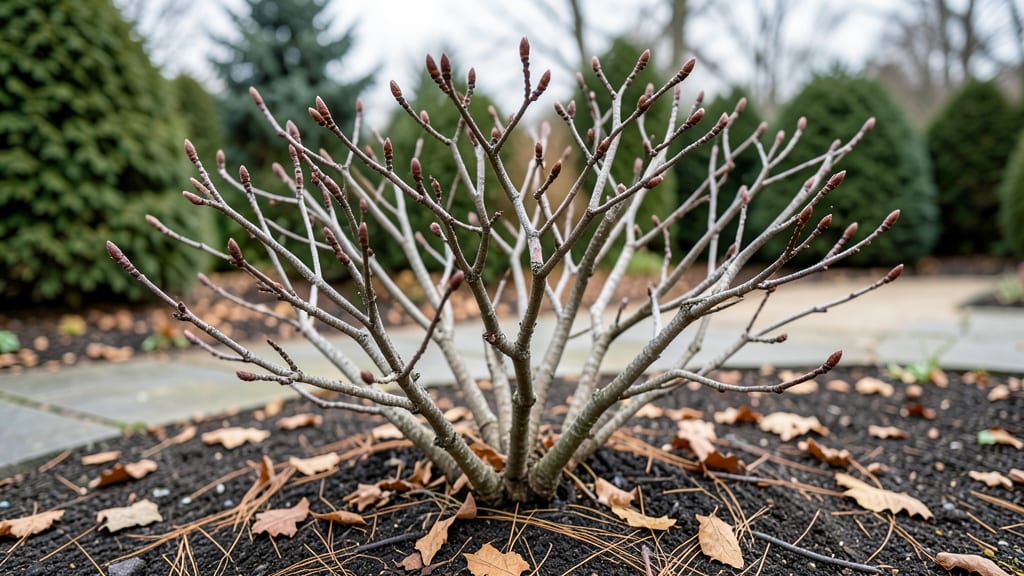
In winter, butterfly bushes look like leafless shrubs with woody branches and tight clusters of pea-sized buds, creating a skeletal appearance that revives in spring.
These shrubs enter dormancy after their vibrant summer blooms fade, leaving behind slender, brownish stems that may appear dead. 🌿 The buds, which hold next year's flowers, are the key identifier—look for their plump, rounded shapes along the branches.
Unlike other dormant shrubs, butterfly bushes often retain some of their twiggy structure even after heavy pruning, making them recognizable even in their winter state.
If you're unsure whether you're looking at a butterfly bush, check for leaf scars or small buds along the stems—these are telltale signs. Some gardeners even leave a few branches unpruned in winter to spot the buds early, which can help plan spring care.
💡 In This Article
- Identifying Butterfly Bush Buds and Stem Structures
- Winter Care Tips for Butterfly Bushes
Identifying butterfly bush buds and stem structures
Butterfly bushes (Buddleia spp.) transform into winter's botanical puzzle, where their true identity hides in the details of their buds and stem architecture. The buds—typically pea-sized (0.5–0.75 inches)—are the most reliable clue.
These swollen, oval-shaped buds form in clusters along the branches, often appearing in tight groups of 3–5. Each bud contains next year's flower, and their glossy, waxy texture helps distinguish them from the rougher bark of other dormant shrubs.
The stems themselves are slender and woody with a brownish-gray hue, often developing a slightly zigzag pattern as they mature. Unlike some deciduous shrubs that shed all branches, butterfly bushes retain their skeletal structure, creating a twiggy, lace-like appearance.
Look closely for leaf scars—small, crescent-shaped marks where leaves once attached—typically spaced 0.5–1 inch apart along the stems. These scars are a key differentiator from shrubs like lilacs, which have larger, more prominent scars.
What sets butterfly bushes apart is their bud placement. While many shrubs have buds at branch tips or nodes, butterfly bush buds often form in dense clusters along the entire length of the stem, not just at the ends.
This unique pattern, combined with the buds' plump, rounded shape, makes them stand out against other winter-dormant plants. 🌿 Even in cold climates where buds might shrink slightly, their presence along the stems remains a dead giveaway.
Another identifying feature is the branch flexibility. Butterfly bush stems are semi-flexible when dormant—you can gently bend them without snapping, unlike brittle stems of dead or diseased shrubs. This resilience is due to their pithy interior structure, which stores nutrients to fuel spring regrowth.
For gardeners, this flexibility is a practical clue: if you can bend a branch and it springs back, it's likely a healthy butterfly bush preparing for spring.
Comparing butterfly bushes to similar winter shrubs reveals key differences. For example, winterberry holly has bright red berries in winter, while smoke bush (Cotinus) features fuzzy, velvety stems. Butterfly bushes lack these distinctive features, relying instead on their bud clusters and zigzag stems for identification.
This subtle yet consistent structure is why experienced gardeners can spot them even under snow—just look for those telltale bud clusters peeking through.
If you're still unsure, consider the growth habit. Butterfly bushes typically grow in multi-stemmed clumps, with branches spreading outward at 30–45 degree angles. This open, airy structure contrasts with shrubs like boxwood, which grow in dense, rounded mounds.
The combination of bud clusters, zigzag stems, and open branching creates a winter silhouette that's unmistakably a butterfly bush.