
Plants
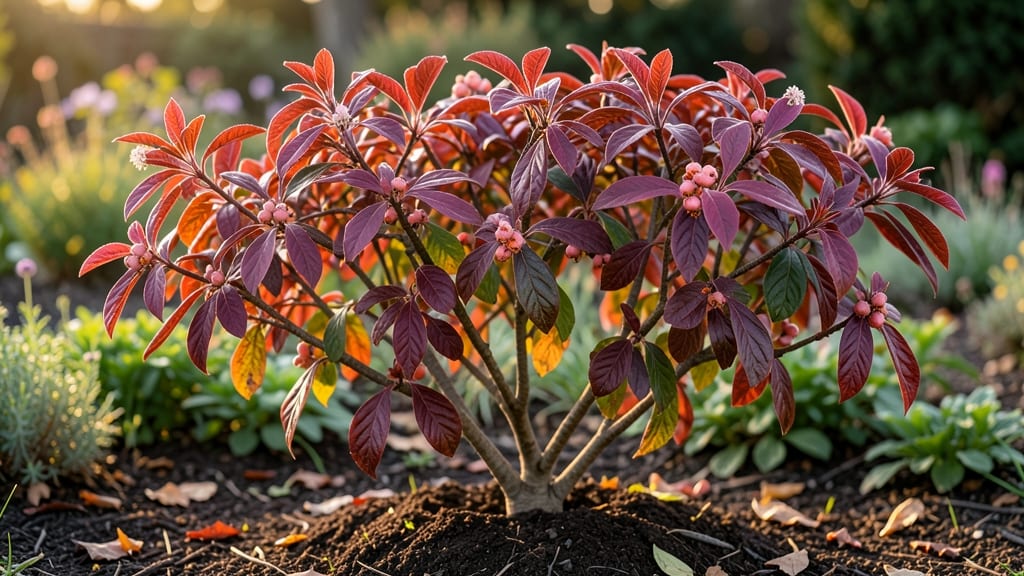
A burning bush shrub looks like a dramatic landscape statement with its upright stems, fiery red-orange fall foliage, and clusters of bright yellow blooms appearing in late summer. This deciduous shrub grows 6 to 15 feet tall with a similar spread, showcasing glossy green leaves that transform into stunning autumn hues.
A burning bush shrub gets its name from the brilliant red-orange foliage that appears in fall, created by anthocyanin pigments triggered by cooler temperatures. 🌿 The leaves start as glossy green in spring and summer, then gradually deepen into fiery tones that catch sunlight beautifully.
What makes this shrub stand out is its multi-stemmed structure, which creates an architectural focal point in gardens and landscapes.
While the classic burning bush reaches impressive heights, there are compact varieties like 'Dwarf Burning Bush' that stay under 3 feet tall, perfect for smaller spaces. The yellow flower clusters that appear in late summer add another layer of visual interest before the foliage transformation.
Whether you choose a standard or dwarf variety, this shrub delivers year-round appeal with its ever-changing seasonal display.
💡 In This Article
- Identifying Burning Bush Shrub by Seasonal Foliage Changes
- Burning Bush Varieties: Size, Color, and Growth Habits Compared
Identifying burning bush shrub by seasonal foliage changes
The burning bush's signature transformation begins with its glossy green leaves that emerge in spring, measuring about 2-4 inches long with serrated edges. These leaves contain chlorophyll that absorbs sunlight for photosynthesis, but as temperatures drop in autumn, the plant triggers a cascade of chemical reactions.
The key player here is anthocyanin pigments, water-soluble compounds that develop in response to cooler weather and shorter daylight hours.
During fall, these pigments accumulate in the leaf cells, creating the iconic red-orange hues that can range from deep crimson to bright scarlet, depending on sunlight exposure. Shrubs in full sun typically develop more intense colors because sunlight enhances anthocyanin production.
The leaves also become slightly thicker and more leathery as they prepare for dormancy, creating a striking contrast against the yellow flower clusters that appear in late summer.
What's fascinating is how this transformation varies by region. In northern climates with crisp autumns, burning bushes often display their most vibrant colors, while in warmer southern areas, the foliage may shift to more muted tones.
The timing of this change also depends on local weather patterns—early frosts can accelerate color development, while prolonged warm spells may delay the transformation until late fall.
Another identifying feature is the upright branching structure, which creates an architectural form that stands out in landscapes. The stems are typically 1/4 to 1/2 inch thick and develop a reddish-brown bark as they mature.
This branching pattern, combined with the seasonal color changes, makes the burning bush instantly recognizable even from a distance.
For those who appreciate botanical details, the leaf arrangement is also distinctive. Burning bushes exhibit opposite leaf arrangement, meaning each leaf grows directly across from its counterpart on the stem, creating a symmetrical pattern.
This structural feature, combined with the seasonal color shifts, makes identification straightforward even for novice gardeners.
What most people don't realize is that the burning bush's foliage isn't just about aesthetics—it's a survival strategy. The bright autumn colors actually serve as a visual signal to birds and other wildlife, indicating that the leaves are rich in nutrients and sugars.
This makes the shrub an important late-season food source for migrating birds and small mammals.