
Shrubs
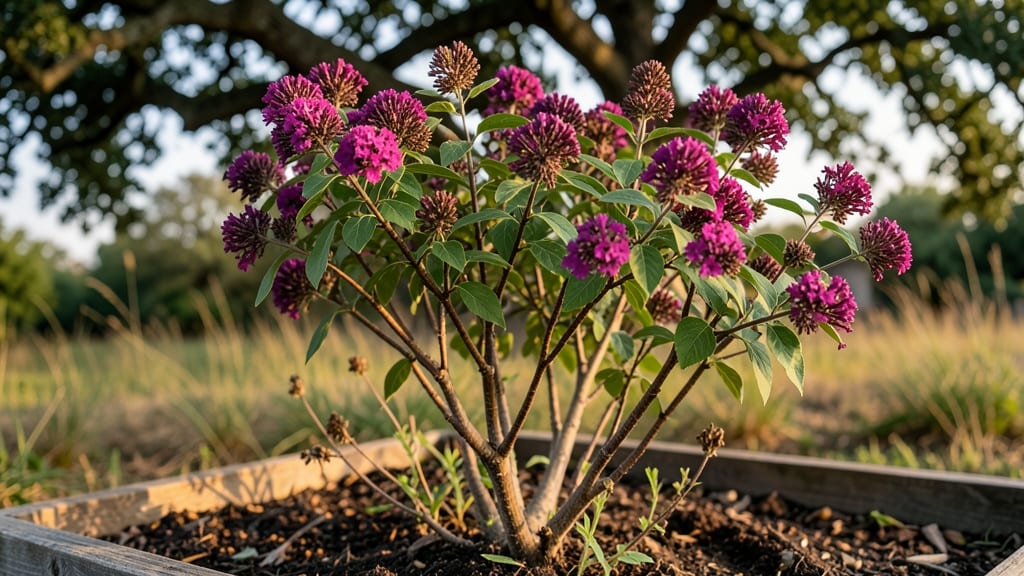
Your butterfly bush in fall might look spent, but this is when you set it up for a stronger comeback next spring. ✨ The right late-season pruning transforms what seems like dead wood into sturdy stems ready to burst with blooms—while also protecting it from winter damage.
I’ve learned that skipping this step means weaker growth and fewer flowers, but doing it right guarantees a bush that thrives through the cold months.
Start by waiting until after the first hard frost when leaves have browned and dropped. Grab your pruners and focus on removing any dead, diseased, or crossing branches—these are the weak points that invite pests and rot.
The goal is to shape the bush into an open vase form, letting sunlight and air circulate freely. This isn’t about drastic cuts; think of it as giving your butterfly bush a winter haircut that keeps it healthy without stressing it.
What you’ll end up with is a bush that looks tidy now but will reward you with earlier, more abundant blooms next season. The open structure also makes it easier to spot pests like spider mites before they take hold.
Plus, pruning now means less cleanup in spring—just a quick trim to shape it up before the growing season kicks in.
Works for both young and mature butterfly bushes, and the same principles apply whether you’re in a mild climate or a zone with harsh winters. Here’s how to do it without overcomplicating things—no green thumb required.
📚 In This Guide
- What you need
- Instructions
- Tips and common mistakes
- Wrapping up and next steps
What you need
- ● Pruning shears: A sharp, bypass-style pair (avoid anvil shears—they crush stems). (1 pair)
- ○ Loppers: For thicker branches (½"–1" diameter). (1 pair, optional if branches are small)
- ● Pruning saw: For stubborn, woody stems (>1" diameter). (1, if needed)
- ● Disinfectant: 70% isopropyl alcohol or a bleach solution (1:9 bleach-to-water ratio) to sterilize tools between cuts.
- ● Gloves: Heavy-duty, cut-resistant gloves (to protect against thorns and sap). (1 pair)
- ● Trash bags or bucket: For collecting pruned debris (5–10 gallons capacity).
- ● Hose or bucket of water: To clean tools and rinse off sap.
- ● Pruning sealant: For large cuts (>½") to prevent disease entry (e.g., Tanglefoot Pruning Seal).
- ● Marking spray: Fluorescent paint or tape to tag branches for removal (useful for complex pruning).
- ● Compost bin: To recycle pruned material (if disease-free).
- ● Safety glasses: If dealing with large branches or debris.
Instructions for late-season butterfly bush pruning
Here's how to prepare your butterfly bush for winter—step by step.
✂️ Step 1: Time Your Pruning Perfectly
Prune your butterfly bush after the first hard frost but before the ground freezes. This timing—typically late October to early December in most climates—lets the plant enter dormancy with energy reserves intact. I wait until the leaves have browned and fallen naturally; this signals the bush has completed its growing season.
If you prune too early, new growth may sprout before winter and get damaged by frost. If you wait too long, the plant won’t have time to harden off properly. Check your local frost dates—this is your best guide. A light frost that kills leaves but doesn’t damage stems is your cue to act.
🌿 Step 2: Remove Dead and Weak Growth
Start by inspecting the bush for dead, diseased, or crossing branches. Use clean, sharp pruners to cut these out first. Dead wood is easy to spot—it’s brown, brittle, and doesn’t bend when you test it. Diseased branches may have black spots, mold, or an unusual odor. Remove them completely to prevent next year’s problems.
Next, trim back any weak or spindly growth. These are the thin stems that grew late in the season and never thickened up. Cut them back to a strong lateral branch or bud. You’ll notice the bush’s natural structure becomes clearer as you go—this is your reward for pruning thoughtfully.
✂️ Step 3: Thin the Canopy for Better Airflow
Butterfly bushes need good airflow to prevent fungal diseases like powdery mildew. Step back and look at the bush’s shape—aim for an open, vase-like form. Start at the center and remove 10-20% of the oldest wood, focusing on branches that are rubbing against others or growing inward.
Cut branches back to a strong outward-facing bud or lateral branch. Avoid leaving stubs—always make clean cuts just above a bud or branch collar. If a branch is thicker than your thumb, use loppers instead of hand pruners. This step is where the bush’s winter resilience really starts to build.
🪴 Step 4: Shape for Next Year’s Blooms
Now’s the time to refine the bush’s shape for next season. Butterfly bushes bloom on new wood, so you don’t need to worry about preserving old blooms. Instead, focus on creating a balanced silhouette with an open center. Cut back some of the longest branches to encourage bushier growth lower down.
Leave 3-5 strong stems at the base if your bush is large—this helps support next year’s flowers. For smaller bushes, aim for 2-3 main stems. Step back frequently to check your progress. The goal is a bush that looks natural but intentional, not over-pruned or chaotic.
⏰ Step 5: Clean Up and Protect for Winter
After pruning, remove all debris from the area—this includes fallen leaves, cut branches, and any plant litter. Dispose of diseased branches in the trash, not your compost pile. Next, apply a 2-3 inch layer of mulch around the base of the bush, keeping it 6 inches away from the trunk to prevent rot.
Water the bush deeply before the ground freezes to ensure its roots stay hydrated through winter. If you’re in a cold climate (Zone 4 or colder), wrap the base of young bushes with burlap or frost cloth for extra protection. This final step is what keeps your butterfly bush thriving year after year.
Tips & tricks for perfect late-season butterfly bush pruning
Here's what nobody tells you about pruning that'll make all the difference for next year's blooms.
Timing is Everything: The window between first hard frost and ground freeze is your golden opportunity. I've learned this the hard way—pruning too early can trigger new growth that gets nipped by frost, while waiting too late means the plant won't harden off properly. Check your local frost dates and watch for leaves to brown naturally. This is your plant's way of saying "I'm ready!"
Pruning Technique: When cutting branches, always make clean cuts just above a strong outward-facing bud or lateral branch. This encourages new growth in the right direction. I use my pruners to cut at a 45-degree angle about 1/4 inch above the bud—this prevents water from pooling and causing rot. For branches thicker than your thumb, switch to loppers to avoid crushing the stem.
Canopy Airflow: The open vase-like shape isn't just about looks—it's about preventing fungal diseases like powdery mildew. Focus on removing 10-20% of the oldest wood from the center first. This creates that crucial airflow while still maintaining the bush's natural structure. Think of it like giving your bush a spa day—better circulation means fewer problems down the line.
Winter Protection: That 2-3 inch layer of mulch isn't just decoration—it's insulation for the roots. Keep it 6 inches away from the trunk to prevent rot, but don't skimp on the coverage. For young bushes in cold climates, add an extra layer of burlap or frost cloth around the base. I've seen bushes survive -20°F winters with this simple protection, while unprotected ones struggle.
Pro Tips for Butterfly Bush In Fall
- Here's what nobody tells you about pruning that'll make all the difference for next year's blooms.
- Timing is Everything: The window between first hard frost and ground freeze is your golden opportunity.
- Pruning Technique: When cutting branches, always make clean cuts just above a strong outward-facing bud or lateral branch.
Frequently asked questions
about caring for your butterfly bush in fall—especially when it comes to late-season pruning and winter prep.When is the best time to prune butterfly bushes in fall?
Prune your butterfly bush after the first hard frost but before winter dormancy sets in (typically late fall, around November). This timing helps remove dead foliage while protecting tender growth from early freezes. Avoid heavy pruning too late—wait until spring if frost is still a risk!
Do I need to cut back butterfly bushes for winter?
Yes! Cutting back 2/3 of the plant (to 12–18 inches tall) helps prevent snow mold and reduces winter damage. Leave a few stems for structure, but remove all dead or diseased branches. Mulch lightly afterward to insulate roots.
Will pruning in fall affect next year’s butterfly blooms?
Not at all! Butterfly bushes thrive after fall pruning—they’re hardy shrubs that regrow vigorously in spring. In fact, late pruning encourages denser growth and more blooms next season. Just avoid over-pruning (never cut more than 1/3 of the plant in one season).
What if my butterfly bush doesn’t bloom well after fall pruning?
Check these fixes:
- Location: Ensure it gets full sun (6+ hours daily).
- Soil: Amend with compost if soil is poor.
- Fertilizer: Apply a balanced shrub fertilizer in early spring.
- Age: Young bushes (<3 years) may need patience—blooms peak at 5+ years.
Are there cold-hardy alternatives to butterfly bushes?
Yes! If your zone is very harsh (Zone 4 or colder), try these low-maintenance, butterfly-friendly shrubs:
Plant
Hardiness Zone
Bloom Time
Butterfly Weed (Asclepias tuberosa)
3–9
Summer
Russian Sage (Perovskia atriplicifolia)
5–9
Summer to fall
Spirea (Spiraea japonica)
4–8
Spring to summer
Wrapping up and next steps
Your butterfly bush in fall doesn’t have to fade into winter—with the right pruning and care, it can bounce back stronger than ever! 🌿 By following these late-season steps, you’ll encourage vibrant blooms next year while keeping your shrub healthy and resilient.
Now that you’re armed with the know-how, grab those shears and give your butterfly bush the perfect send-off into dormancy.
Ready to take it further? Next up:
- Mark your calendar for early spring—that’s when you’ll trim back any dead or weak growth for a fresh start.
- Consider adding mulch around the base to protect roots from harsh winter winds.