
Fertilization
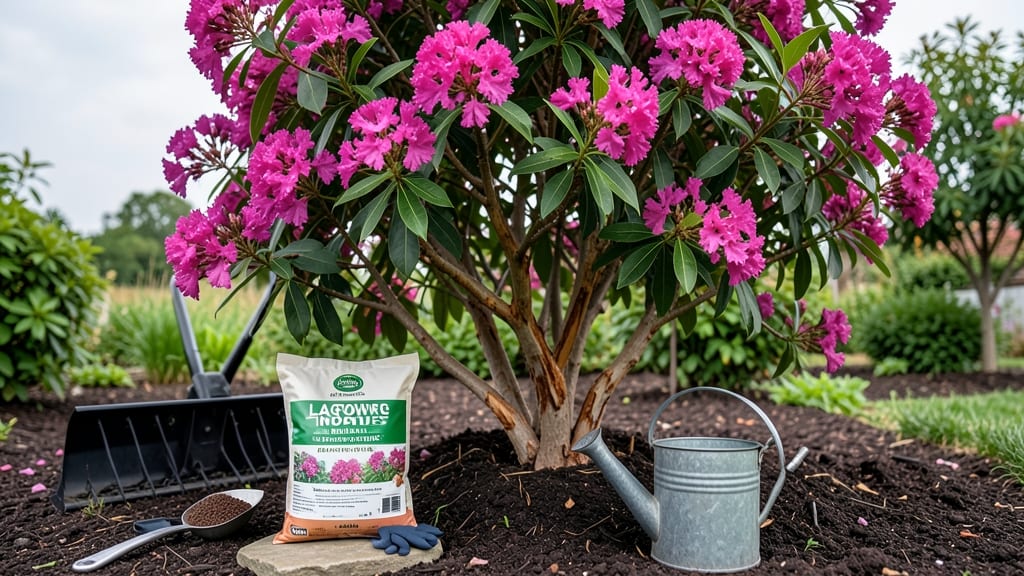
The right fertilizer for your crepe myrtle bush 🌸 is the key to those showstopping blooms—and using the wrong mix can leave you with stunted growth or worse.
Picture this: You’ve spent months nurturing your crepe myrtle, only for it to produce sparse, weak flowers instead of the vibrant display you dreamed of. The problem? Most gardeners overlook the NPK ratio that crepe myrtles crave, or they feed at the wrong time.
With the right blend and timing, you can transform your plant into a season-long spectacle.
In this guide, I’ll break down the science-backed NPK ratios (like 10-10-10 or 12-4-8) that encourage lush foliage and abundant blooms, plus when to apply fertilizer—spring for growth, fall for prep—and how to spot signs of over- or under-feeding before it’s too late.
Ready to give your crepe myrtle the nutrients it needs? You’ll learn how to choose between organic and synthetic options, master the step-by-step application, and avoid costly mistakes that could harm your plant.

Optimal NPK ratios for crepe myrtle blooms: what science recommends
Crepe myrtles (Lagerstroemia spp.) are showstoppers in any landscape, but their vibrant blooms depend on precise nutrient balance. The key lies in understanding NPK ratios—nitrogen (N), phosphorus (P), and potassium (K)—and how they interact with your plant's growth cycle.
Too much nitrogen? Lush foliage but fewer flowers. Too little phosphorus? Weak roots and poor bloom development. Let's decode the science behind the perfect blend for your crepe myrtle.
Most crepe myrtles thrive with a balanced fertilizer like 10-10-10 or 12-4-8, but seasonal adjustments are critical. In spring, focus on root development with slightly higher phosphorus (P). By summer, shift to potassium (K) to support bloom production.
Fall fertilization should be light to prepare for dormancy, while winter is a rest period—no feeding needed. Understanding these shifts prevents common mistakes like over-fertilizing in late summer, which can delay flowering.
| Season | NPK Ratio | Key Nutrient Focus | Application Tips |
|---|---|---|---|
| Spring (April-May) | 10-10-10 or 12-4-8 | Phosphorus (P) for roots | Apply 1 tbsp per 1 ft of height; water deeply |
| Summer (June-August) | 5-10-10 or 7-7-7 | Potassium (K) for blooms | Light feed every 6-8 weeks; avoid late summer |
| Fall (September-October) | 5-5-10 | Potassium (K) for winter prep | Reduce to 50% of spring dose; stop by November |
| Winter (November-March) | None | Dormancy period | No fertilization; focus on pruning |
Reading fertilizer labels can be confusing, but crepe myrtles respond best to balanced or low-nitrogen blends. For example, a 10-10-10 label means equal parts nitrogen, phosphorus, and potassium by weight. If you see a high nitrogen number (e.g., 30-10-10), your plant will prioritize leafy growth over blooms.
Instead, opt for low-nitrogen, high-phosphorus fertilizers in spring to encourage root and flower development. Organic options like bone meal (high in P) or kelp meal (rich in K) are excellent choices for crepe myrtles.
Organic vs. synthetic fertilizers both work, but they behave differently. Synthetic fertilizers release nutrients quickly, giving you immediate results but requiring careful dosing. Organic fertilizers, like compost or fish emulsion, release nutrients slowly, mimicking natural processes.
For crepe myrtles, I recommend starting with a slow-release organic fertilizer in spring, then switching to a liquid potassium boost in summer. This two-step approach ensures steady nutrition without risking burnt roots from over-application.
One common mistake is assuming "more fertilizer = better blooms." Over-fertilizing with nitrogen can lead to leafy growth at the expense of flowers, while too much phosphorus can harm soil microbes. Always follow the label instructions and adjust based on your plant's response.
For example, if your crepe myrtle's leaves turn dark green and glossy, it’s likely getting too much nitrogen. If blooms are small or sparse, it may need more phosphorus or potassium.
Soil testing is your best friend when fine-tuning NPK ratios. A simple home soil test kit (available at garden centers) can reveal deficiencies or excesses. For crepe myrtles, aim for a slightly acidic to neutral pH (6.0-7.0).
If your soil is too alkaline, the plant may struggle to absorb nutrients like phosphorus and iron. In this case, a chelated iron supplement or sulfur amendment can help. Always apply amendments in early spring to give roots time to adjust before the growing season.
Seasonal adjustments are non-negotiable for crepe myrtles. In spring, focus on root establishment with a balanced fertilizer. By late spring, switch to a low-nitrogen, high-potassium blend to encourage blooming. In fall, reduce feeding to 50% of spring doses and stop by early winter.
This mimics natural cycles and prevents late-season growth that can damage tender new shoots during frost. Think of fertilization as a three-act play: growth (spring), blooming (summer), and rest (fall/winter).
For container-grown crepe myrtles, reduce fertilizer doses by 25-50% since potted plants have limited root space. Always water thoroughly after applying fertilizer to prevent root burn. If you notice yellowing leaves or crispy leaf edges, flush the soil with water to remove excess salts.
Pro tip: Use a rainwater collection system for diluting fertilizers—it’s gentler on plants than tap water, which can contain chlorine and minerals that alter nutrient uptake
Step-by-step fertilization guide: when, how much, and how to apply
Timing and technique are everything when fertilizing your crepe myrtle bush. Unlike many plants, crepe myrtles thrive on a balanced approach—too much nitrogen can lead to lush foliage but fewer blooms, while too little phosphorus or potassium stunts root and flower development.
The key is feeding at the right time with the right NPK ratio—typically 10-10-10 or 12-4-8—and using methods that match your plant's growth stage.
Most gardeners make the mistake of fertilizing year-round, but crepe myrtles need a seasonal feeding schedule to avoid stress. Spring and early summer are critical for bloom production, while fall and winter require minimal intervention.
Organic options like compost or bone meal release nutrients slowly, while synthetic fertilizers offer quick results but require precise dosing. Let’s break down the exact steps to keep your crepe myrtle healthy and vibrant.
Step-by-Step Fertilization Guide for Crepe Myrtle
-
Step 1: Test Your Soil
Before applying fertilizer, test your soil’s pH (6.0-7.0 ideal) and nutrient levels. Crepe myrtles prefer slightly acidic to neutral soil. Use a home soil test kit or send a sample to your local extension office for accuracy. -
Step 2: Choose Your Fertilizer
Organic: Compost (for soil health) or bone meal (3-4-0 NPK for phosphorus).
Synthetic: 10-10-10 or 12-4-8 balanced fertilizer for blooms. Slow-release granules are ideal for steady nutrition. -
Step 3: Apply at the Right Time
Spring (April-May): First feeding after buds form. Use 1 tbsp per foot of plant height (max 1 cup).
Summer (June-August): Light feed every 6-8 weeks to support blooms.
Fall/Winter: Skip fertilizing to allow dormancy. -
Step 4: Use the Right Method
Granular: Sprinkle around the drip line (not the trunk) and water in.
Liquid: Dilute per label and apply to moist soil in early morning.
Slow-Release: Work into top 2-3 inches of soil in spring. -
Step 5: Monitor for Signs
Over-fertilized: Yellow leaves, burnt tips, or excessive foliage with no blooms.
Under-fertilized: Pale leaves, stunted growth, or fewer flowers. Adjust NPK ratios or feed more frequently.
One common misconception is that crepe myrtles need high-nitrogen fertilizer to grow faster, but this actually reduces blooms. Instead, focus on a balanced NPK ratio like 10-10-10, which supports both foliage and flowers.
For organic gardeners, compost tea or worm castings provide gentle, long-term nutrition without risk of burning roots. Always water thoroughly after applying fertilizer to help nutrients penetrate the soil.
If your crepe myrtle isn’t blooming as expected, check your fertilizer timing. Applying too late in the season can delay flower buds from forming. For example, if you fertilize in late summer, the plant may not have enough time to produce blooms before winter.
Aim to feed in early spring when new growth begins and again in early summer to support peak flowering.
Pro tip: Mulch around your crepe myrtle with 2-3 inches of organic mulch (like pine straw or shredded bark) after fertilizing. This helps retain moisture, regulates soil temperature, and slowly releases nutrients back into the soil over time.
Just keep mulch 6 inches away from the trunk to prevent rot.
Remember, crepe myrtles are drought-tolerant once established, so over-fertilizing can lead to root burn and stress. Always follow the label instructions and adjust based on your plant’s response. With the right approach, your crepe myrtle will reward you with stunning blooms year after year! 🌸