
Pruning
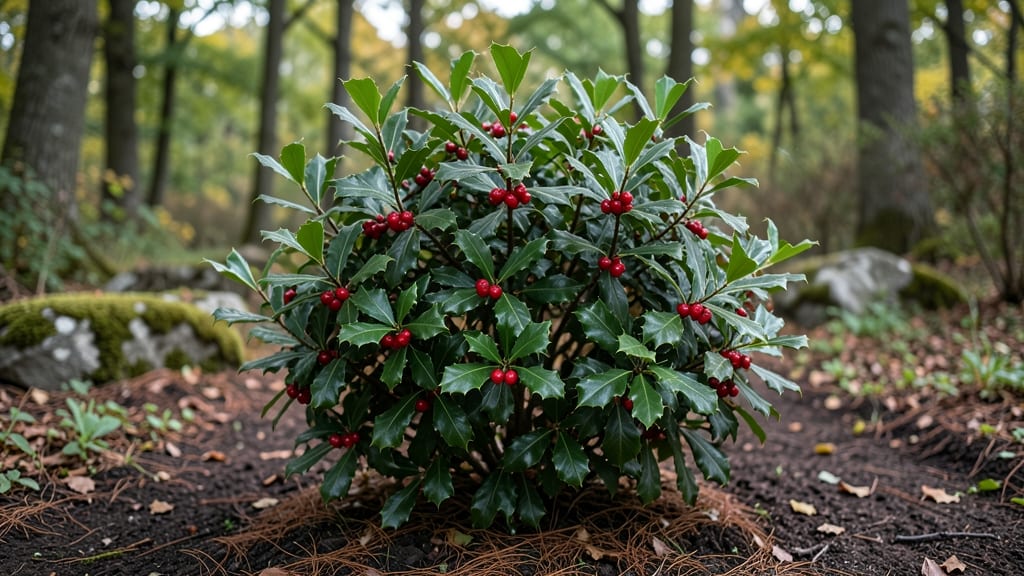
Shaping a holly bush 🌿 into a polished, perfect form is the secret to turning a wild shrub into a year-round garden star.
Picture this: a neat column framing your front door, a rounded hedge that feels like a living wall, or a topiary masterpiece that turns heads in every season.
Without the right pruning know-how, even the most stunning holly can end up looking like a tangled mess—no matter how much you love its glossy leaves and bright berries.
What makes holly bushes such a game-changer for garden design? Unlike finicky annuals, they stay lush and structured all year, offering color and texture when most plants take a break.
The key is understanding when and how to prune for the shape you want—whether you're going for formal symmetry or a more natural, flowing silhouette.
In this guide, I’ll walk you through the easiest techniques to train your holly into any shape, from seasonal maintenance tips to the tools that make the job effortless. Ready to turn your holly into the standout feature of your landscape?
How to prune holly bushes for different shapes year-round
Pruning holly bushes is an art that blends precision with patience. These evergreens respond well to shaping, but timing and technique are everything.
Whether you're aiming for a tight column, a rounded hedge, or a naturalistic silhouette, understanding the seasonal rhythms of holly growth will help you achieve the perfect form.
Start by selecting the right tools—a sharp pair of bypass pruners for clean cuts and a hedge trimmer for larger surfaces.
Before you begin, assess your holly's current shape and growth pattern. Holly bushes grow best when pruned in late winter or early spring, just before new growth begins. This timing allows you to shape the plant without disturbing its dormant state.
For formal shapes like columns or hedges, plan to prune twice a year: once in spring for shaping and once in summer for touch-ups. Always remove no more than one-third of the foliage in a single session to avoid stressing the plant.
- Bypass pruners for clean cuts on small branches
- Hedge shears for larger surfaces and uniform edges
- Loppers for thicker branches (1-inch diameter or larger)
- Gloves to protect from spines
- Disinfectant to clean tools between cuts and prevent disease
- Columnar: Prune to encourage vertical growth, removing side branches to create a tapered silhouette.
- Rounded Hedge: Use a curved trimmer to maintain a soft, mounded shape.
- Naturalistic: Allow branches to grow organically, pruning only to remove dead or crossing branches.
- Topiary: Sculpt intricate designs by training branches along a wire frame.
- Late Winter/Early Spring: Remove dead or weak branches and shape for the year. This is ideal for columnar or hedge shapes.
- Summer (June-July): Light pruning to maintain shape and encourage dense foliage growth. Avoid heavy pruning during this period.
- Fall (September-October): Minimal pruning to prepare for winter. Focus on removing sparse or overgrown branches.
- Cut just above a bud or branch collar at a 45-degree angle to promote healing.
- Avoid cutting into old wood—holly bushes won’t regrow from mature wood.
- For hedges, use a guiding string to maintain even height and shape.
- After pruning, apply a layer of mulch around the base to retain moisture.
- Water deeply to help the plant recover, especially in hot or dry conditions.
- Monitor for new growth in 4-6 weeks. Adjust pruning as needed for touch-ups.
For columnar shapes, focus on removing branches that grow outward from the main stem. This encourages the holly to grow taller and narrower, creating a tapered silhouette that’s perfect for narrow garden beds or as a focal point.
Use a guiding string or a straightedge to keep cuts uniform, and always step back occasionally to check your progress. Patience is key—columnar holly bushes can take 2-3 years to fully develop their shape.
Creating a rounded hedge requires a different approach. Start by trimming the outer edges to form a gentle curve, then gradually work inward to create a uniform density.
Use a curved trimmer for smoother lines, and avoid cutting into the center too aggressively, as this can create a bare spot that’s difficult to recover. Holly hedges thrive with regular pruning every 6-8 weeks during the growing season to maintain their shape and encourage bushy growth.
If you prefer a naturalistic shape, holly bushes are surprisingly adaptable. Focus on removing dead, diseased, or crossing branches while allowing the plant to grow organically. This approach highlights the holly’s textured foliage and berries, making it a low-maintenance yet striking addition to any garden.
For a wild, cottage-garden look, leave some branches untamed to create a layered, textured effect.
Topiary is where holly bushes truly shine, especially varieties like Ilex crenata or Ilex aquifolium. To create a topiary shape, start by training young branches along a wire frame or flexible grid.
Prune regularly to encourage dense foliage growth and shape the branches into curves, spirals, or geometric forms. For best results, prune topiary holly bushes monthly during the growing season to maintain their intricate designs. Remember, topiary requires consistent care, so be prepared for ongoing maintenance.
One common mistake is pruning holly bushes in fall or winter, which can leave them vulnerable to cold damage or disease. Always wait until late winter or early spring to prune, just as new growth begins.
Another pitfall is removing too much foliage at once, which can stress the plant and reduce its ability to produce berries. Holly bushes produce berries on old wood, so avoid heavy pruning in years when you want a full berry display.
To keep your holly bushes healthy and vibrant, fertilize lightly in early spring with a balanced fertilizer (10-10-10). This encourages new growth and helps the plant recover from pruning.
Best holly varieties for specific shapes and growth habits
Not all holly bushes grow the same way, and choosing the right cultivar can make the difference between a wild, sprawling mess and a structured landscape masterpiece. Some varieties naturally form tight columns, while others spread into dense hedges or compact mounds.
Let’s explore the top holly cultivars for specific shapes and how to maintain their ideal forms.
When selecting a holly, consider your design goals and available space. A dwarf variety like Ilex crenata 'Green Lustre' thrives in tight spots, while Ilex aquifolium 'Pyramidalis' reaches towering heights—perfect for dramatic focal points. Below, I’ve compared the best options based on their natural growth habits and pruning responses.
For hedges and topiaries, Ilex crenata 'Green Lustre' is my go-to choice. Its dense foliage and slow growth make it easy to shape into neat rectangles or curves. I recommend shearing it twice a year—once in late spring and again in early summer—to encourage bushier growth and prevent legginess.
If you’re aiming for a tall, vertical accent, Ilex aquifolium 'Pyramidalis' delivers stunning height with minimal pruning. This variety naturally grows in a narrow pyramid, making it ideal for lining driveways or framing entryways. Simply remove any crossing branches or deadwood in late winter to maintain its elegant silhouette.
For low-maintenance borders, Ilex glabra 'Strongbox' is a game-changer. Its prostrate habit and drought tolerance make it perfect for slopes or rocky areas where other plants struggle. A quick trim after berries fade keeps it tidy without sacrificing its natural charm.
Remember, the key to shaping holly bushes lies in consistent pruning and understanding each variety’s growth quirks. Start with the right cultivar for your space, and your holly will reward you with year-round structure and holiday cheer.