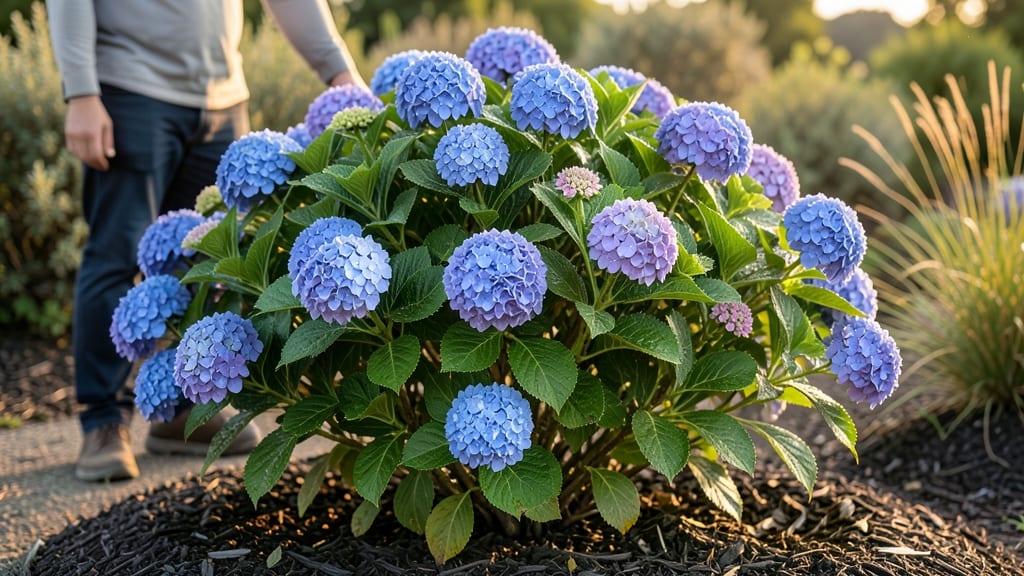
Hydrangea bushes grow anywhere from 3 feet to over 15 feet tall, depending entirely on the variety you choose—so picking the right one for your space is the first step to avoiding overpruned stumps or towering giants.
Picture this: your 🌸 hydrangea macrophylla stays compact and cheerful in a container, while a paniculata variety next door climbs toward your roof. The difference isn’t just aesthetics—it’s about sunlight, soil, and how you prune.
Get it wrong, and you’ll either struggle with unruly growth or miss out on the blooms you love.
Below, I break down the exact height ranges for the most popular types, including dwarf varieties perfect for patios and towering screens for privacy. You’ll also learn how pruning timing can shrink a 6-foot bush by half—or let it reach its full potential.
Whether you’re designing a cozy garden bed or planning a dramatic backyard backdrop, knowing these heights helps you space plants right the first time. Let’s dive into the numbers so you can pick the perfect hydrangea for your vision.
Hydrangea Height Range
3 ftto15 ft
0 ft
3 ft
6 ft
9 ft
12 ft
🌱
Medium Shrub
Hydrangea height by variety: exact growth ranges for popular types
Hydrangeas come in stunning varieties, but their mature heights can vary dramatically—from compact dwarf varieties perfect for containers to towering giant shrubs that create living privacy screens. Understanding these differences helps you plan your garden layout and avoid overcrowding.
For example, a mophead hydrangea might stay under 4 feet, while an oakleaf hydrangea could reach 12 feet or more.
Your choice of variety directly impacts spacing needs, pruning requirements, and even sunlight exposure. Some hydrangeas thrive in tight spaces, while others need room to sprawl. Below, we break down the exact height ranges for 12+ popular hydrangea types, including their growth habits and ideal planting scenarios.
This will help you select the perfect fit for your garden design, whether you're aiming for a low-maintenance border plant or a statement-making focal point.
| Variety |
Mature Height (ft) |
Spread (ft) |
Growth Habit |
Best For |
| Mini Penny® (H. macrophylla) |
2-3 |
2-3 |
Compact, rounded |
Containers, patios |
| Endless Summer® (H. macrophylla) |
3-5 |
3-4 |
Bushy, upright |
Foundation plantings |
| Limelight® (H. paniculata) |
4-6 |
4-5 |
Pyramidal, arching |
Screening, mixed borders |
| Annabelle® (H. arborescens) |
3-5 |
3-4 |
Rounded, dense |
Mass plantings, containers |
| Oakleaf Hydrangea (H. quercifolia) |
6-12 |
5-8 |
Upright, spreading |
Woodland gardens, privacy screens |
| Grandiflora (H. macrophylla) |
4-6 |
3-4 |
Bushy, mounded |
Cut flower gardens |
| Little Lime® (H. paniculata) |
3-4 |
3-4 |
Compact, rounded |
Small gardens, containers |
| Nikko Blue® (H. macrophylla) |
3-5 |
3-4 |
Bushy, upright |
Shade gardens, borders |
| Vanille Fraise® (H. macrophylla) |
3-4
How to control hydrangea height: pruning tips for each growth type
Hydrangeas grow at different rates depending on their variety and bloom type. Some varieties like Hydrangea paniculata can reach 12 feet tall if left unpruned, while others like Little Lime stay compact at just 2-3 feet.
The key to controlling their height lies in understanding when and how to prune based on their growth habits.
First, identify whether your hydrangea blooms on old wood (last year's growth) or new wood (current year's growth). This determines the best pruning timing and technique.
Old wood bloomers like mophead hydrangeas (Hydrangea macrophylla) need minimal pruning, while new wood bloomers like panicle hydrangeas (Hydrangea paniculata) can be pruned more aggressively.
-
1
Old Wood Bloomers (e.g., Mophead, Oakleaf) - Prune immediately after flowering (late summer) to avoid cutting off next year's blooms. Remove dead or weak stems only.
-
2
New Wood Bloomers (e.g., Panicle, Smooth) - Prune in late winter or early spring before new growth starts. Cut back 1/3 of the oldest stems to encourage bushier growth.
-
3
Heading Back Technique - For height reduction, cut stems back to just above a leaf bud or lateral branch. This encourages fuller growth at the desired height.
-
4
Thinning Cuts - Remove entire stems at the base to improve airflow and reduce height. Ideal for overgrown bushes needing drastic size control.
-
5
Seasonal Maintenance - Light pruning in early summer can shape growth without risking next year's blooms. Always use sterilized pruners to prevent disease.
For tall-growing varieties like Limelight or Grandiflora, prune in stages over 2-3 years to avoid shocking the plant. Start by removing 30% of the tallest stems in the first year, then gradually reduce the remaining stems in subsequent years.
This method prevents sudden height loss while maintaining a balanced shape.
Remember, over-pruning can stress your hydrangea, leading to fewer blooms or even death. Always leave at least 3-5 strong stems to ensure continuous growth.
If your hydrangea is too tall for its space, consider topiary training or container growing for varieties like Annabelle, which thrive in large pots with controlled pruning.
Finally, mulch around the base after pruning to retain moisture and protect roots. Hydrangeas respond well to regular care, and with the right pruning approach, you can keep them at your desired height while enjoying vibrant blooms all season. ✂️🌿🌸
★★★★★4.6(7 reviews)
|