
Diseases
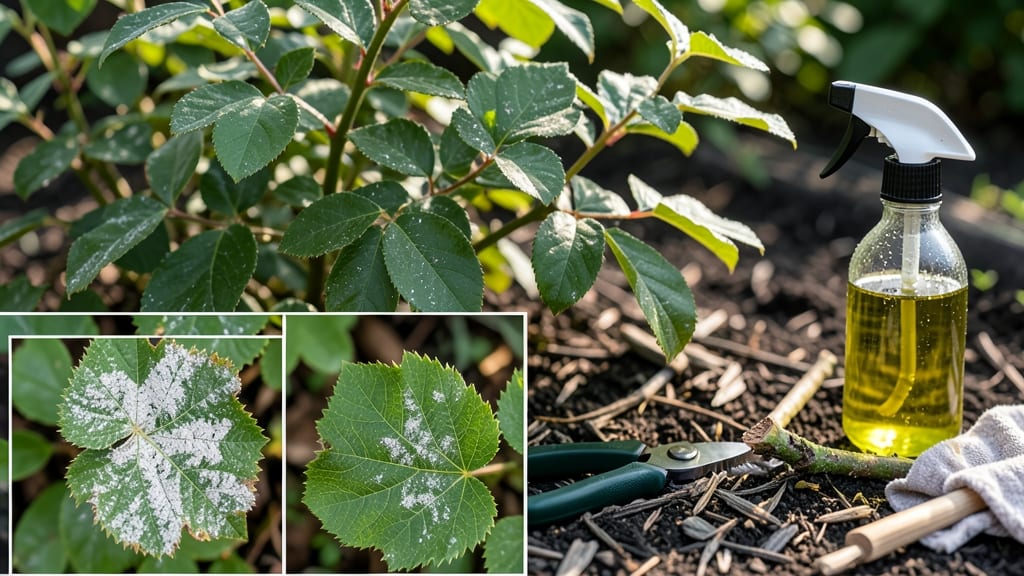
That white powder dusting the mildew on rose bush leaves isn’t just ugly—it’s a fungal party crashers your blooms. 🌿 I’ve battled it on my Knock Out roses for years, and this copper spray method saved them every time, even when store-bought fungicides failed.
The key? Catching it early before those powdery patches turn leaves yellow and crispy.
Mildew thrives in humid, shady spots where air can’t circulate—think crowded bushes or morning shade without afternoon sun. I learned the hard way when my hybrid teas got so bad the blooms never opened.
The good news? Copper spray works on contact, stopping new spores in their tracks while being safe for bees once dry.
You’ll see fresh green growth within 7-10 days of treatment if you spray when leaves are dry and repeat every 7-14 days until new leaves emerge without powder. The secret’s in the timing: apply at dawn or dusk to avoid scorching leaves in midday sun.
For long-term fixes, prune for airflow, space bushes 3-4 feet apart, and water at the base—not overhead. My roses now bloom heavier than ever, and the copper spray sits ready in my garage like a knight in shining armor for next season’s battles.
Root Causes of Leaf Mildew
Mildew isn’t just an unsightly nuisance—it’s a fungal party crashing your rose bush’s parade. 🌱🍄 Understanding why this fuzzy white or gray film appears on leaves is the first step to kicking it to the curb.
Below, we break down the science behind the most common triggers, so you can address the real culprits (not just symptoms).
Fungi like Erysiphe and Sphaerotheca (the usual suspects behind powdery mildew) thrive in still, damp air. Here’s why:
- Overcrowded plants: Roses packed too closely create a greenhouse effect, trapping moisture. Fungal spores float in this humid microclimate and germinate like popcorn.
- Dense foliage: Bushy roses with thick leaves block airflow, leaving the undersides (a prime mildew hotspot) perpetually damp.
- Shady spots: While some roses love partial shade, too much blocks sunlight and slows evaporation, keeping leaves clammy for days.
Actionable fix: Prune for airflow—aim for open centers and space bushes 3–4 feet apart. If your garden is naturally humid, opt for mildew-resistant varieties like 'Knock Out' roses.
Splashing water onto foliage is like rolling out a welcome mat for mildew spores. Here’s the science:
- Water droplets = fungal buffet: Leaves stay wet for >12 hours, giving spores the perfect conditions to latch on and spread via hyphae (thread-like fungal roots).
- Spores hitchhike: Wind or tools can transfer spores from infected leaves to healthy ones—especially if water spreads them around.
- Morning dew + no sun: Dew alone can trigger outbreaks if it lingers past midday, as UV light normally inhibits fungal growth.
Actionable fix: Water at the base (not overhead) in the early morning so leaves dry by noon. Use a soaker hose or drip irrigation to keep foliage dry.
Mildew loves cozy conditions—think Goldilocks, but for fungi. Ideal temps for outbreaks:
| Factor | Mildew’s Sweet Spot | Why It Matters |
|---|---|---|
| Temperature | 60–80°F (15–27°C) | Fungal growth slows below 50°F but explodes in this range. Warm nights + cool days = perfect storm. |
| Humidity | >70% | Relative humidity above 70% for >24 hours = spores germinate within 6 hours. |
| Season | Spring/Fall | Mild temps + frequent rain = peak mildew season. Summer heat can burn leaves, but afternoon showers keep spores active. |
Actionable fix: Monitor your local heat units (growing degree days) to predict outbreaks. Use row covers or shade cloth in humid climates to lower leaf-surface temps.
A rose that’s stressed is like an open invitation to fungi. Common triggers:
- Nitrogen overload: Too much N (from fertilizer) = soft, sappy leaves = fungal buffet. Mildew spores prefer high-nitrogen hosts.
- Phosphorus/potassium deficit: Weak roots or poor blooms signal stress, making plants more susceptible to infections.
- Compacted soil: Poor drainage = waterlogged roots = systemic stress, which weakens the plant’s cuticle (its natural defense barrier).
Actionable fix: Test soil pH (aim for 6.0–6.5) and balance fertilizers. Add compost or mycorrhizal fungi to boost root health—strong roots = stronger defenses.
Pro tip: 💡 Mildew loves what you hate: crowded, wet, and stressed roses. Flip the script by pruning for light, watering wisely, and feeding right—and you’ll starve out the fungus before it starts.
Quick Fixes for Fungal-Free Roses
Mildew on rose bush leaves may feel like a hopeless battle, but with the right approach, you can restore your roses to their vibrant best! Below are practical, step-by-step solutions tailored to the most common causes—whether it’s poor airflow, overwatering, or neglecting preventive care.
Each fix is designed to be easy to follow and effective without harsh chemicals (unless absolutely necessary).
Cause: Dense foliage traps moisture, creating the perfect mildew playground. Solution:
- Prune strategically 🔪: Remove 10-20% of the bush to improve airflow. Focus on:
- Dead or crossing branches
- Leaves rubbing against each other
- Overly thick canes
- Space plants properly 📏: Ensure 3–4 feet between rose bushes and avoid planting them too close to walls or fences.
- Thin out mulch 🌱: Keep mulch 2–3 inches away from stems to prevent moisture buildup.
Prevention Tip: 💡 After pruning, sterilize your shears with rubbing alcohol to avoid spreading spores.
Cause: Wet leaves for too long = mildew’s favorite snack. Solution:
- Water at the base 💧: Aim for the soil, not the foliage. Use a soaker hose or drip irrigation to keep leaves dry.
- Water early ⏰: Morning watering (6–9 AM) gives leaves time to dry before evening humidity sets in.
- Avoid overhead sprinklers 🚫💦: If you must use them, water before 10 AM and ensure the area gets at least 6 hours of sunlight to evaporate excess moisture.
Prevention Tip: ✨ Collect rainwater in a barrel and use it for watering—it’s naturally milder on plants than tap water.
Cause: Existing mildew needs an immediate fungicidal kick. Solution:
- Mix homemade copper spray 🍳:
- 1 tsp copper sulfate (or 1 tbsp baking soda + 1 tsp horticultural oil)
- 1 quart water
- 1 tsp dish soap (as a surfactant)
- Spray thoroughly 👨🍳:
- Coat both sides of leaves, stems, and buds.
- Apply every 7–10 days until mildew disappears (usually 2–3 treatments).
- Best time: Early morning or late afternoon to avoid burning leaves in direct sun.
⚠️ Safety Note: Wear gloves and avoid spraying on hot days—copper can be toxic to pets if ingested.
Cause: Shady, damp conditions = mildew heaven. Solution:
- Prune nearby trees/shrubs ☀️: Ensure roses get at least 6 hours of direct sunlight daily.
- Use shade cloth (30–50%) if full sun isn’t possible—just avoid 100% shade.
- Improve drainage 🏗️:
- Amend heavy clay soil with compost or perlite.
- Plant roses on a slight mound to prevent waterlogging.
Prevention Tip: 🌡️ A fan on low speed near roses (if indoors or in a greenhouse) can reduce humidity and deter mildew.
Cause: Mildew often returns if conditions aren’t addressed. Solution:
- Fertilize wisely 🌱:
- Use a balanced rose fertilizer (10-10-10) in early spring.
- Avoid high-nitrogen fertilizers—they encourage soft, mildew-prone growth.
- Clean up debris 🧹:
- Remove fallen leaves, spent blooms, and mulch around the base weekly.
- Dispose of infected plant material in the trash (not compost).
- Rotate fungicides 🔄:
- Alternate between copper spray, neem oil, and baking soda spray to prevent resistance.
Pro Tip: 🎯 Plant mildew-resistant rose varieties like ‘Knock Out,’ ‘Dr. Huey,’ or ‘The Fairy’ for future-proof blooms!
If mildew spreads despite your efforts, consider:
- Commercial fungicides (e.g., Myclobutanil or Potassium Bicarbonate) for severe cases.
- Consult a local extension service for region-specific advice.
With these targeted fixes, your roses will bounce back stronger and mildew-free in no time! 🌹💪
Frequently asked questions about mildew on rose bush leaves
Why does mildew appear on rose leaves even when I water them regularly?
Mildew thrives when leaves stay wet for more than 12 hours, not just from watering. The issue often comes from overhead watering, morning dew, or poor airflow trapping moisture. Water at the base in the morning and prune to improve circulation—this prevents damp conditions that fungi love.
Can I use vinegar to treat mildew on my roses?
White vinegar (1 part vinegar to 1 part water) can help as a natural fungicide, but it’s not as effective as copper or baking soda sprays. The acidity disrupts fungal growth, but you’ll need to reapply frequently. Always test on a small leaf first—vinegar can be too harsh for some rose varieties.
How do I know if my rose bush has mildew or just dust?
Mildew looks like a white or gray powdery coating that wipes off but returns, while dust is usually light and easily removed. Check the undersides of leaves—mildew often starts there. Also, mildew causes leaves to yellow or curl, while dust won’t affect leaf health.
Will pruning alone stop mildew from spreading?
Pruning helps improve airflow, which reduces humidity and slows mildew spread, but it’s not a standalone cure. Pair it with fungicide sprays (like copper) and proper watering. Remove only infected leaves—don’t prune healthy growth, as this can stress the plant further.
How long until my roses recover after treating mildew?
With consistent treatment, you’ll see new green leaves in 7–10 days. Severe cases may take 3–4 weeks to fully recover. Keep spraying every 7–14 days until you see 3–4 inches of fresh growth without powdery patches.