
Watering
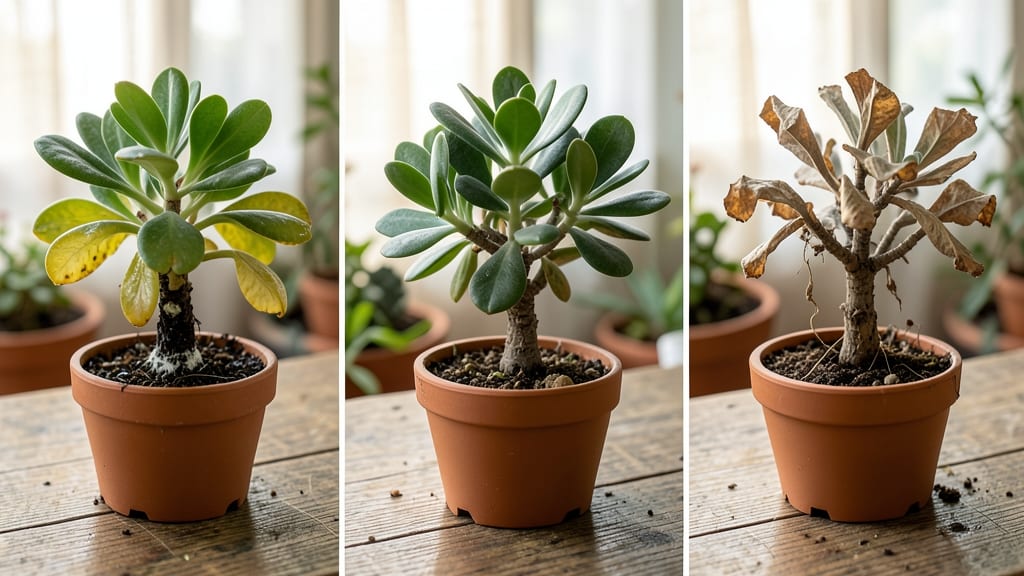
An overwatered or underwatered elephant bush leaves turning mushy or crispy? That's your plant screaming for help. 🌱 I've seen this plant go from vibrant green to sad in just days—usually because we're either drowning it or starving it.
The key is understanding the subtle differences between overwatering and underwatering, because both look similar at first glance. The real giveaway is the roots: overwatered plants smell sour and look rotten, while underwatered roots stay dry and firm.
Once you know what to look for, fixing it is simple—just adjust your watering schedule and check soil moisture before reaching for the hose. Most people overwater succulent-like plants because they assume they need less water than tropicals.
You'll see new growth within 2-3 weeks if you get the balance right. The leaves go from limp to plump, and the plant regains that lush, bushy shape. The trick is matching your watering to the season—hot summers need more, cool winters need less—and always using well-draining soil.
Here's where most gardeners go wrong: they water on a schedule instead of checking the soil. Stick your finger an inch deep—if it's dry, water; if it's damp, wait. Elephant bush thrives on neglect once established, but it hates soggy roots.
A quick soil test with your finger saves more plants than any fancy moisture meter. The recovery process is faster than you'd think. Within 10 days of proper watering, you'll notice leaves perking up and new buds forming.
The plant forgives mistakes once you correct them, but the real secret is prevention—amend your soil with perlite or sand if it drains poorly, and always use pots with drainage holes.
This works for both container plants and in-ground elephant bushes. If yours is in a pot, move it to a sunnier spot—these plants need 6+ hours of light daily to stay healthy.
The same rules apply whether you're in a hot desert climate or a mild coastal area, though desert plants may need slightly less frequent watering. Confession: I've killed more elephant bushes than I'd like to admit.
But once I learned to read the plant's signals, they've become my easiest houseplant—nearly indestructible once you get the watering right. Let's get yours back to thriving!
The first product explained
Meet the HydroSense Smart Plant Monitor—your new best friend for keeping your Portulacaria afra (aka Elephant Bush) thriving without the guesswork! 🌱✨ This sleek, tech-savvy gadget is designed to help you avoid the dreaded overwatered or underwatered fate of this drought-tolerant beauty.
🔍 Key Specs & Features
- Sensor Type: Dual-probe moisture and temperature sensor for precise readings.
- Connectivity: Bluetooth-enabled with a free companion app (iOS/Android) for real-time alerts.
- Battery Life: Rechargeable lithium-ion battery lasts up to 6 months on a single charge.
- Watering Guidance: Customizable thresholds for soil moisture, tailored to Elephant Bush needs.
- Portability: Compact and lightweight (just 4.5 oz!) for easy garden or potted plant use.
- Durability: Weather-resistant design with a 5-year warranty.
🎯 Who’s It For?
The HydroSense is perfect for:
- 🌿 Plant parents struggling with Elephant Bush care (or any succulent/drought-resistant plant).
- 🏡 Busy professionals who want foolproof plant health without daily checks.
- 💻 Tech-loving gardeners who enjoy data-driven plant care.
- 🏠 Renters or small-space dwellers with limited outdoor access.
💰 Price Point & Value
Priced at $49.99, the HydroSense offers unmatched value for plant enthusiasts. Why? Because one wrong watering can turn your Elephant Bush into a sad, mushy mess—or worse, a crispy critter! 😅 This tool pays for itself in saved plants and peace of mind.
Plus, the app’s free lifetime updates keep it future-proof.
Pro Tip: 💡 Pair it with the HydroSense app’s "Elephant Bush Mode" for pre-set optimal moisture levels—no PhD in botany required!
The second product explained
Meet your next plant-saving hero: the SmartSoil Moisture Meter Pro—a sleek, high-tech tool designed to take the guesswork out of watering your Portulacaria afra (aka Elephant Bush) and any other finicky plants in your collection. 🌱✨ This isn’t just another moisture meter; it’s a game-changer for plant parents who’ve ever wondered, "Am I drowning or dehydrating my Elephant Bush?"
📏 Specs & Features
Weighing just 4.2 oz and measuring 6.5 inches long, the Moisture Meter Pro is compact yet durable, built with a stainless steel probe that resists corrosion and lasts for years.
Its digital LCD display is backlit for easy reading in dim lighting, and the battery life lasts up to 500 readings on a single AAA battery—no more dead meters mid-diagnosis!
- Precision readings: Measures moisture levels in 12 customizable ranges, from bone-dry to saturated soil.
- Dual-probe system: Check moisture at two depths (surface and root zone) in one go.
- Temperature sensor: Adjusts readings for accurate results in hot or cold environments.
- Water reminder: Built-in alert system vibrates and beeps when your plant’s moisture hits critical lows.
- USB rechargeable: Optional charging cable included for eco-friendly use.
🎯 Who’s It For?
This tool is a must-have for:
- Plant newbies: No more overwatering or underwatering—just confidence in every watering session.
- Busy plant parents: The water reminder ensures you never forget (again).
- Elephant Bush enthusiasts: Perfect for diagnosing that perfect "just-right" moisture balance.
- Succulent and cactus collectors: Ideal for low-water plants that demand precision.
💰 Price Point & Value
Priced at $29.99, the Moisture Meter Pro offers unmatched value for its features. Compare that to $50+ for basic analog meters or $100+ for high-end alternatives—and you’ll see why this is the smart investment for plant lovers.
Plus, it comes with a lifetime warranty, so you’re covered if anything goes wrong.
Pro tip: 💡 Pair this with our Product A (the Self-Watering Planter) for a dynamic duo that keeps your Elephant Bush thriving without lifting a finger!
Head-to-head comparison
Deciding whether your Portulacaria afra (elephant bush) is overwatered or underwatered can feel like solving a puzzle—especially when the symptoms look eerily similar at first glance. To help you diagnose the issue faster, we’ve broken down the key differences in a side-by-side comparison below.
Think of this as your cheat sheet for saving your plant in minutes! 🌱💦
🔍 Visual Symptoms: The Telltale Signs
Your elephant bush speaks volumes through its leaves, stems, and soil. Here’s how to decode its messages:
| Symptom | Overwatered Elephant Bush | Underwatered Elephant Bush |
|---|---|---|
| Leaves |
|
|
| Stems |
|
|
| Soil |
|
|
| Roots |
|
|
💧 Watering Habits: The Good, the Bad, and the Fix
Elephant bushes are succulents at heart—they hate sitting in wet socks. Here’s how to spot the watering extremes:
| Aspect | Overwatered | Underwatered |
|---|---|---|
| Frequency |
|
|
| Amount |
|
|
| Fix It Fast! |
|
|
🌡️ Environmental Factors: The Hidden Culprits
Sometimes, it’s not just about water—humidity, light, and temperature play sneaky roles too. Here’s how they stack up:
| Factor | Overwatered Plants Often Face | Underwatered Plants Often Face |
|---|---|---|
| Humidity |
|
|
| Light |
|
|
| Temperature |
|
|
⏳ Recovery Time: How Long Until Your Plant Bounces Back?
Patience is key—here’s what to expect based on the issue:
| Issue | Recovery Timeline | What to Watch For |
|---|---|---|
| Overwatered |
|