
Diseases
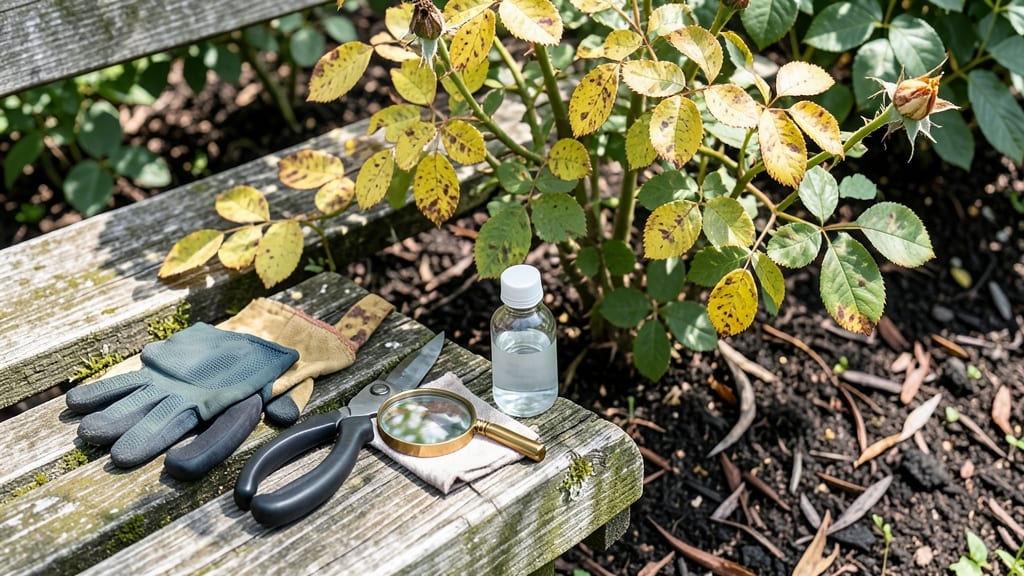
Your roses are screaming for help—yellow leaves and brown spots mean root rot or fungal trouble, and copper fungicide spray is the game-changer. 🌿 I’ve saved multiple bushes from this exact problem by diagnosing correctly and acting fast, and you can too.
The key is stopping the spread before it kills your plants.
Overwatering, poor drainage, or fungal infections like black spot create the perfect storm for these symptoms. Root rot thrives in soggy soil, while powdery mildew and spider mites leave behind telltale brown spots. The good news? Copper fungicide tackles fungi while improving soil health—just don’t overdo it.
You’ll see new green growth within 2-3 weeks of treatment, with fewer spots and stronger stems. Prune affected leaves immediately, improve drainage, and space plants for airflow. The secret? Consistency—one spray won’t fix it, but a routine will.
Works for all rose types, from hybrid teas to climbers. Here’s the step-by-step rescue plan—no more sad, spotty bushes.
Root Causes Of Leaf Discoloration
When your beloved rose bush starts showing yellow leaves with brown spots, it’s often a cry for help from the plant itself. These symptoms rarely appear out of nowhere—they’re usually a response to stress, disease, or environmental factors.
Understanding the why behind these changes is the first step toward saving your roses. Below, we break down the most common culprits, explained in clear, actionable terms.
Fungi thrive in damp, warm conditions, making roses a prime target. Two of the most common fungal diseases that cause yellowing and brown spots are black spot (Diplocarpon rosae) and powdery mildew (Erysiphe spp.).
- Black Spot: This fungus attacks leaves, creating dark brown or black spots with yellow halos. Over time, infected leaves turn yellow and drop prematurely.
The fungus spreads via spores, especially in high humidity or poor air circulation. - Powdery Mildew: Unlike black spot, this disease appears as white, powdery patches on leaves, which can turn brown and crispy. It weakens the plant, leading to yellowing and stunted growth.
Why it happens: Fungi enter through leaf surfaces, often exploiting weak spots caused by overwatering, nutrient deficiencies, or stress. If left unchecked, they can spread rapidly, especially in shady, crowded rose beds.
Roses need consistent moisture, but too much water—especially in poorly draining soil—can lead to root rot (Phytophthora or Fusarium species). When roots suffocate from excess water, they struggle to absorb nutrients, causing leaves to yellow and develop brown, water-soaked spots.
Why it happens:
- Compacted or clay-heavy soil traps water, preventing oxygen from reaching roots.
- Frequent overhead watering keeps leaves wet for long periods, encouraging fungal growth.
- Lack of mulch leads to soil temperature fluctuations, stressing roots.
Key sign: Check the soil—if it stays soggy more than a day after watering, drainage is likely the issue.
Yellow leaves with brown spots can also signal nutritional imbalances, particularly iron, magnesium, or nitrogen deficiencies.
- Iron Deficiency (Chlorosis): Leaves turn pale yellow between veins, while veins stay green.
Brown spots may develop if the plant is severely stressed. - Magnesium Deficiency: Older leaves develop yellow patches between veins, eventually turning brown and crispy. - Nitrogen Deficiency: Leaves turn uniformly yellow before browning, often starting at the tips.
Why it happens:
- Alkaline soil (high pH) locks out iron and manganese, even if they’re present.
- Over-fertilizing with nitrogen can burn roots, reducing nutrient uptake.
- Poor soil structure prevents roots from accessing essential minerals.
Pro tip: Test your soil’s pH—roses thrive in slightly acidic soil (6.0–6.5). If pH is too high, amend with sulfur or peat moss.
While less common than fungi or water issues, pests like spider mites, aphids, or scale insects can cause leaf discoloration.
- Spider Mites: These tiny pests suck sap from leaves, causing yellow stippling and brown patches.
They thrive in dry, hot conditions. - Aphids: Clusters of these insects distort leaves and excrete honeydew, leading to sooty mold (a black fungal growth) and brown spots. - Scale Insects: They attach to stems and leaves, draining nutrients and causing yellowing and wilting.
Why it happens: Pests multiply rapidly in stressed plants (e.g., those with poor water or nutrient balance). Their feeding weakens leaves, making them susceptible to secondary infections.
Extreme weather can shock rose bushes, leading to sudden leaf discoloration.
- Heat Stress: In intense summer heat, leaves may scorch, turning yellow with brown, crispy edges.
- Cold Damage: Frost or late spring freezes can cause brown, water-soaked spots on leaves.
- Windburn: Strong, dry winds strip moisture from leaves, leading to brown, papery patches.
Why it happens: Roses are sensitive to temperature swings and desiccation. Without proper mulching or shade, leaves become vulnerable to physical damage.
Sometimes, well-intentioned gardening practices backfire. Over-application of fertilizers, herbicides, or fungicides can cause leaf burn, manifesting as yellowing with brown edges or spots.
Why it happens:
- Salt buildup from fertilizers disrupts nutrient absorption.
- Herbicide drift (even from nearby lawn treatments) can bleach or brown leaves.
- Copper fungicide misuse (too strong or frequent applications) may cause phyto-toxicity, leading to brown spots.
Key sign: Damage often appears suddenly and uniformly across multiple leaves.
To narrow down the cause, ask yourself: ✅ Are spots raised or powdery? → Likely fungal (black spot or mildew). ✅ Is soil soggy or dry? → Overwatering (root rot) or underwatering (stress). ✅ Are veins green but leaf tissue yellow? → Nutrient deficiency (iron/magnesium). ✅ Are leaves stippled or sticky? → Pests (mites or aphids). ✅ Did damage happen after a weather event? → Environmental stress.
Once you identify the root cause, you can target treatment effectively—whether it’s copper fungicide, soil amendments, or pest control. 🚀
Revive Your Roses Naturally
Now that you know the culprits behind those unsightly yellow leaves and brown spots on your rose bush, let’s roll up our sleeves and get to work! 🌿💪 The good news? Most issues are fixable with the right care—and prevention is easier than you think.
Below, we’ve mapped out practical, step-by-step solutions tailored to each cause, plus pro tips to keep your roses thriving long-term.
Fungal diseases like black spot, powdery mildew, or root rot thrive in damp conditions, but they’re no match for a few key strategies.
🍳 Step 1: Prune the Problem Areas
- 🔪 Snip off infected leaves and stems using clean, sharp pruners (dip them in rubbing alcohol first!).
Dispose of the clippings in the trash—not the compost—to prevent reinfection. - 🌡️ Focus on airflow: Remove any crowded or overlapping branches to improve circulation. Thin out dense foliage by 20–30%.
👨🍳 Step 2: Apply Copper Fungicide
- 💧 Spray early in the morning (avoid midday heat) using a copper-based fungicide (like copper sulfate or copper fungicide sprays).
Follow label instructions—typically 1–2 applications, 7–10 days apart. - 🌧️ For root rot: If the soil is waterlogged, mix 1 tablespoon of copper fungicide per gallon of water and water the base of the plant. Pair this with well-draining soil amendments (see below).
🥘 Step 3: Adjust Watering Habits
- 💦 Water at the base, not overhead, to keep leaves dry.
Use a soaker hose or drip irrigation to deliver moisture directly to the roots. - ⏰ Time it right: Water early in the day (before 10 AM) so foliage has time to dry. Avoid evening watering, which encourages fungal growth.
💡 Prevention Tips
- 🌡️ Space plants 3–4 feet apart to prevent humidity buildup.
- ✨ Mulch properly: Use 2–3 inches of organic mulch (like shredded bark) but keep it 6 inches away from the stem to avoid trapping moisture.
- 🔄 Rotate fungicides: If you use chemical treatments, alternate between copper and neem oil or sulfur-based sprays to avoid resistance.
Yellowing leaves can signal a lack of essential nutrients. Let’s give your roses the boost they need!
🍳 Step 1: Test Your Soil
- 📊 Grab a soil test kit (available at garden centers) to check pH and nutrient levels.
Roses prefer slightly acidic soil (6.0–6.5 pH). - 💡 Quick fix: If testing isn’t an option, amend the soil with compost or aged manure to improve fertility.
👨🍳 Step 2: Fertilize Correctly
- 🌱 Use a balanced rose fertilizer (like 10-10-10 or 5-10-5) in early spring and mid-summer.
Avoid over-fertilizing in fall—it encourages tender new growth that’s susceptible to frost damage. - 🍎 For yellow leaves with green veins (iron deficiency/chlorosis): - Apply chelated iron or Epsom salt (1 tablespoon per gallon of water) every 2–4 weeks until leaves green up. - ✨ Pro tip: If your soil is alkaline, mix sulfur into the soil to lower pH over time.
🥘 Step 3: Improve Soil Drainage
- 🏗️ Amend heavy clay soil with perlite, sand, or compost to prevent waterlogging.
- 💦 If planting new roses, dig a hole twice as wide as the root ball and mix in compost and peat moss for better aeration.
💡 Prevention Tips
- 📅 Feed regularly but moderately: Over-fertilizing burns roots and attracts pests. Stick to the label’s recommended schedule.
- 🌿 Mulch with nitrogen-rich materials (like grass clippings or leaf mold) to slowly release nutrients.
Aphids, spider mites, and scale insects weaken roses, making them vulnerable to disease. Kick them to the curb with these tactics!
🍳 Step 1: Inspect & Isolate
- 🔍 Check undersides of leaves and new growth for pests. Isolate heavily infested plants if possible.
- 💦 Blast pests off with a strong spray of water (especially for aphids and spider mites).
👨🍳 Step 2: Use Organic Pesticides
- 🌿 Neem oil: Mix 1 teaspoon neem oil + 1 teaspoon mild soap + 1 quart water. Spray every 7–10 days until pests are gone.
- 🍎 Insecticidal soap: Effective against soft-bodied pests like aphids.
Spray directly on infested areas. - 🐝 For scale insects: Scrape them off with a plastic spoon or rubbing alcohol-soaked cotton swab, then treat with horticultural oil.
🥘 Step 3: Encourage Beneficial Insects
- 🐞 Attract ladybugs, lacewings, and parasitic wasps by planting dill, fennel, or marigolds nearby.
- 🌸 Avoid broad-spectrum pesticides—they kill beneficial insects too!
💡 Prevention Tips
- 🌿 Keep your garden clean: Remove fallen leaves and debris where pests hide.
- 🌡️ Monitor regularly: Check plants weekly during growing season for early signs of infestation.
If your roses are struggling due to overwatering, underwatering, or extreme conditions, tweak their environment to match their needs.
🍳 Step 1: Check Watering Practices
- 💧 Roses need 1–2 inches of water per week (including rain).
Stick your finger 2 inches into the soil—if it’s dry, water deeply. - 🚫 Avoid soggy soil: Ensure pots have drainage holes, and raised beds have sandy or loamy soil.
👨🍳 Step 2: Protect from Harsh Conditions
- 🌡️ In hot climates: Provide afternoon shade (especially for young roses) and mulch heavily to retain moisture.
- ❄️ In cold climates: Prune in late winter (after the worst frost) and cover with burlap if temperatures drop below 20°F.
🥘 Step 3: Revitalize Stressed Plants
- 🌱 For underwatered roses: Soak the root zone slowly over 30–60 minutes to encourage deep water absorption.
- 💧 For overwatered roses: Let the soil dry out completely between waterings, and consider raising the plant in a mound of soil to improve drainage.
💡 Prevention Tips
- 🌿 Group roses with other plants to create a microclimate with more stable humidity.
- 🌡️ Use a soil moisture meter to avoid guesswork—water only when needed!
- 🔄 Rotate treatments: If using fungicides or pesticides, switch types every few weeks to prevent resistance.
- 🌱 Plant disease-resistant varieties: Look for roses labeled "resistant to black spot" or "powdery mildew-resistant" for low-maintenance options.
- 📅 Prune strategically: Deadhead spent blooms and prune in late winter to encourage healthy new growth.
- 🌿 Quarantine new plants: Keep new additions separate for 2–4 weeks to spot pests/diseases before they spread.
With these targeted fixes, your rose bush should bounce back stronger than ever.
Frequently asked questions
Why do my rose bush leaves turn yellow with brown spots?
This usually signals fungal infections (like black spot or powdery mildew), root rot from overwatering, or nutrient deficiencies. Check soil moisture and leaf patterns—powdery white spots mean mildew, while dark spots with yellow halos indicate black spot.
Can I save my rose bush if the brown spots are spreading fast?
Yes! Act immediately by pruning infected leaves, applying copper fungicide, and improving airflow. For severe cases, combine treatments with neem oil and adjust watering habits. With consistent care, you’ll see new growth in 2-3 weeks.
Is copper fungicide safe for all rose varieties?
Copper fungicide is generally safe but should be used as directed. Avoid overapplication—too much can cause leaf burn. Organic alternatives like baking soda spray (1 tsp baking soda + 1 quart water) work well for milder cases. Always test on a small leaf first.
How do I prevent yellow leaves and brown spots next season?
Focus on proper spacing (3-4 feet between plants), mulching (2-3 inches away from stems), and watering at the base in the morning. Choose disease-resistant varieties and rotate fungicides to prevent resistance. Regular pruning also improves airflow.
What’s the difference between black spot and powdery mildew?
Black spot creates dark brown/black spots with yellow edges that spread quickly, while powdery mildew appears as white, powdery patches that turn brown. Black spot thrives in humid conditions, while mildew prefers dry, warm weather. Both weaken leaves, causing yellowing.