
Diseases
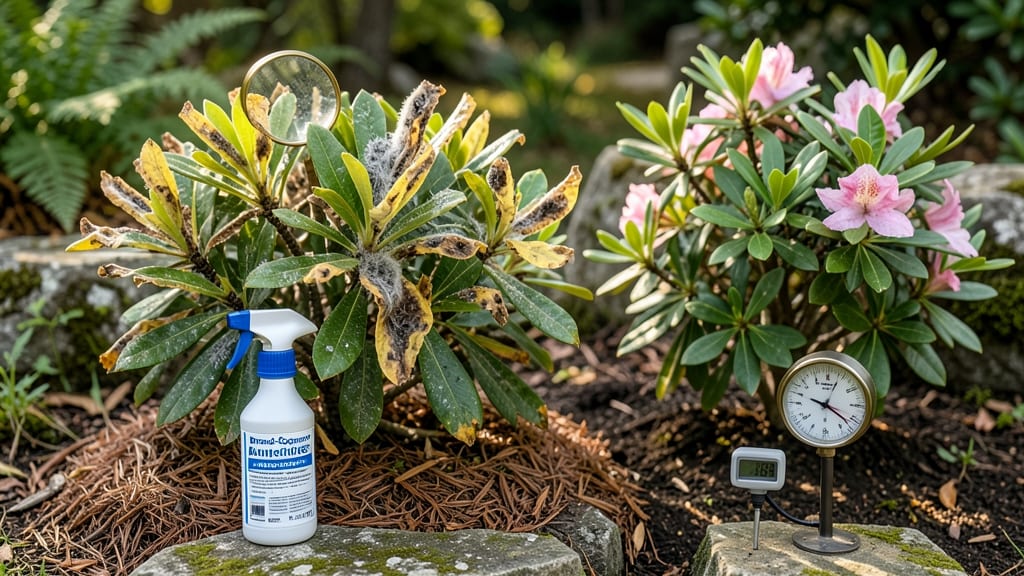
Azalea bush fungus turns your vibrant blooms into a sad, spotted mess—but there’s hope. 🌿 I’ve battled powdery mildew and leaf spots on my own azaleas, and these organic fixes saved them without harsh chemicals.
The key is acting fast when you spot those ugly brown spots or fuzzy white patches.
Fungus thrives in damp, shaded conditions, so poor air circulation and overwatering are usually to blame. Prune for airflow, water at the base (not overhead), and avoid mulch piles against the stems.
My azaleas now stay lush because I treat them like the finicky divas they are—with just the right balance of care.
Start with a baking soda spray (1 tsp per quart of water) for mild cases, or use neem oil for stubborn infections. Repeat every 7–10 days until new growth appears. The results? Healthy foliage and blooms that rival your neighbors’—without the chemical guilt.
Prevention is easier than cleanup: space plants properly, water early in the day, and fertilize lightly. These small tweaks keep fungus at bay year after year. Let’s get those azaleas thriving again!
Root Causes Of Fungal Spread
Azalea bushes are prized for their stunning blooms, but fungal infections can quickly turn their beauty into a sad, wilted mess. Understanding why these pathogens take hold is the first step to preventing them.
Below, we break down the science behind the most common triggers—so you can protect your plants before they’re infected.
Fungi thrive in wet conditions, and azaleas are especially vulnerable when their roots sit in soggy soil. Here’s why:
- Excess moisture creates the perfect breeding ground for fungal spores like Phytophthora and Pythium, which cause root rot.
- Compacted or clay-heavy soil doesn’t drain well, trapping water at the roots and inviting fungal growth.
- Frequent overhead watering keeps leaves damp for long periods, encouraging leaf spot diseases (e.g., Exobasidium).
Actionable fix: Use well-draining soil mixes (like peat-based or pine bark blends) and water only at the base of the plant. Elevate containers slightly to improve airflow.
Fungi spread like wildfire in humid, stagnant environments. Azaleas, with their dense foliage, trap moisture when airflow is restricted. Key culprits:
- Poor circulation (e.g., overcrowded plantings or thick mulch layers) slows evaporation, keeping spores active.
- Morning dew + no sun exposure leaves foliage wet for hours, ideal for Botrytis (gray mold) and Powdery Mildew.
- Shady, enclosed spaces (like greenhouses or dense forests) amplify humidity, speeding up fungal reproduction.
Actionable fix: Space bushes 3–4 feet apart, prune for airflow, and water early in the day so leaves dry quickly. Use a fan in greenhouses if needed!
Stressed azaleas are fungal magnets. When plants struggle—due to poor nutrition, pests, or environmental shocks—they can’t fend off infections. Common stressors:
- Nutrient deficiencies (especially nitrogen or phosphorus) weaken cell walls, making them easier targets.
- Insect damage (e.g., lace bugs or spider mites) creates entry points for fungi like Phyllosticta.
- Sudden temperature swings (e.g., frost followed by heat) shock the plant, lowering its resistance.
Actionable fix: Feed azaleas with acid-loving fertilizer (pH 4.5–5.5) in early spring and monitor for pests. Mulch with pine needles to retain moisture without suffocating roots.
Fungal spores are everywhere—and they hitchhike on dirty tools, old mulch, or infected plant debris. How it happens:
- Reusing pruners or shears without sterilizing them spreads spores from infected to healthy plants.
- Using compost or mulch from diseased plants introduces Rhizoctonia or Fusarium into fresh soil.
- Planting near infected bushes (even in previous seasons) leaves dormant spores in the soil.
Actionable fix: Sterilize tools with 70% isopropyl alcohol or bleach solution (1 part bleach to 9 parts water). Test soil pH before planting—aim for acidic (5.0–6.0) to discourage fungal growth.
Pro tip: 💡 Rotate crops if growing azaleas in containers—don’t replant in the same soil without sterilizing it first!
Revive Your Azaleas Naturally
Fungal infections can turn your once-vibrant azalea bushes into wilted shadows, but the good news is that organic remedies can bring them back to life—without harsh chemicals. Below, we’ll tackle the most common causes of fungal issues in azaleas and provide practical, step-by-step solutions to restore their health.
Prevention tips are woven in to keep your bushes thriving long-term.
Cause: Too much moisture suffocates roots, creating the perfect breeding ground for fungi like Phytophthora.
Fix:
- 🔥 Stop Watering Immediately – Let the top 2–3 inches of soil dry out before watering again.
- 🍳 Improve Drainage – Mix in compost or perlite to aerate the soil. Avoid heavy clay pots.
- 👨🍳 Elevate the Plant – If in a container, add a layer of gravel or broken pottery at the bottom to prevent waterlogging.
- ⏰ Water Deeply but Less Often – Early morning is best to allow foliage to dry before evening dampness sets in.
💡 Pro Tip: Mulch with pine bark or straw (not wood chips) to retain moisture without smothering roots.
Cause: White, powdery patches on leaves? This fungal spore thrives in humid, shaded conditions.
Fix:
- 🔪 Prune Infected Leaves – Snip off heavily affected foliage and dispose of it in the trash (not compost).
- 🌡️ Neem Oil Spray – Mix 1 tbsp neem oil + 1 tsp mild soap + 1 quart water. Spray both sides of leaves every 7–10 days until clear.
- ✨ Boost Airflow – Thin out dense branches to improve circulation. Avoid overcrowding plants.
- 🎯 Prevent Future Outbreaks – Water at the base (not overhead) and space azaleas 3–4 feet apart.
💡 Pro Tip: Baking soda spray (1 tsp baking soda + 1 quart water + a drop of dish soap) works for mild cases—test on a small leaf first!
Cause: Dark spots with yellow halos? This fungus spreads via splashing water or infected tools.
Fix:
- 🔥 Remove All Spotted Leaves – Cut back to healthy green tissue (sterilize pruners with rubbing alcohol between cuts).
- 🍳 Copper Fungicide (Organic Option) – Use copper sulfate (follow label rates) or hydrogen peroxide spray (3% solution, spray undersides of leaves).
- 👨🍳 Sterilize Tools – Clean pruners and shears with bleach water (1:10 ratio) after each use.
- 🌿 Apply Preventative Fungicide – Serratia marcescens (Bio-Care) or potassium bicarbonate sprays create a protective barrier.
💡 Pro Tip: Reflective mulch (like aluminum foil under pots) can reduce humidity around the base, deterring spores.
Even after treatment, prevention is key. Build your azaleas’ resistance with these habits:
- 📊 Soil pH Check – Azaleas love acidic soil (pH 4.5–5.5).
Test with a kit and amend with sulfur or peat moss if needed. - 💪 Feed with Organic Fertilizer – Use fish emulsion or compost tea in early spring to boost immunity. - 🥗 Avoid Nitrogen Overload – Too much nitrogen weakens plants.
Opt for balanced 10-10-10 or low-nitrogen formulas. - 🍎 Prune for Light – Thin out branches to increase sunlight penetration, reducing moisture retention.
Final Thought: Fungal issues don’t have to mean the end of your azaleas—consistent care and organic interventions can turn them around. Start with the fixes above, monitor progress, and soon, you’ll be back to admiring those show-stopping blooms! 🌸
Frequently asked questions about azalea bush fungus
What are the most common signs of fungus on azalea bushes?
Look for white powdery patches (powdery mildew), dark brown spots with yellow halos (leaf spot), or fuzzy gray growth (Botrytis). Check both leaf tops and undersides—fungus often starts hidden. If branches appear blackened or leaves drop prematurely, root rot from overwatering may be the culprit.
Can I save my azalea if it already has severe fungal damage?
Yes, but act fast! Prune all infected leaves and branches (sterilize tools between cuts), then apply neem oil or copper fungicide. For root rot, improve drainage immediately. Severe cases may need 3-4 weeks of consistent treatment—don't give up after one application!
Is it safe to use store-bought fungicides on azaleas?
Most chemical fungicides are safe when used as directed, but organic options like baking soda spray or potassium bicarbonate work well too. Always choose products labeled for ornamental plants and avoid overusing chemicals—it can harm beneficial microbes in the soil.
How often should I spray my azaleas to prevent fungus?
For prevention, spray every 7-10 days during humid months (spring/fall). If you've had issues before, start treatments in early spring before spores become active. Focus on undersides of leaves where moisture lingers—this is where fungus starts!
Will my azalea ever be fungus-free once it's been infected?
While you can't guarantee 100% prevention, consistent care makes fungus much less likely to return. Maintain proper spacing (3-4 feet apart), good airflow, and acidic soil (pH 4.5-5.5). Most importantly, water at the base and avoid overhead sprinkling to keep leaves dry.